Taiwan: Sheltering from the Storm
We sat in a small hotel room last Thursday evening in Kaohsiung, a city in southern Taiwan, and looked out our eleventh-floor window. A few trees were blowing in the breeze; the traffic (cars, buses and motorbikes) was roaring up the streets in a blur of red brake lights; a crowd of teenage boys in school uniform were loitering at the pedestrian crossing. Everything looked normal…except that Super Typhoon Champi, a monster storm, was churning across the Pacific towards Taiwan. The government had just announced the closure of all schools, public offices in the entire country for the following day with flight cancellations and drastically reduced public transport.
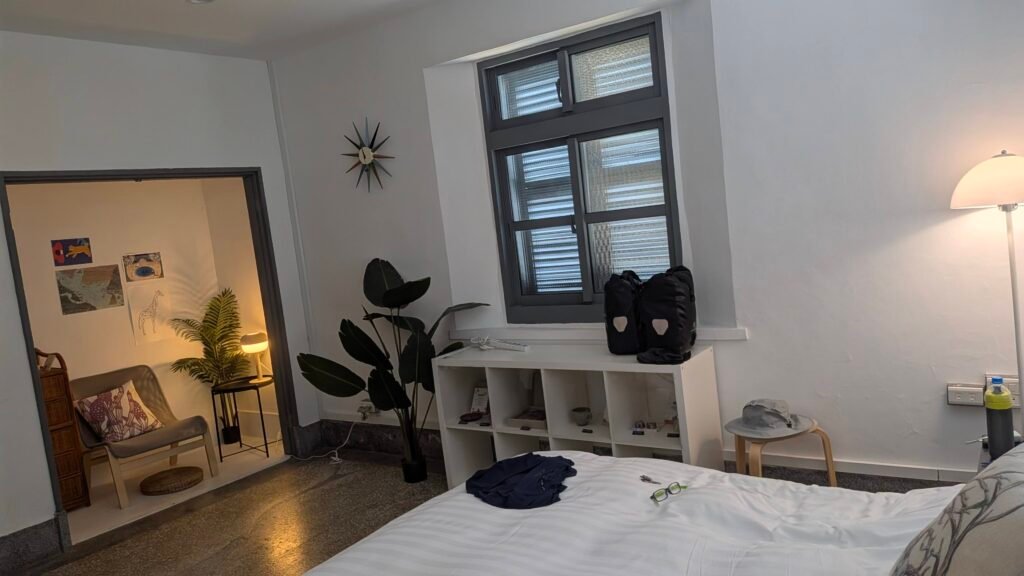
We had only arrived that afternoon in Kaohsiung by train. People kept telling us that the most beautiful part of Taiwan was the south and particularly the east, so we lopped off a considerable portion of the industrial west coast by taking the ‘non-sweaty option – a local train from Changhua to Kaohsiung. Our initial plan was to pedal directly south from the railway station for a couple of hours, but the journey to get the train that morning made us think twice. The wind gusted from the left, almost pushing me into the channel by the rice fields. I struggled to hold the bike steady as we cycled the 14kms from the historic town of Lukang to the train station in Changhua. So we booked a cheap hotel for €30 a night, the Royal Hotel, which was surprisingly comfortable with an excellent breakfast included and free snacks (cookies, popcorn and little doughy buns) available all day. But now our stay was about to be prolonged.

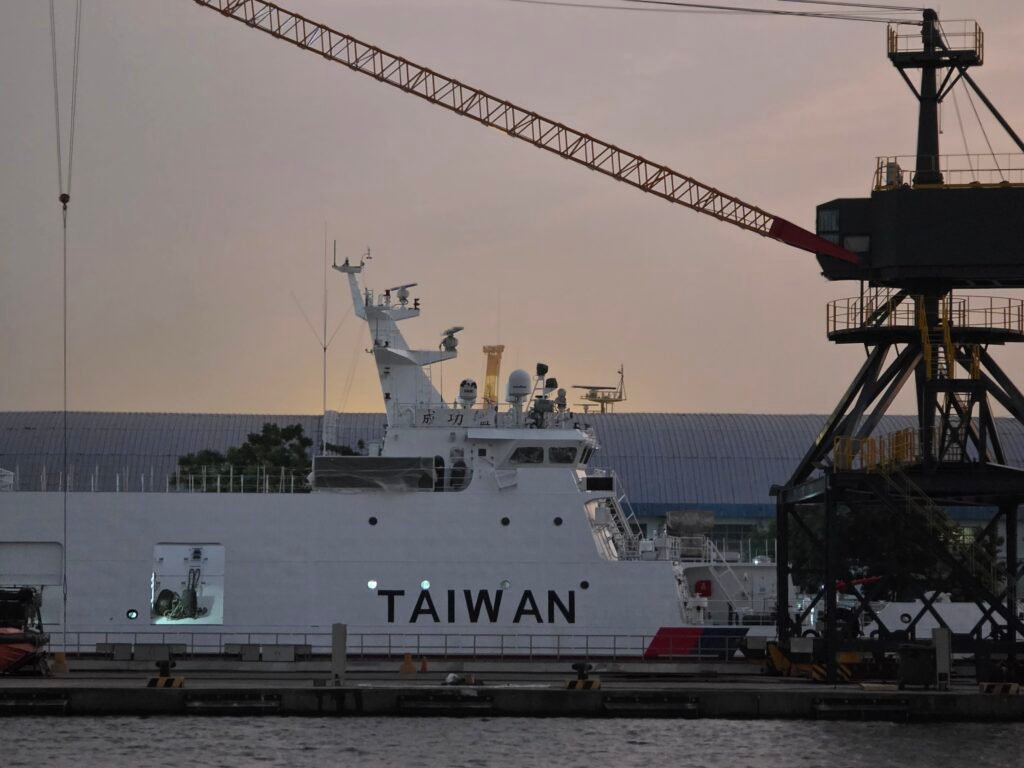
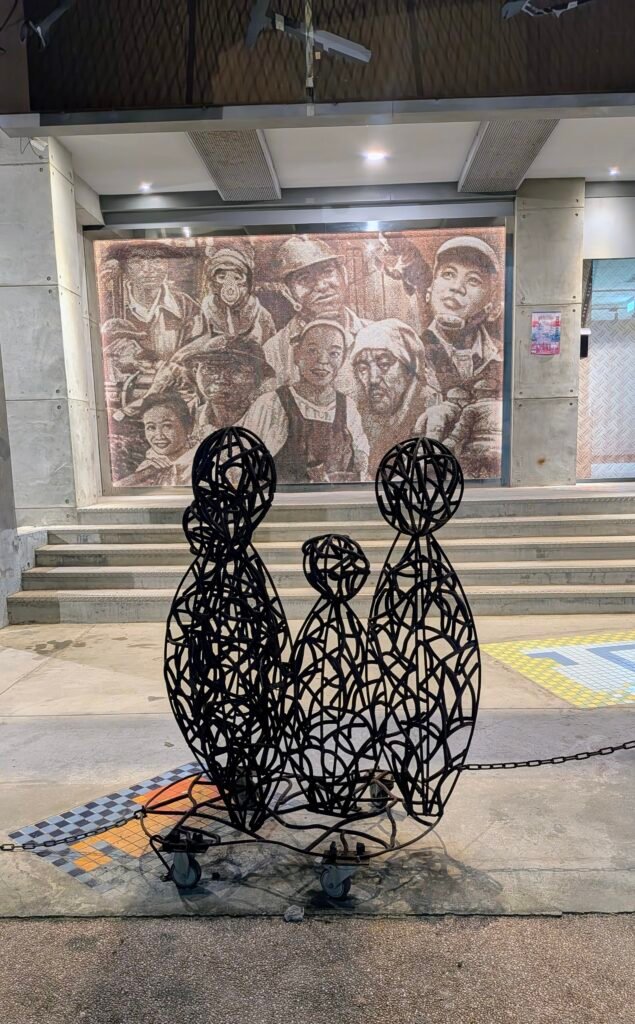
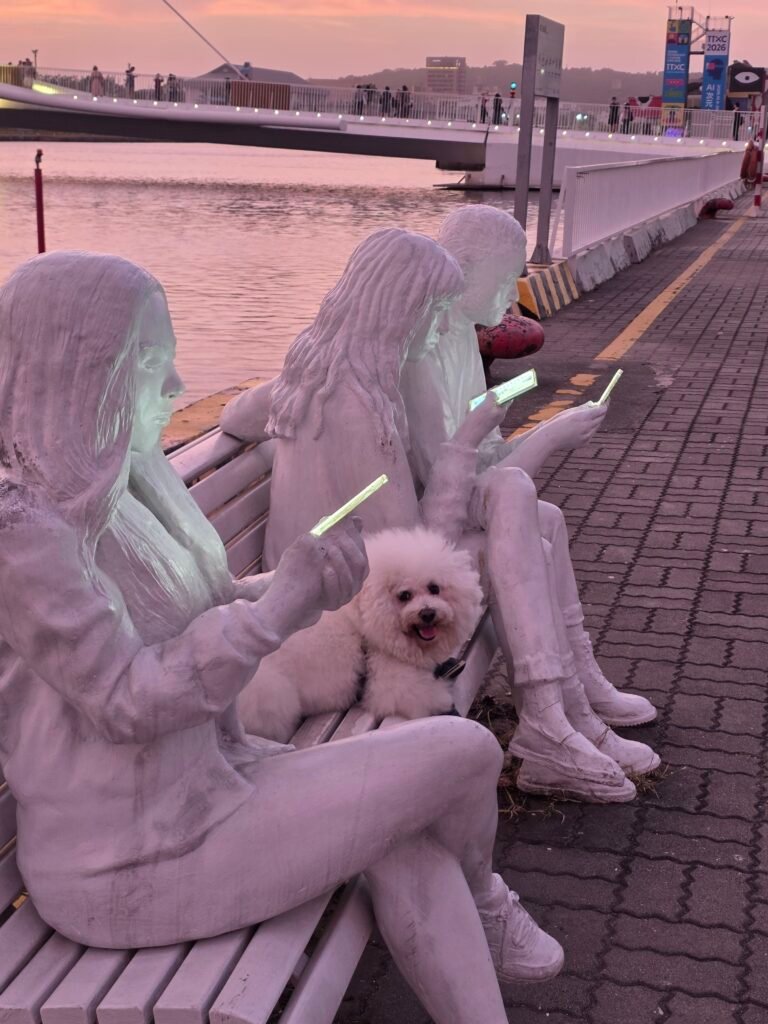
Kaohsiung is a stunning city of wide streets, trees and parks, a city of art and architecture. Pier 2, along the waterfront, was originally a cluster of ordinary port warehouses built around 1973. After falling into disuse when the city shifted away from heavy industry, it reinvented itself as a cultural hub, full of art installations, art galleries and trendy craft shops.
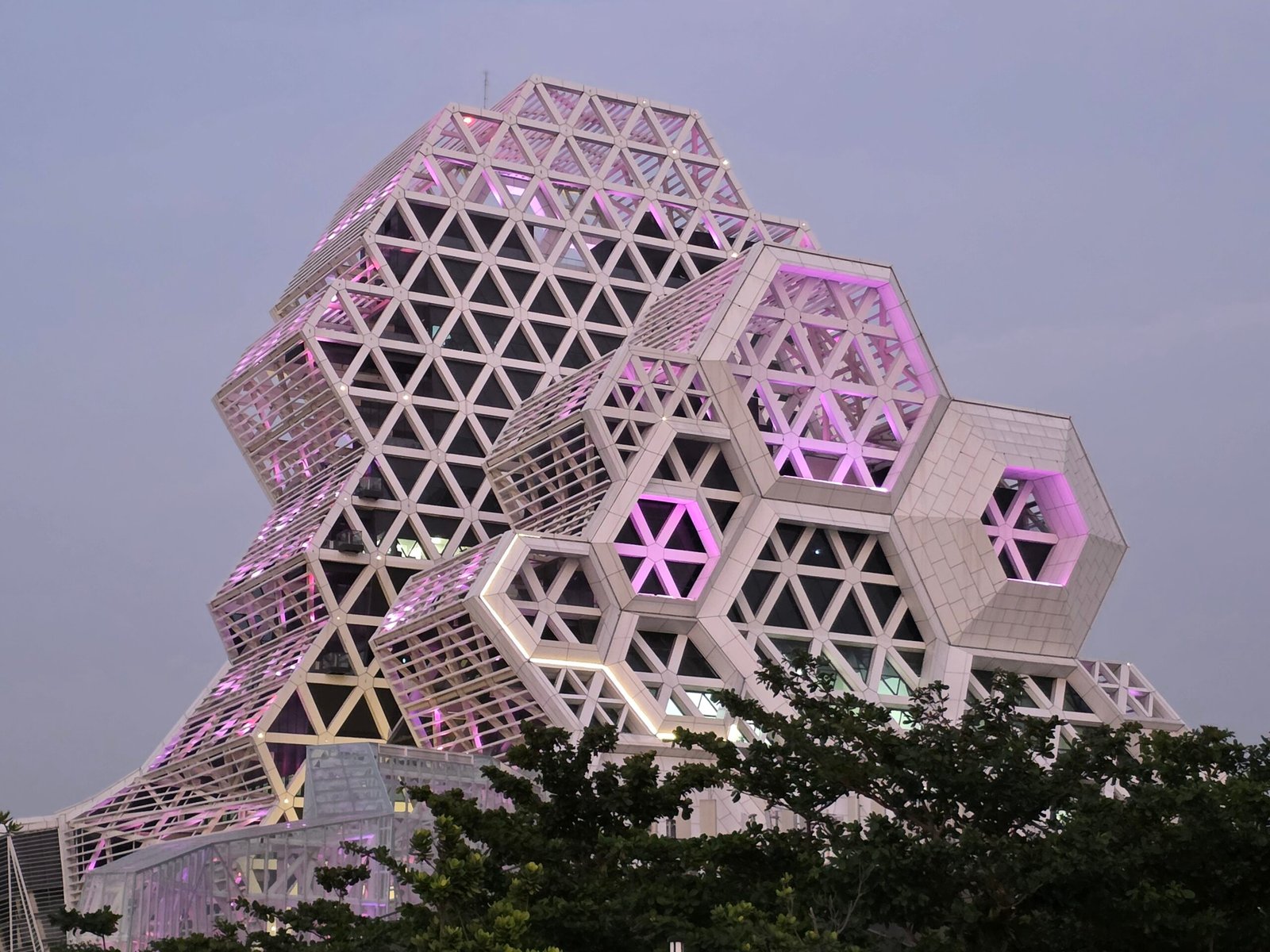
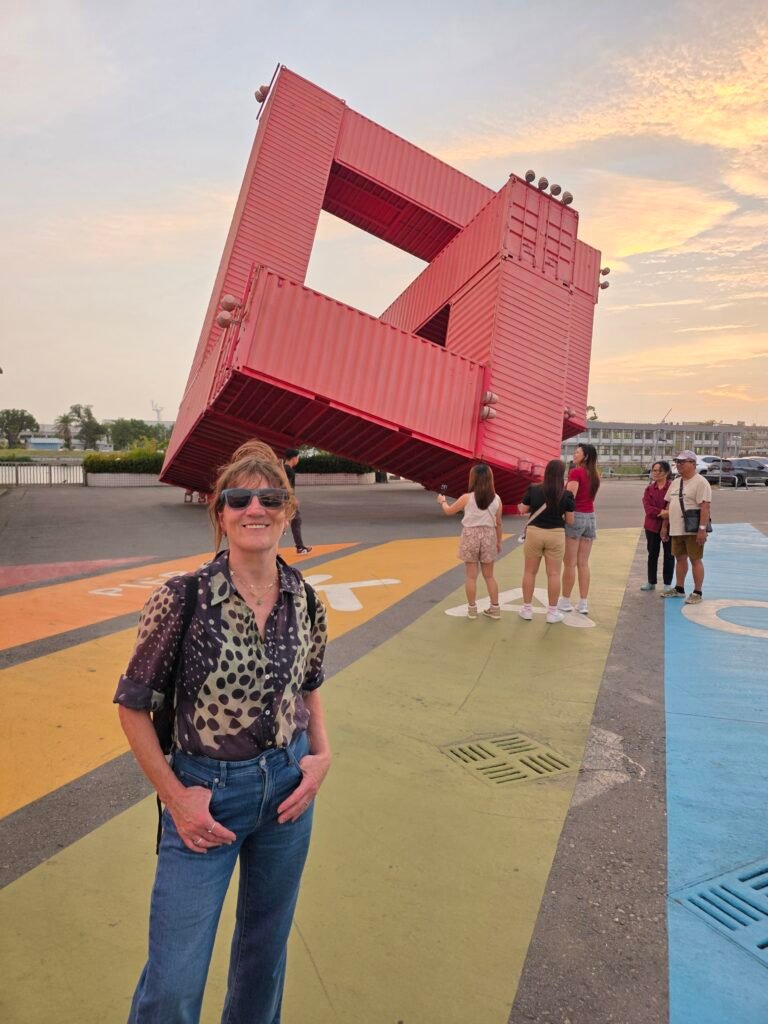
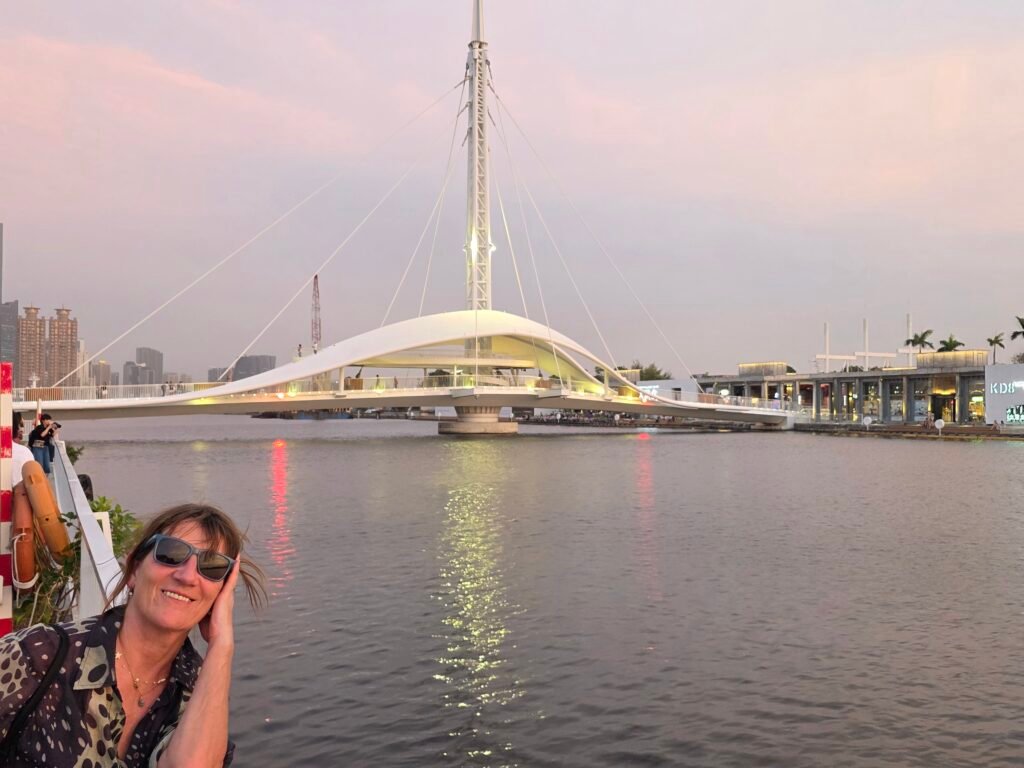
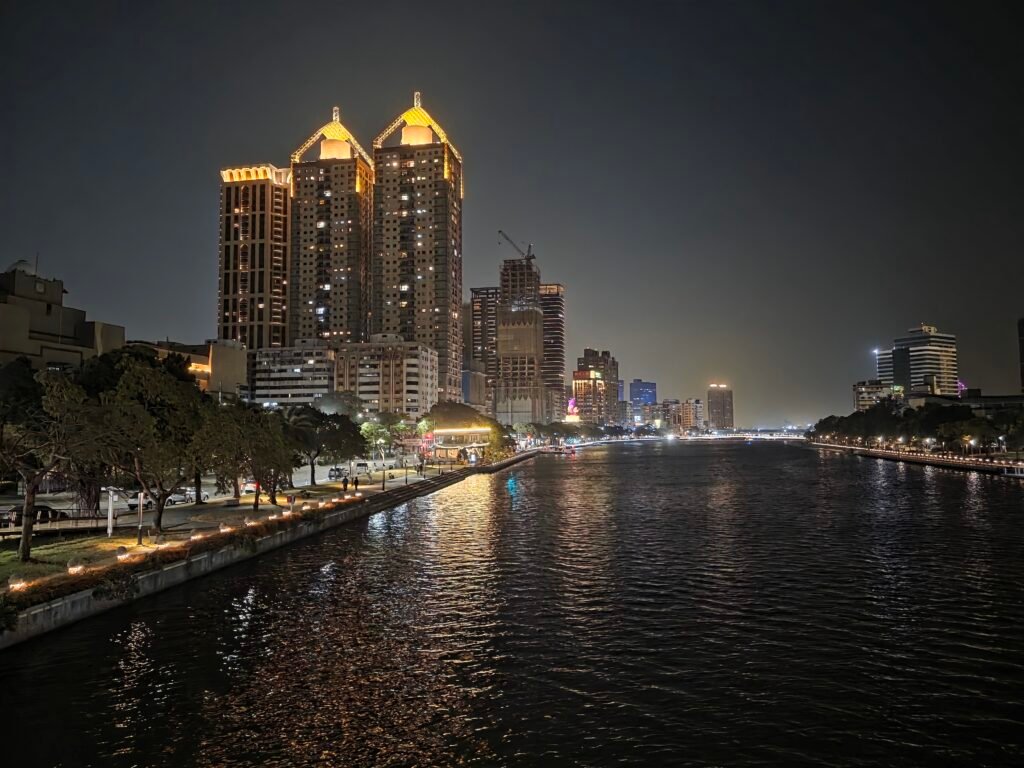
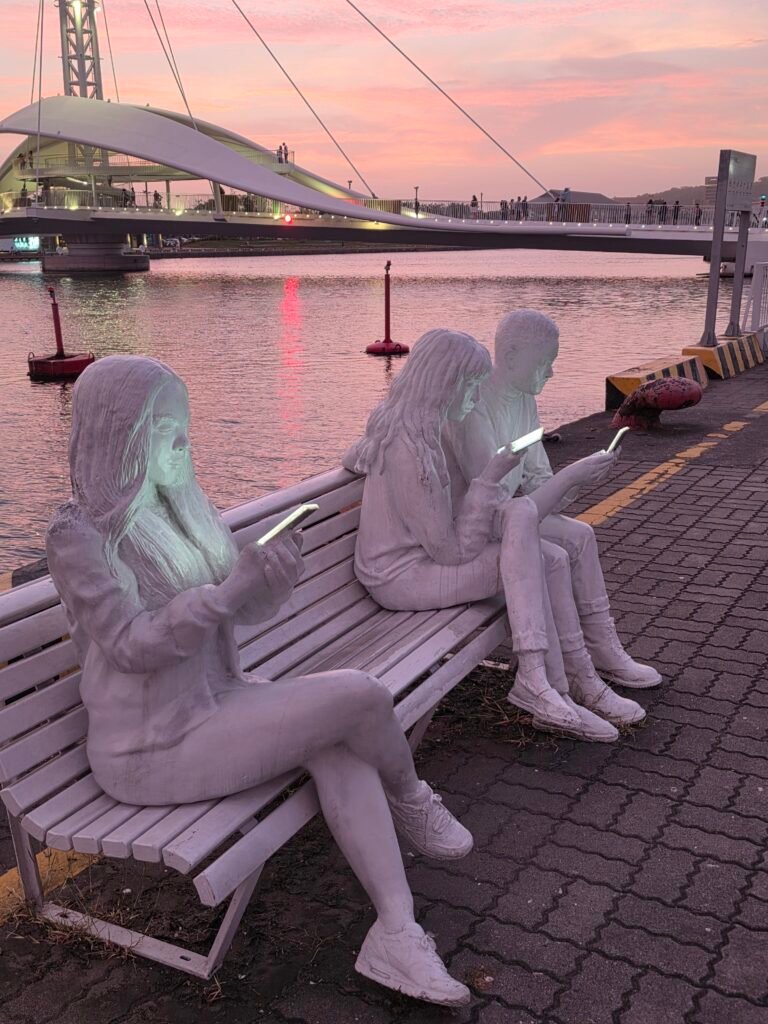
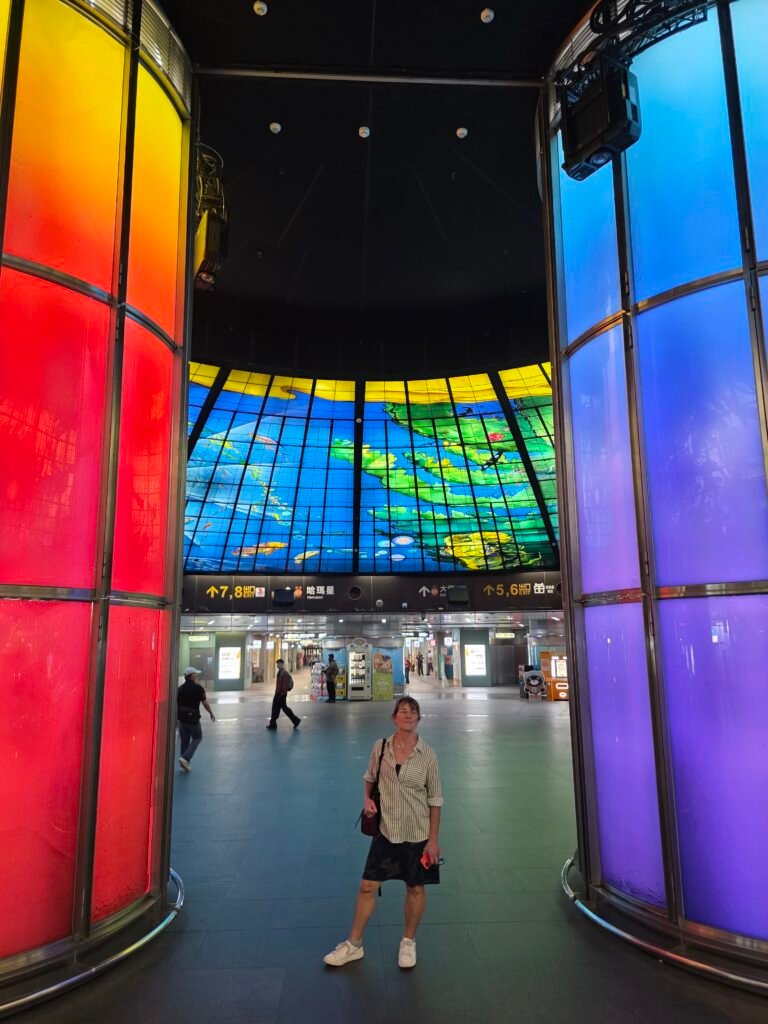
Rolling our bikes off the train, the railway station, a huge modern curvilinear building with a ceiling decorated with cloud-shaped and lantern-themed installations, surprised us. We soon discovered that this was a city where beauty was as important as functionality in the public transport buildings. The Formosa Metro Station was breathtaking with its multi-coloured dome of light.

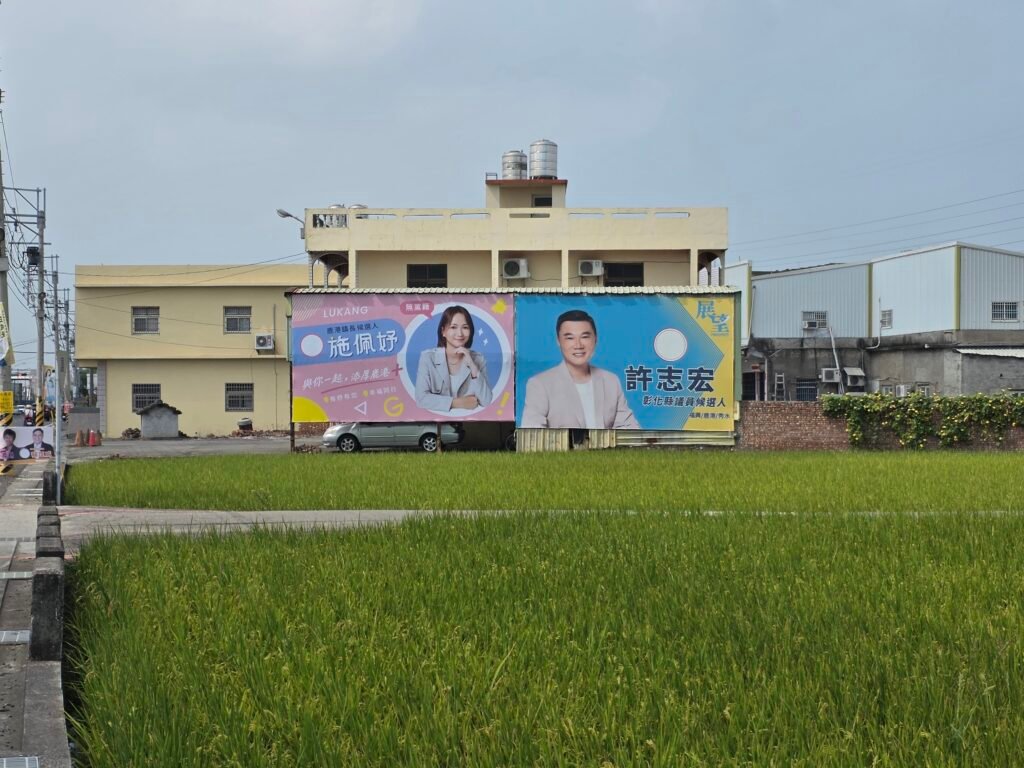
Friday morning was quiet, eerily quiet. I peeped out the window. A lone motorbike rode down the empty street at 7am. Everyone was adhering to the warning and having a lie-in. Taiwan experiences 3 to 5 typhoons annually, and residents treat them with caution, although a super storm appearing at the end of October was late in the season. On this ‘typhoon holiday,’ the sun was shining, and a few fluffy clouds hung in the blue sky. Such ‘holidays’, especially on the Friday of a bank holiday weekend, can be popular politically, and there were elections coming up at the end of November.

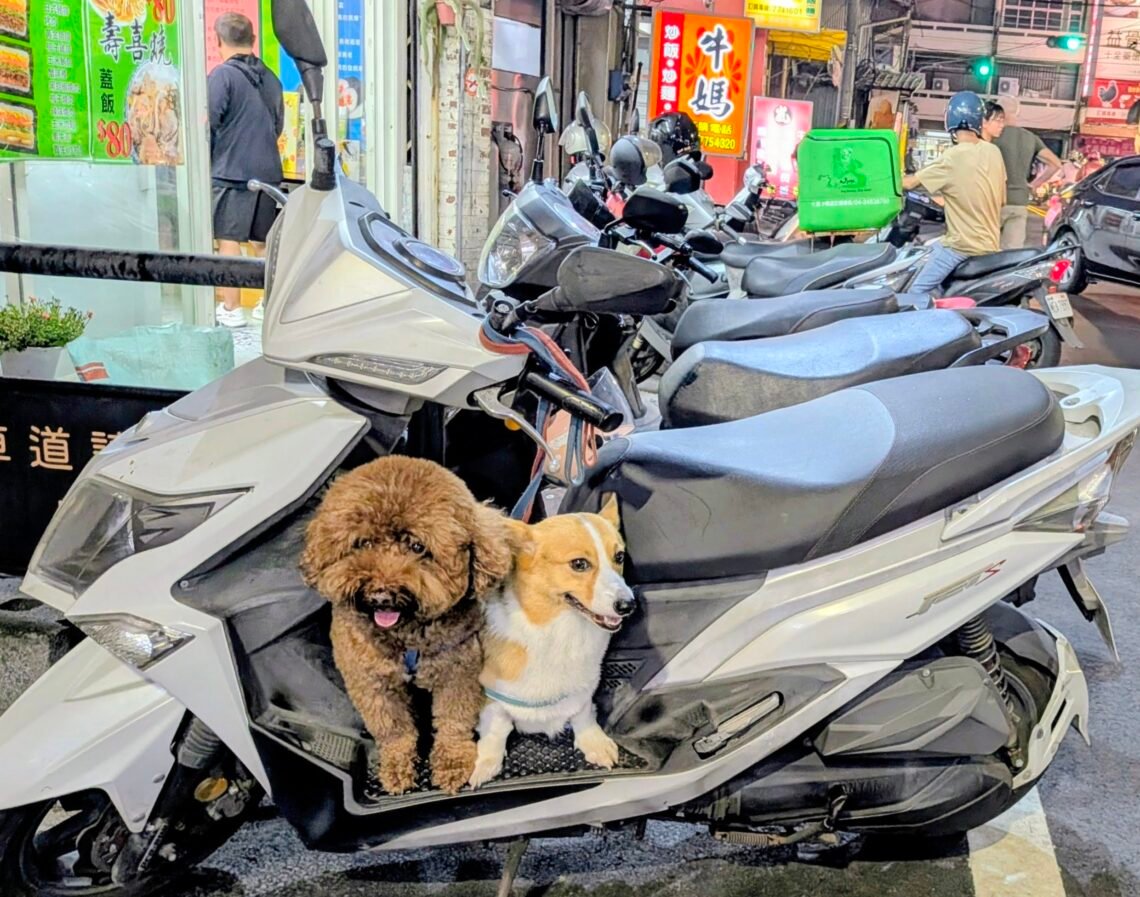
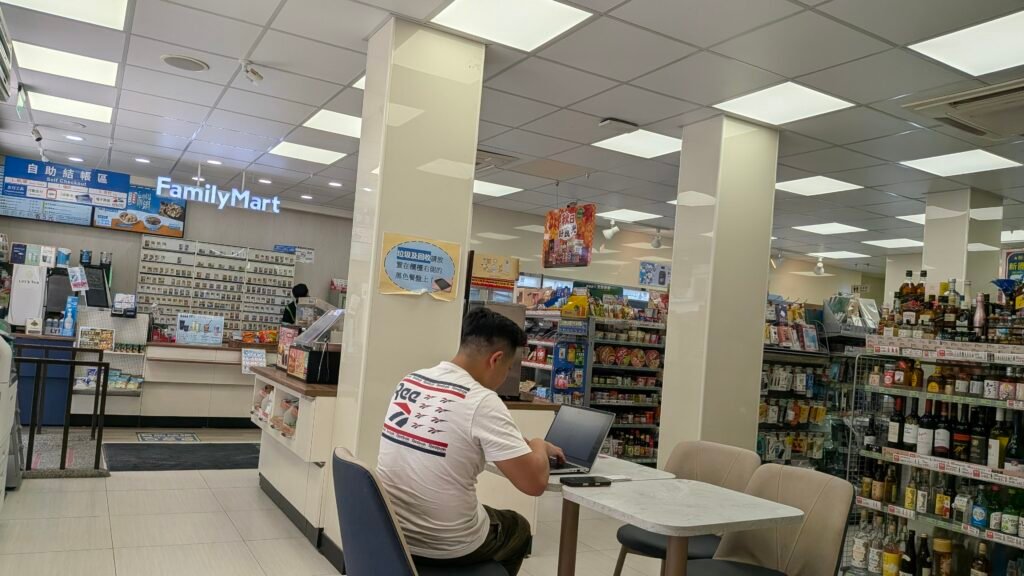
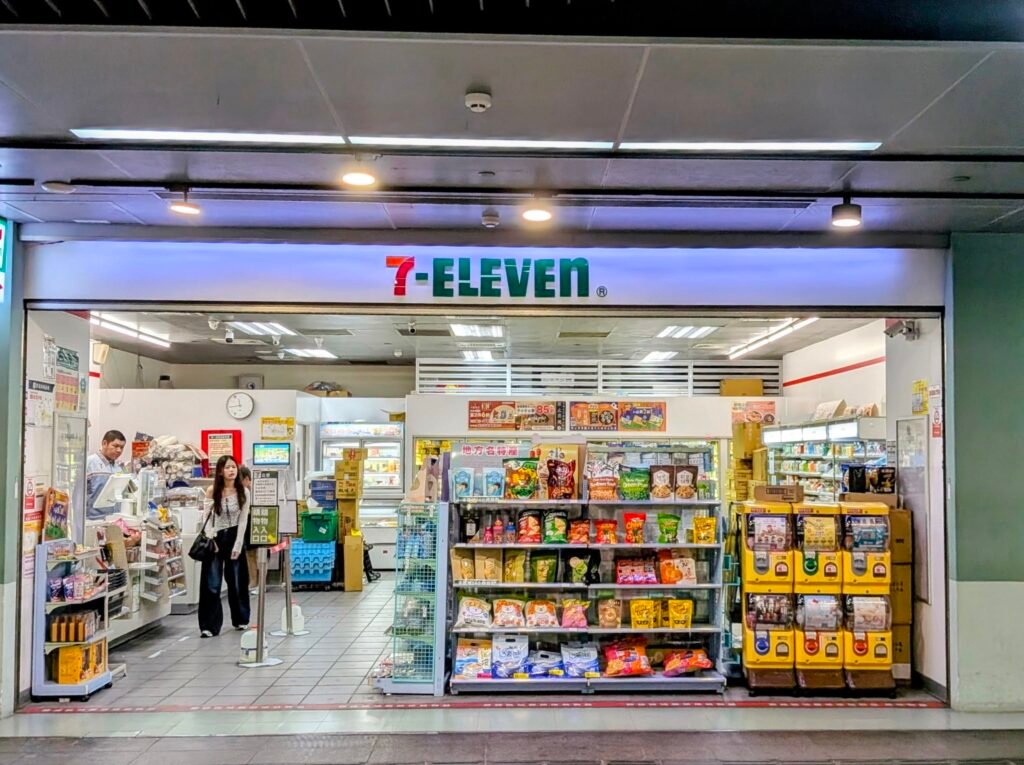
Caoimhin and I walked around the calm streets with their shuttered shops and mostly closed restaurants. A few patrons slurped noodles at a little corner stall, one of the few places open except for the convenience stores, which were all open…it would take more than a super storm for them to shut their doors. Like Japan, the convenience stores (such as 7Eleven and Family Mart) are so much more than a shop -they are places to hang out, air-conditioned oasis and a welcome respite from the heat, places where you can buy pre-packaged food to eat on the premises with microwaves, hot water and ample seating. They have toilets and ATMs, photo-copiers and phone charging stations. Great places to take a break from the saddle.
It was slightly windy but not dramatically so. The temperature was a pleasant 26C, a lot cooler than recently, and the breeze was refreshing…a beautiful day, but the sky was threatening, dark and brooding over the distant mountains. The afternoon darkened with drizzle and gusts but nothing too dramatic, nothing like it might have been if Typhoon Champi hadn’t veered north. Just when we thought it was over, Champi gave a flick of its tail in the late evening, with torrential rain and wind that rattled the windows as if intent on breaking them. But we couldn’t have picked a better place to shelter from the storm: further north and east got the brunt of it, with one death and significant structural damage.
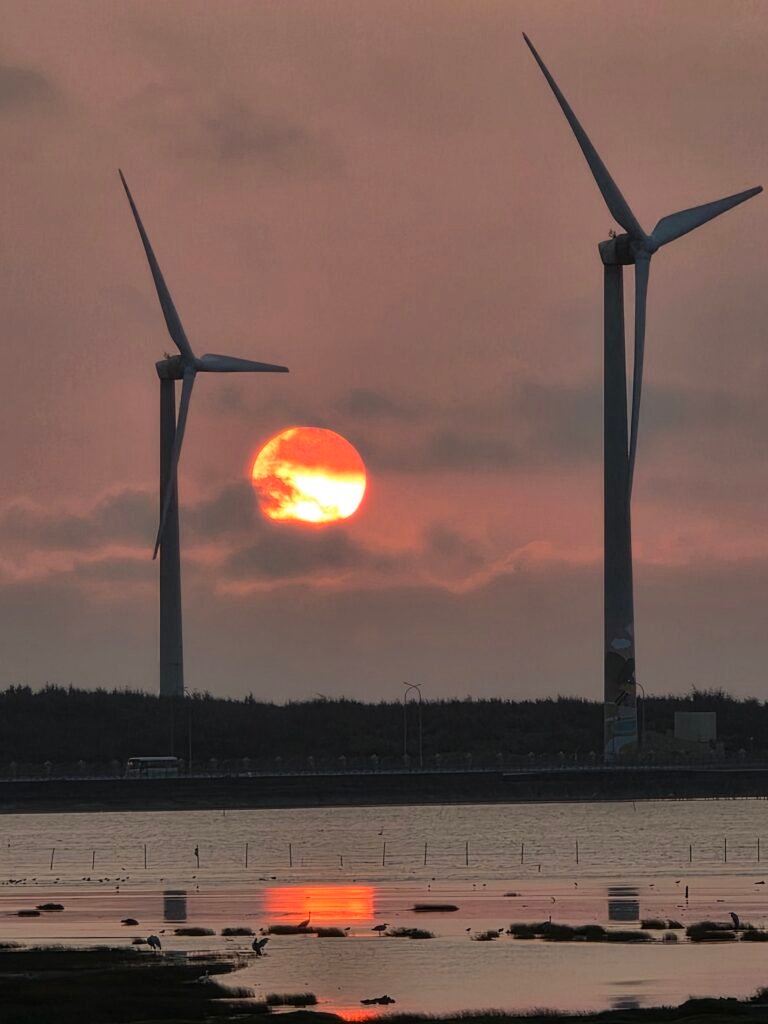
This week has been quite restful, despite the typhoon. It started with Gaomei Lighthouse last Monday where we found an unexpected sanctuary, a place by the sea where we could hear the crickets in the warm night air, instead of the drone of motorbikes and the blaring of buses. It was an oasis of serenity on the west coast. And then onwards to Lukang, a kind of living museum.


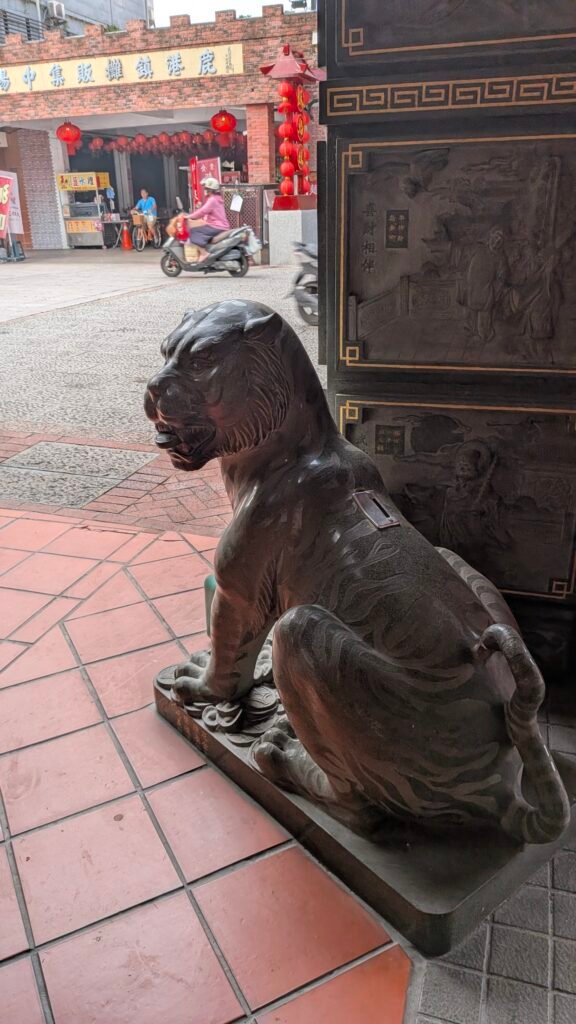
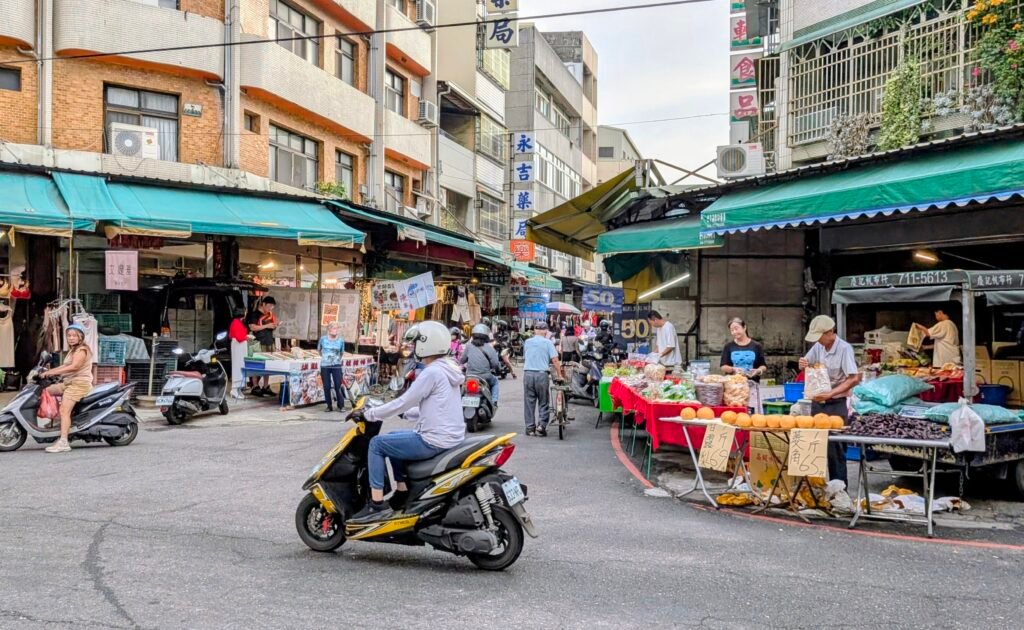
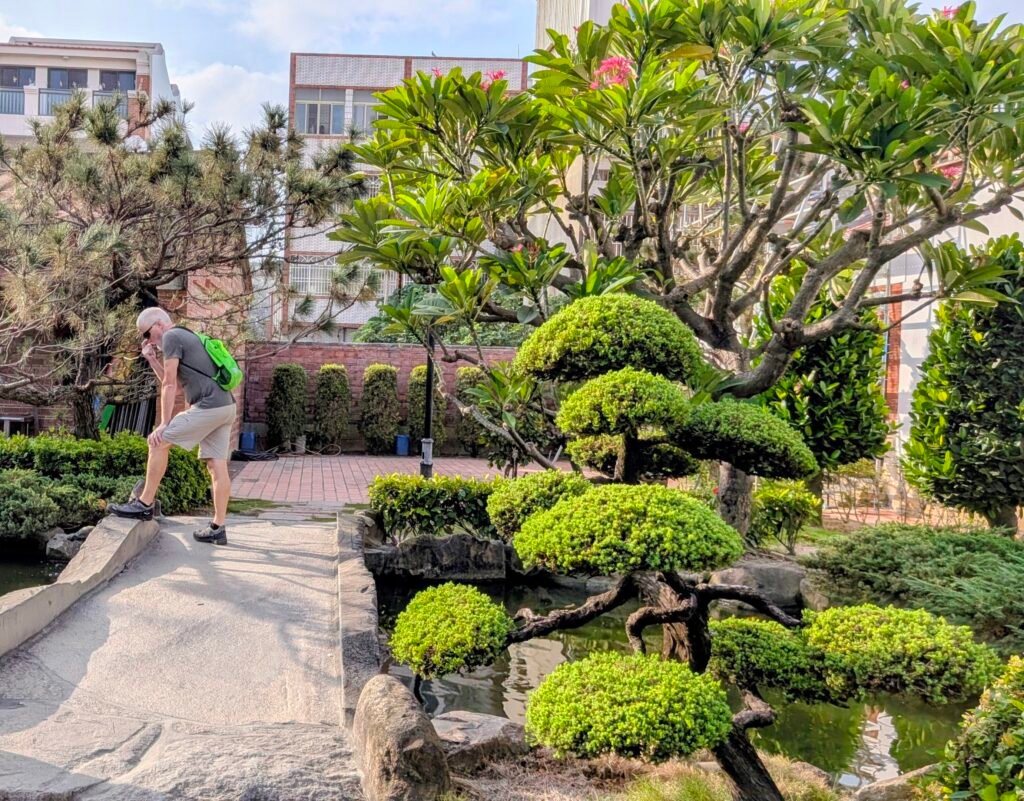
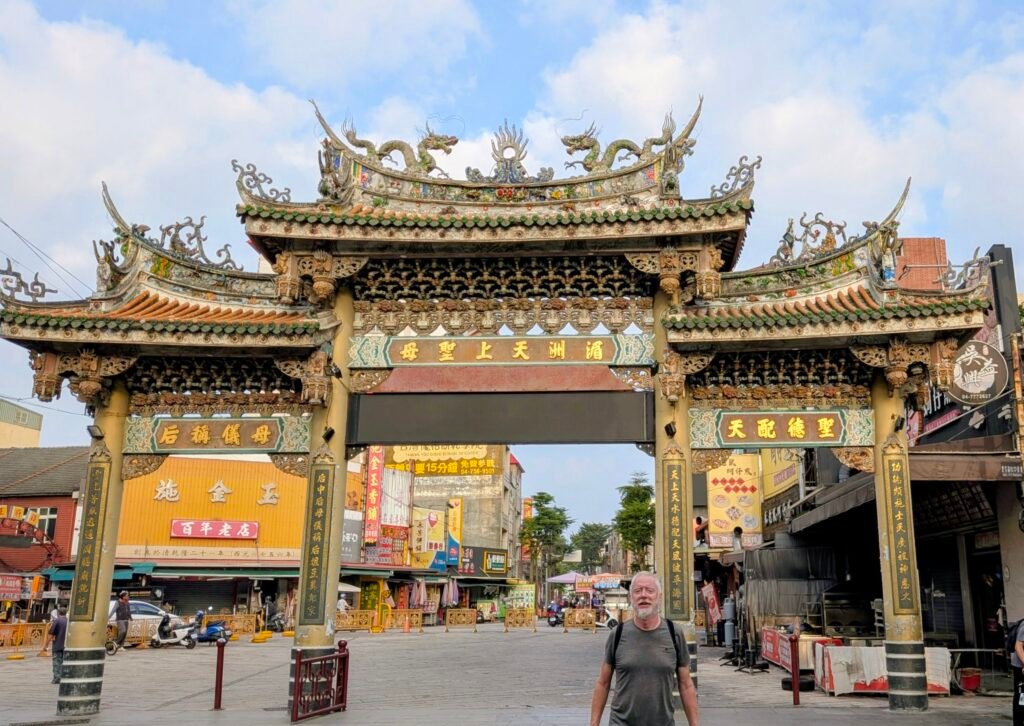
The question in Taiwan is whether there are more convenience stores or temples. Both are ubiquitous. Temples are in the rice fields, in towns and villages, outside factories, most ornately decorated and frequented by the young and old. One place which had more temples than convenience stores was Lukang. Although 90% of this small town was fairly nondescript, the remainder was a charming warren of narrow winding streets with well- preserved houses from the eighteenth-and nineteenth centuries.


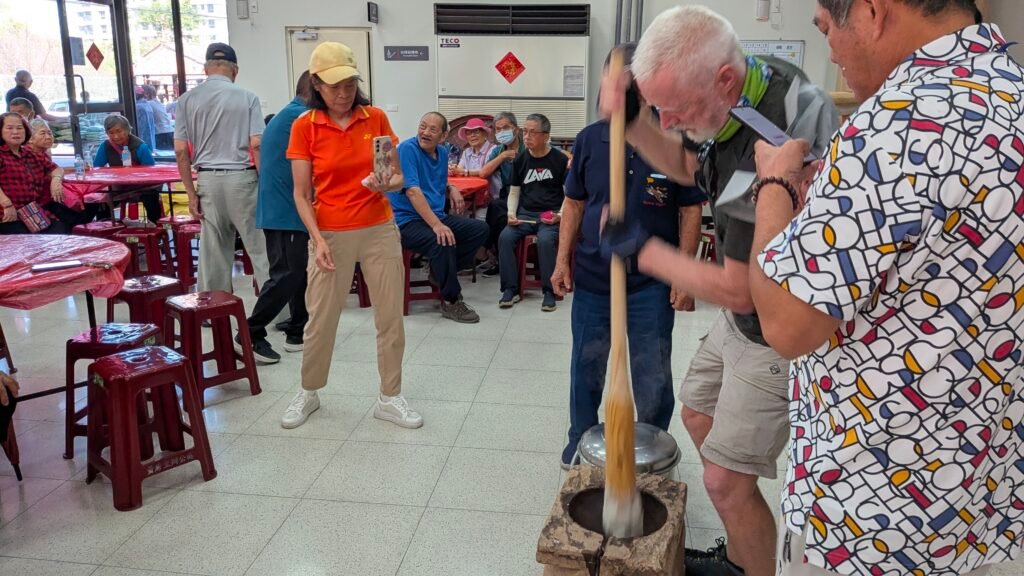
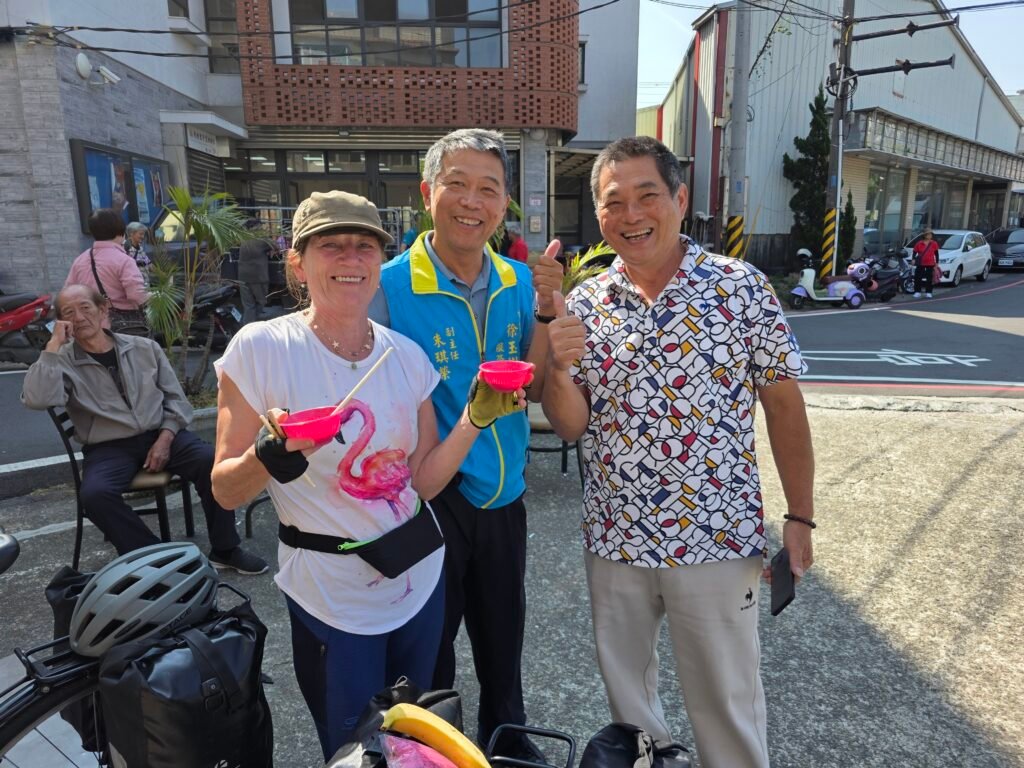
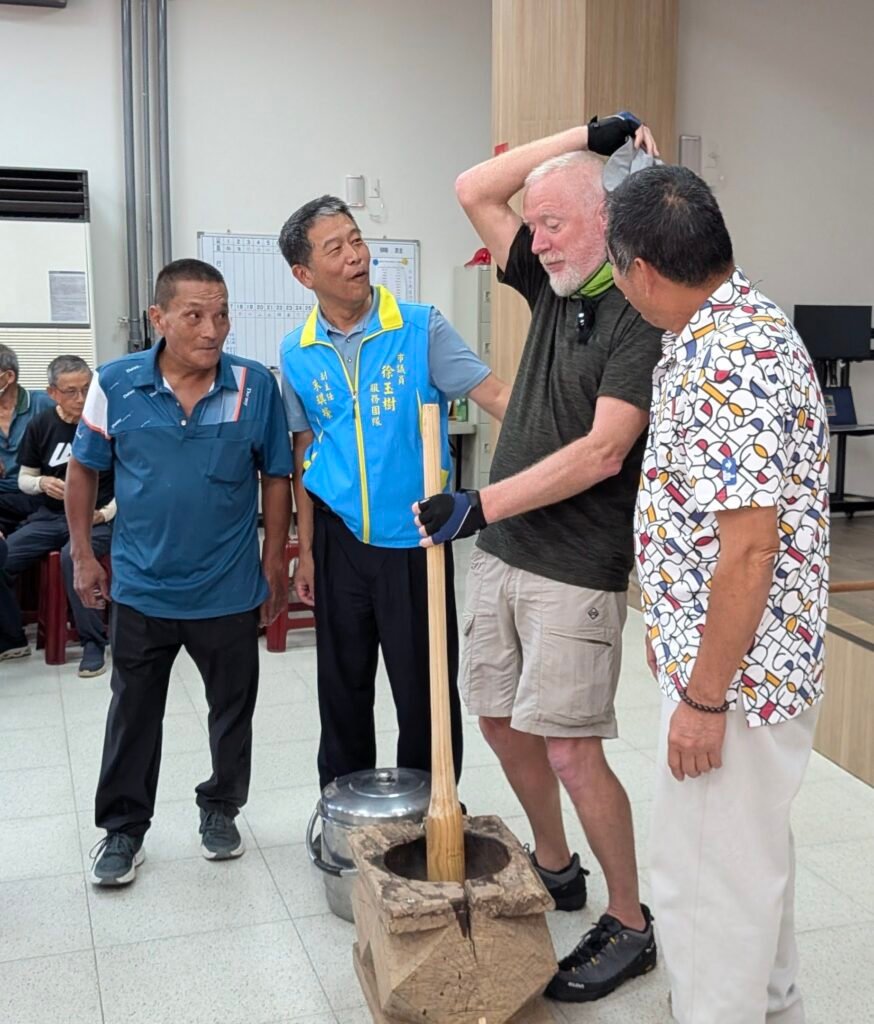
We have met wonderful people along the way. Sitting outside a 7/Eleven convenience store one morning, two men approached us, bearing gifts in pink plastic bowls, the local delicacy of sticky rice balls, glutinous masses covered in sugar and crushed peanuts. Then they invited us into the nearby hall to participate in the process of making it. It was all part of an Active Age morning in a small town. Apart from pounding rice to make it sticky, a strenuous job, most of older adults were playing cards and chatting.
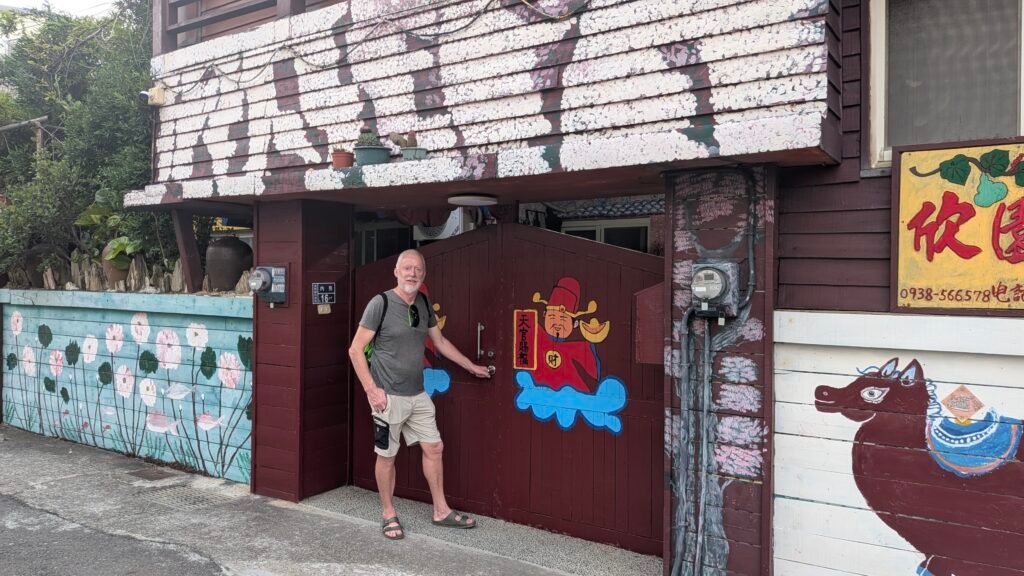
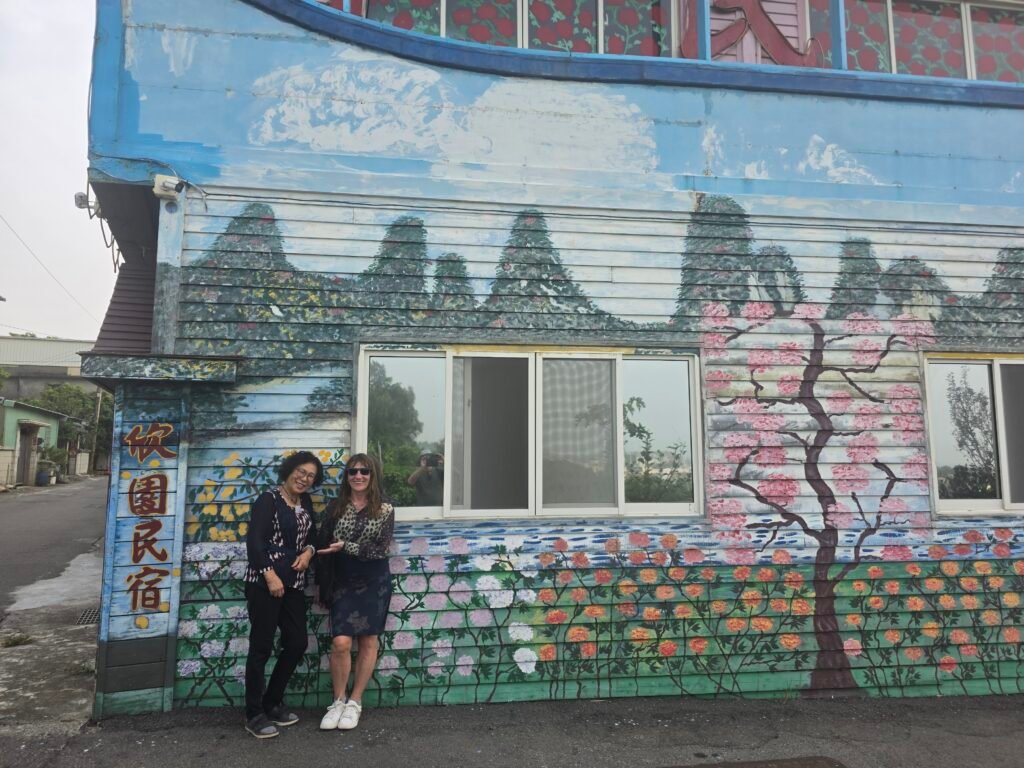
Then there was the woman who loved colour and painting. We sweated into the small town of Baishatun and decided that we couldn’t go any further in the oppressive heat. Unfortunately, there was nowhere to stay on Booking.com, but Caoimhin found a homestay on a Taiwan Tourist website. We dragged ourselves up a steep hill and knocked on the door only to be told that they were full. The woman rang around and eventually found us a place. Our landlady was lovely and welcomed us into her home, a big house where she had painted every wall with flowers and cartoon characters. She gave us dinner and breakfast and turned the TV to English channels for our benefit.

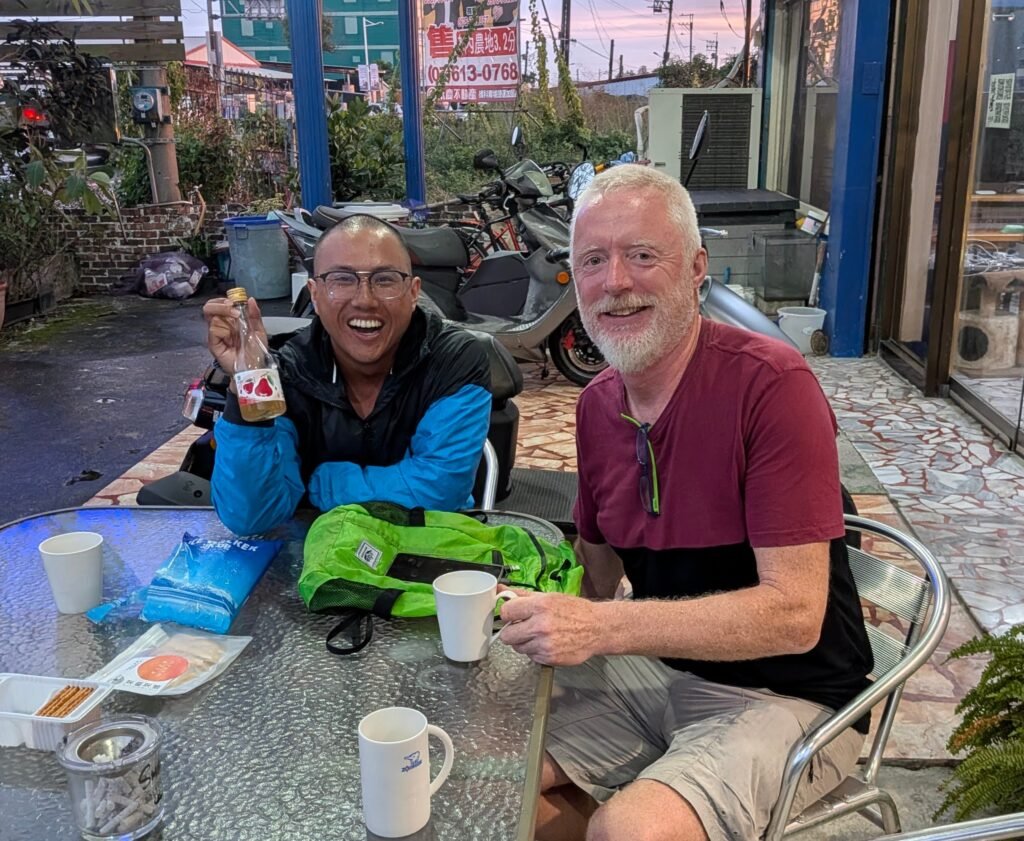
And then there was Young, a Taiwanese in his late twenties, who was walking around Taiwan, deciding what to do with his life. He shared a bottle of local apple wine with us and talked of his fears that China will invade his country.
After our enforced rest days in Kaohsiung, we were eager to be on the road. Cloud cover and drizzle meant that we had our most comfortable cycling day yesterday as we pedalled south. It was 28C but felt as cool as Ireland. Today was similar although hotter, as we made our way to Kenting National Park and the most southerly point in the country. With the mountains on one side and the sea on the other, 62 kms felt relatively easy. It was a glorious day to be discovering the beauty of Taiwan one pedal stroke at a time.

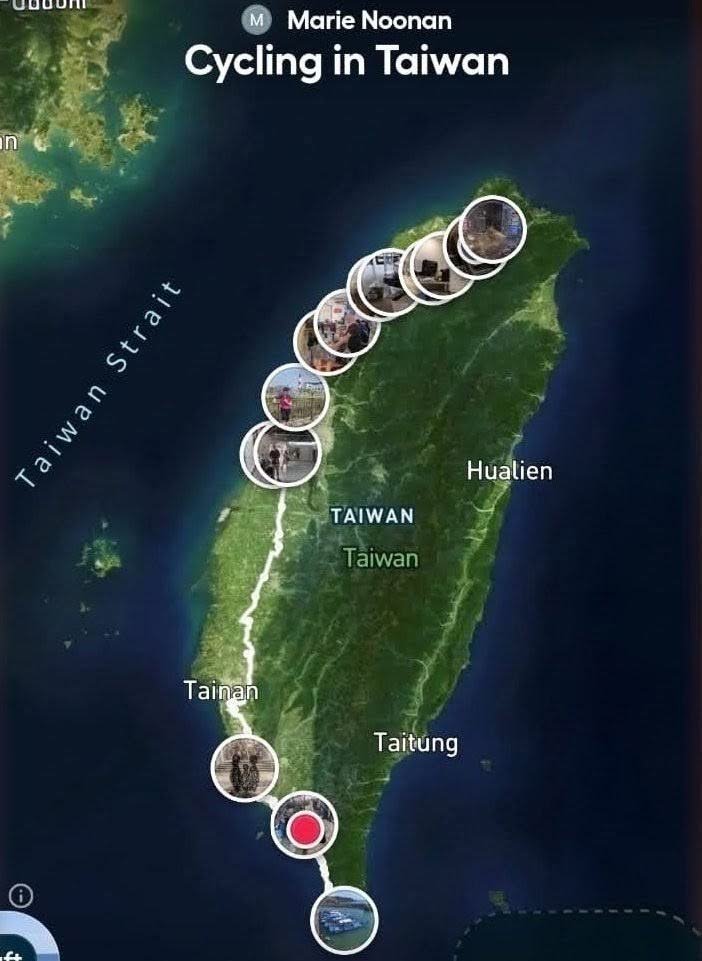
Almost at the most southerly tip


3 Comments
Ciara O Brien
Gosh sounds fantastic Marie. I love the little stories about your meetings with the locals too. Xx
mari.noonan@gmail.com
Thanks, Ciara. Enjoy your week ‘off’…sounds like the weather might be conducive to getting assignments done xx
Derval Corbett
Wonderful updates Marie. You give a wonderful report of your travels. You arevnaking great progress with the cycling. Stay safe and enjoy yourselves.