Taiwan: Island Hoppng
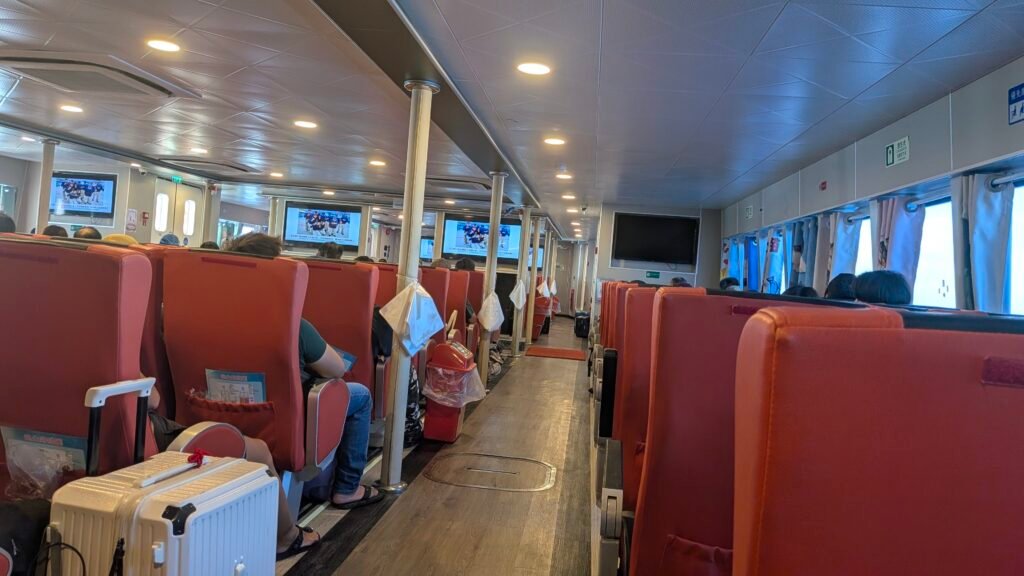
The Green Island ferry lurched into motion, and my stomach heaved with it. Within a couple of minutes, my face was clammy, my head was light, and I was reaching for the many sick bags which were arranged around the large, enclosed ferry – in the seat pockets of the red plastic seats and hanging from the poles in the aisle. I wasn’t the only one who was feeling the effects. An old man in the row in front of us and a young girl were both coughing and retching. Caoimhin, who was totally unaffected, was advising me to look at the horizon, but we were in the middle row, and I couldn’t even turn my head to look out the window. A fifty-minute ferry journey never felt so long.
It could have been worse. Arriving at the ferry terminal in Taitung that morning, we intended to go to Lanyu (Orchid Island), a two and half-hour ferry ride away in the Pacific but we were (wrongly) told that there were no ferries going there that day. We opted to go to the much nearer Green Island instead. Now, as clammy sweat dripped down my face and my stomach churned like a washing machine, I was grateful for that incorrect information and thankful that we hadn’t had time to eat any breakfast. Yes, it could have been much worse.
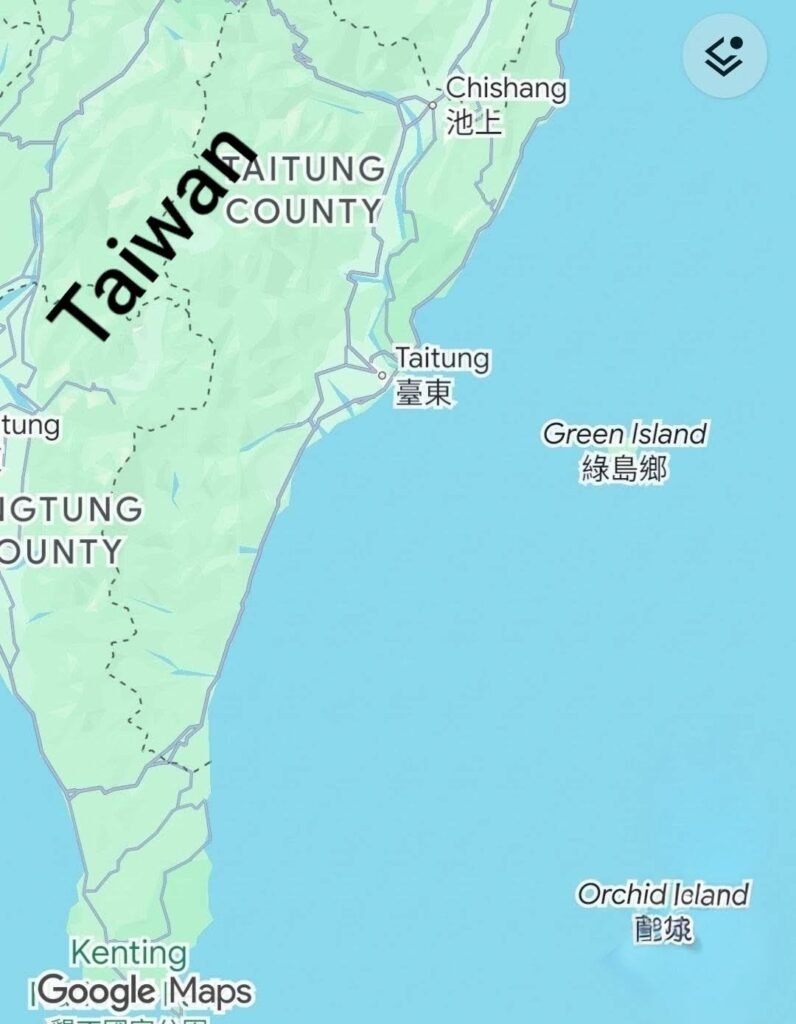
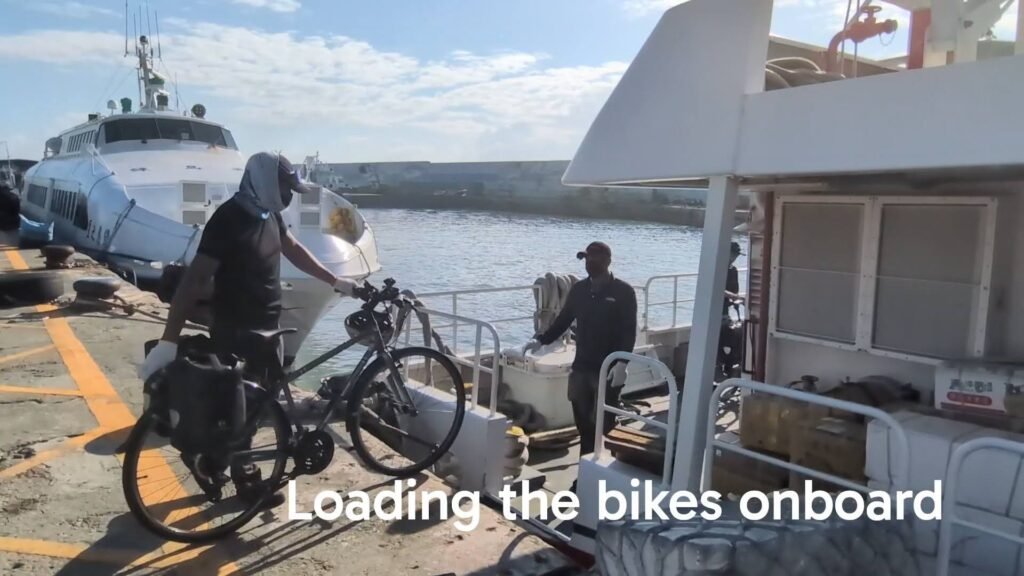
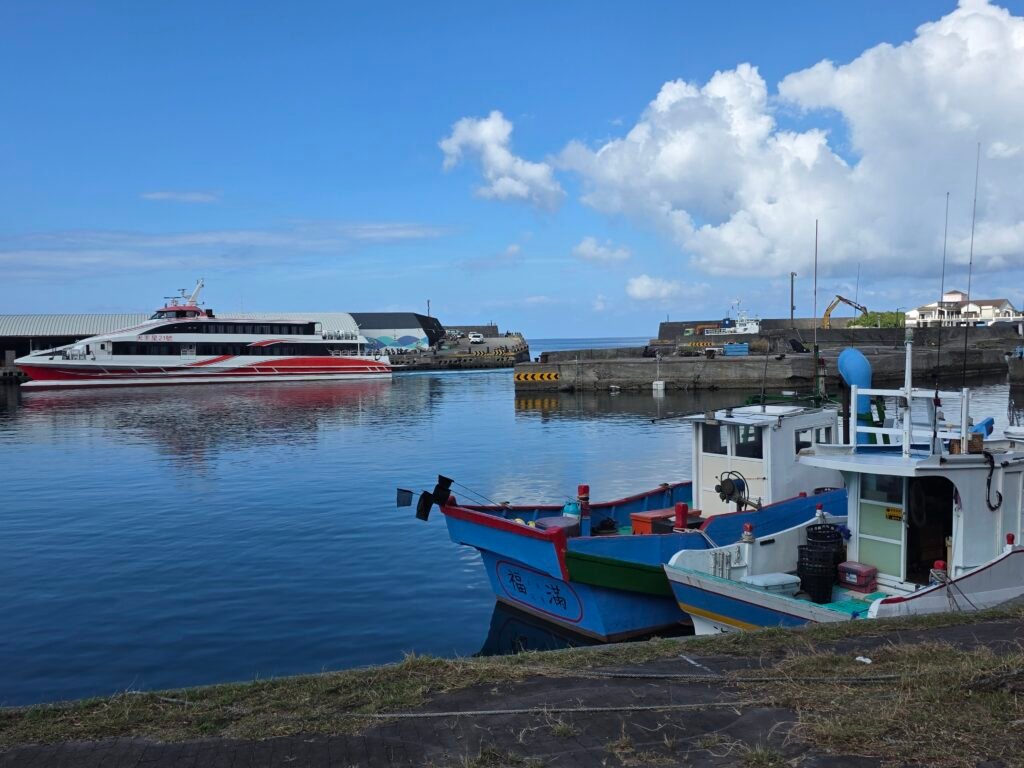
The sunny quayside on Green Island was a noisy mass of humanity with passengers disembarking, others embarking, goods being loaded on for a rapid turnaround back to the mainland. Our bikes, which were stored at the bow of the boat for an extra €3 in cash, were unloaded.
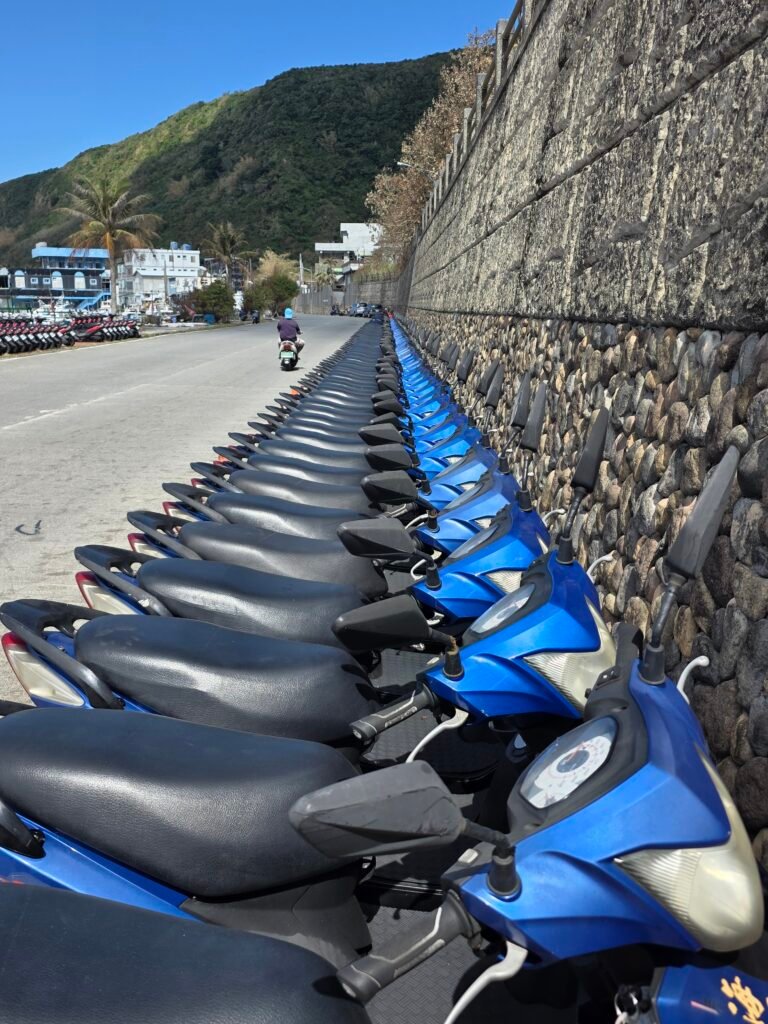
Long rows of motorbikes for rent glinted in the sunlight. The number of vehicles was so staggering that we had to take a photo. We were definitely in the offseason…thankfully…because that volume of scooter traffic on the narrow roads would have been hellish. Away from the action at the harbour, the main town had a sleepy, forlorn feel. Most of the hotels and cafes had their shutters up, with peeling paint and lots of rubble surrounding them.
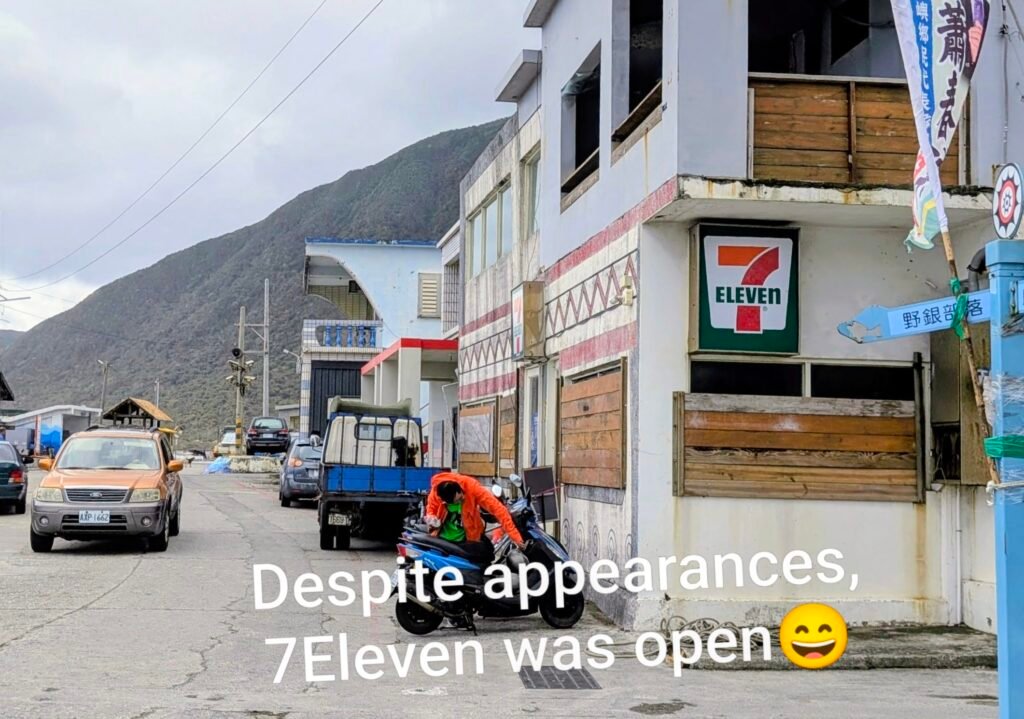
A persistent woman on a red motorbike mined about sleeping in her place. We might have followed her (as we hadn’t any accommodation booked) if I had been feeling better, but I was still wobbly and headachy. Instead, we made our way to the 7Eleven, our refuge of tranquillity and sustenance all over Taiwan and the only place that seemed to be open. Gradually, my normal equilibrium returned, and the head stopped spinning. Motion sickness tablets would be essential for the return trip.
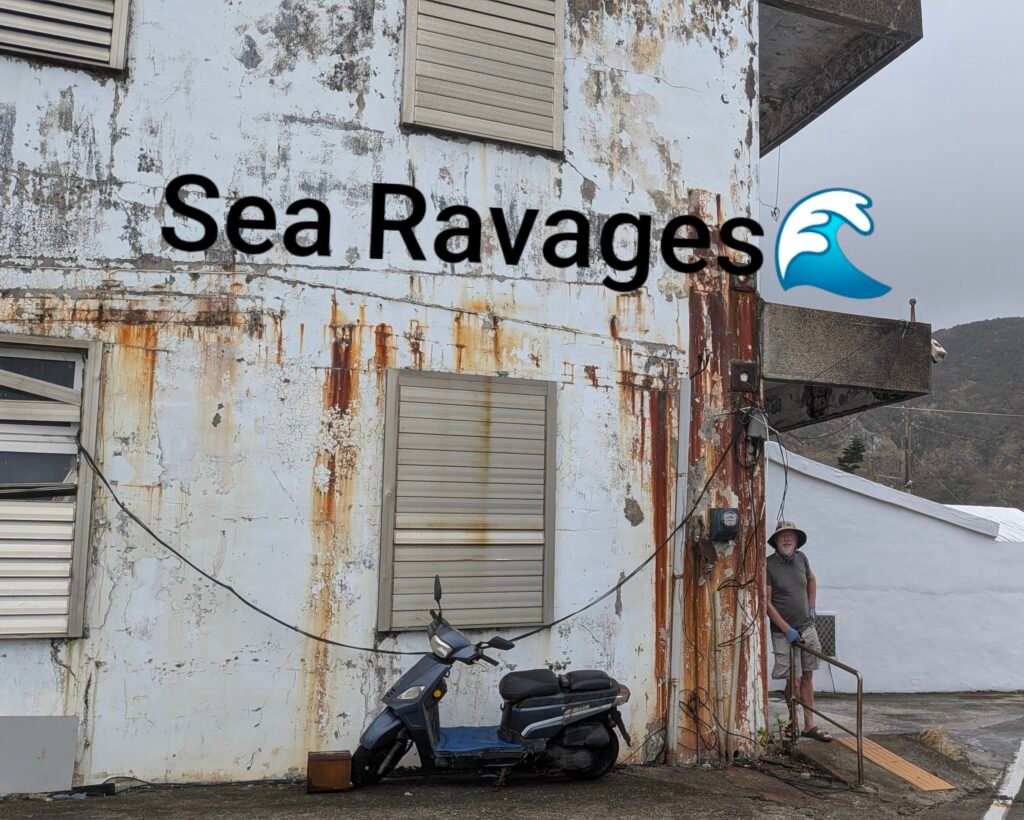
The debris and decay on the island weren’t just because of untidiness, laziness, or the general wear and tear of salt, wind and sea. Typhoon Champi had slammed into the area just ten days before, causing many businesses to close their doors early because of storm damage. November heralds the low season on the islands with blustery north-east winds and turbulent seas.
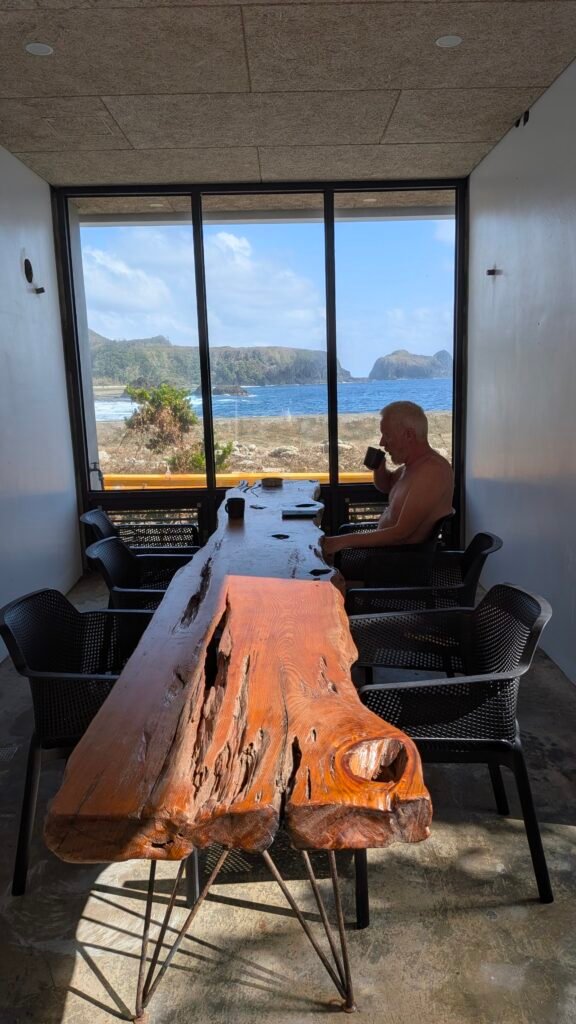
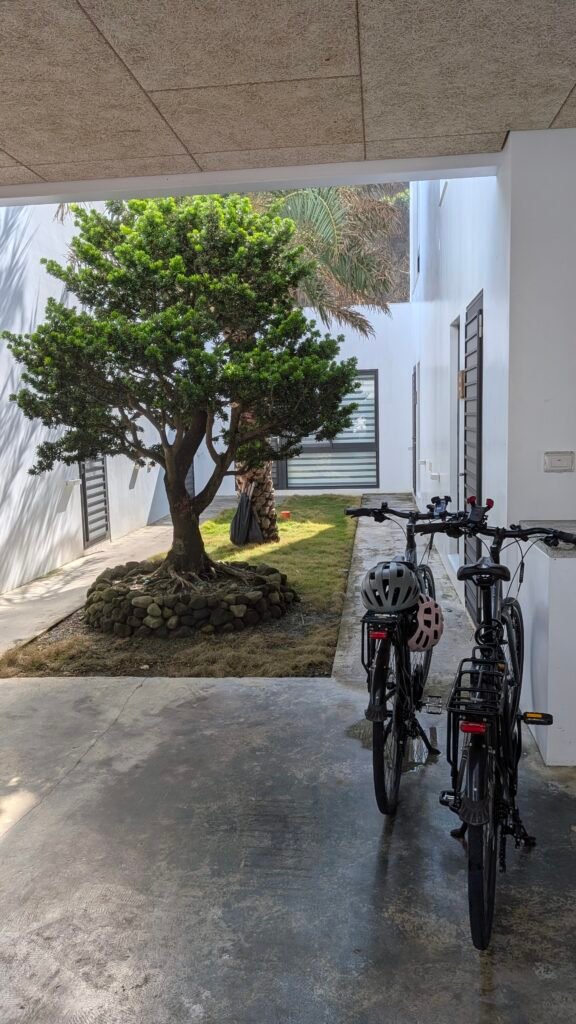
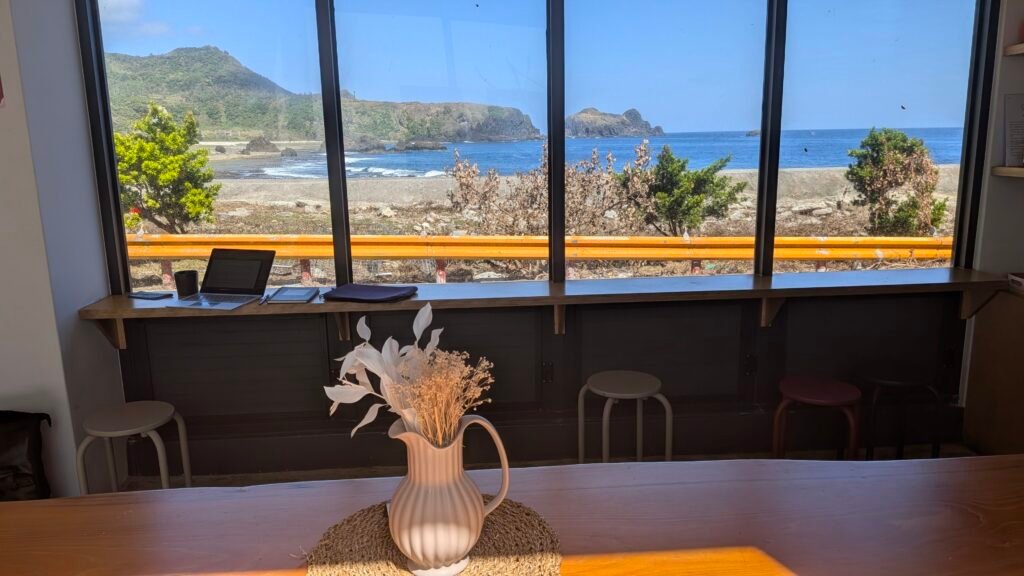
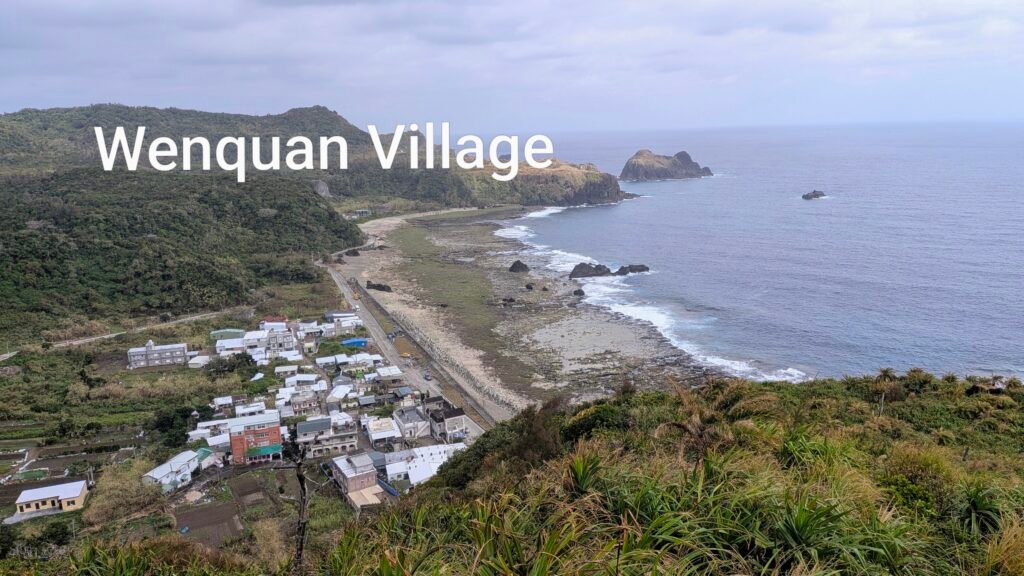
Our accommodation, Langlang Retreat, which we booked in the 7Eleven, was beautiful – a white modern building (built in 2025) with stunning views of the Pacific Ocean. It sustained minimal damage from Champi, unlike the nearby village of Wenquan, one of the worst-hit areas on the island. Diggers worked to clear the shoreline of rubble and boulders and there was lots of evidence of destruction. The hot springs up the road (Zhaori Hot Spring) were so badly damaged that they were also closed.. It was one of only three saltwater hot springs in the world. Volcanic lava heated the water beneath the sea floor, and apparently, you can boil eggs and cook corn in the water…but we didn’t get the opportunity. With so many restaurants and cafes shuttered, we relied on ready meals from the 7Eleven, microwaved in our lovely accommodation with its large common spaces, great for mingling with other guests.


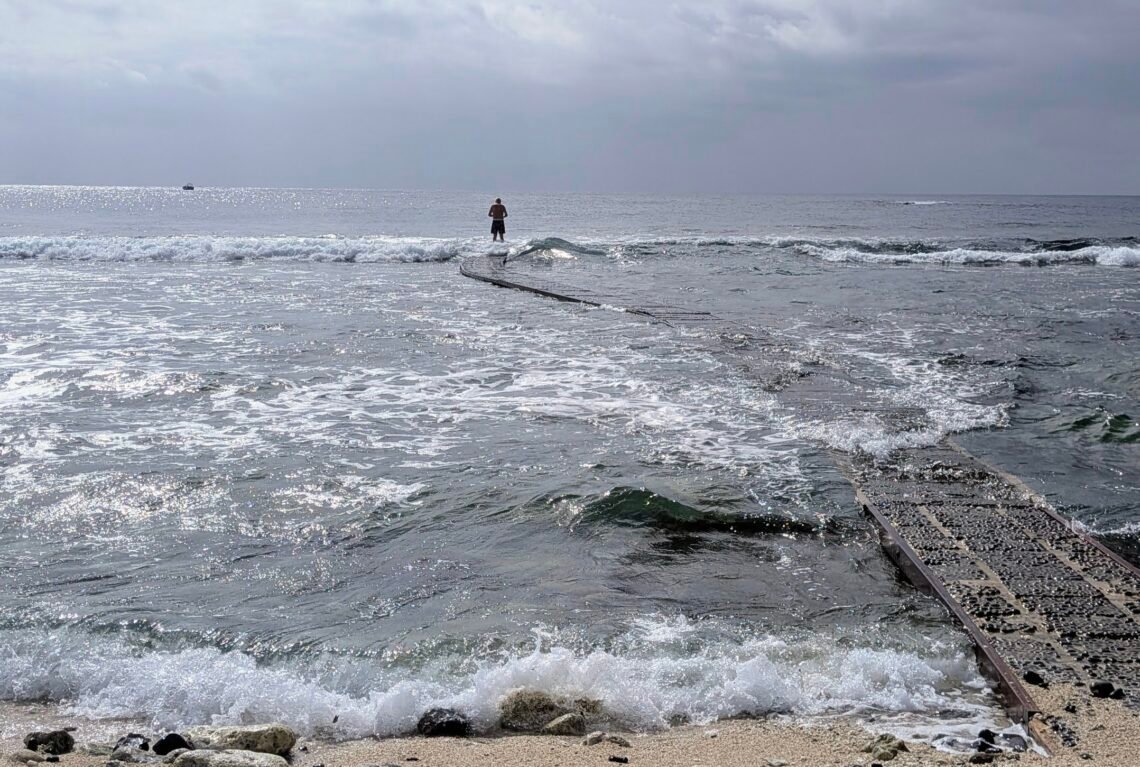
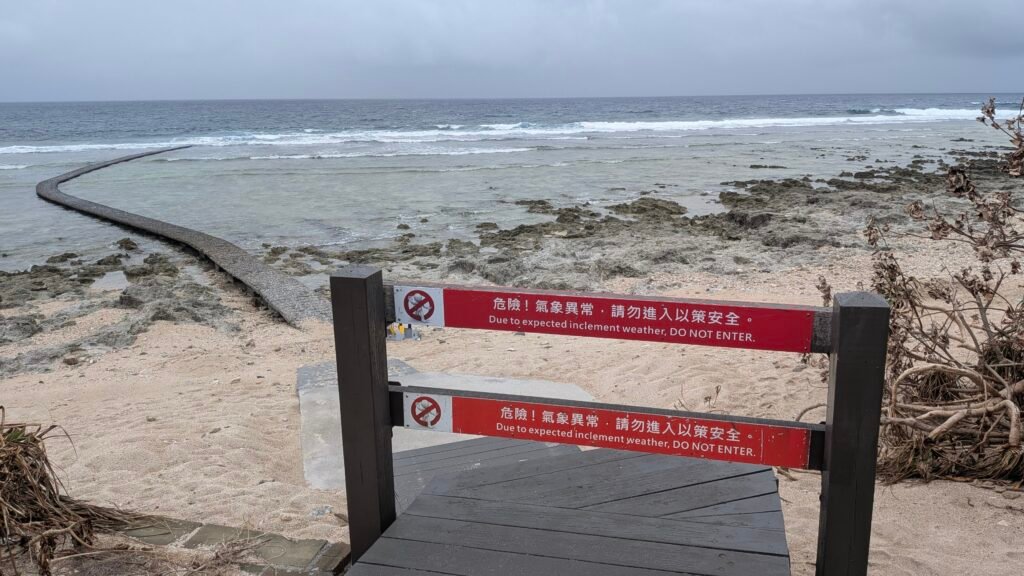
Some of the diving and snorkelling places were also off-limits because of inclement weather warnings, but one area was still open. A concrete path snaked out into the sea to the snorkelling area to prevent damage to the coral near the shore. The water was crystal clear, and the fish were plentiful.

The weather was warm both night and day with highs of 28Cand lows of 24C, but it wasn’t always dry. Warm rain drenched us as we pedalled around the island hills, finding shelter on a building site when the builder invited us in and dusted off a few chairs for us.
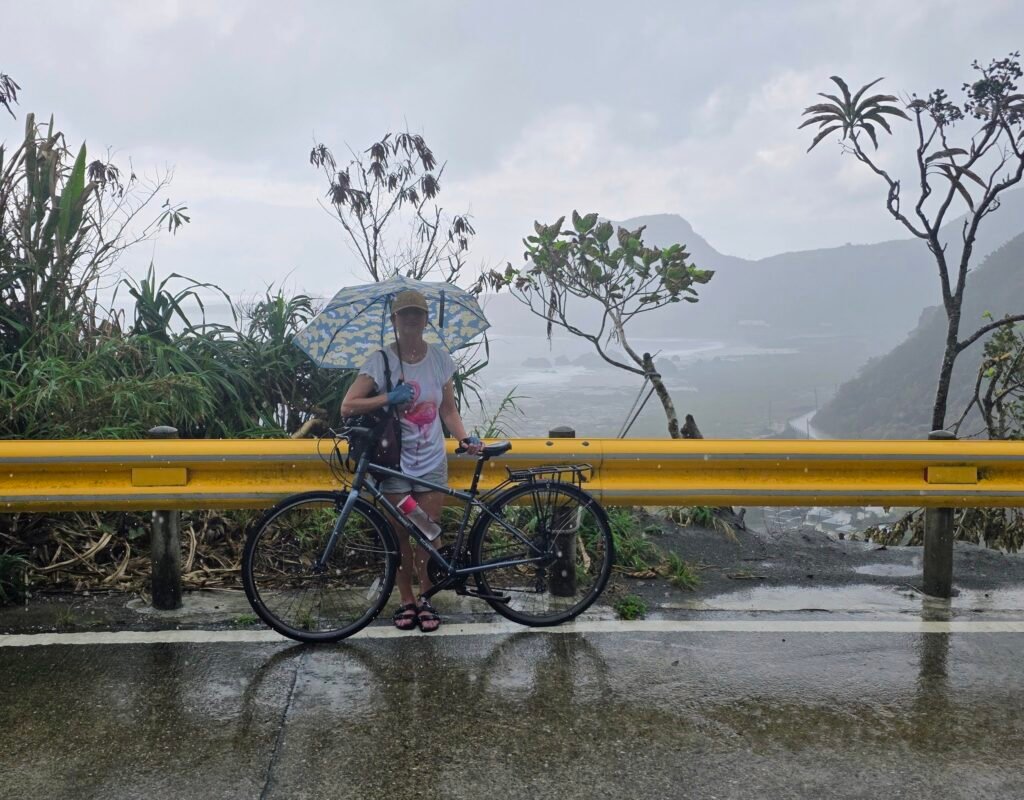
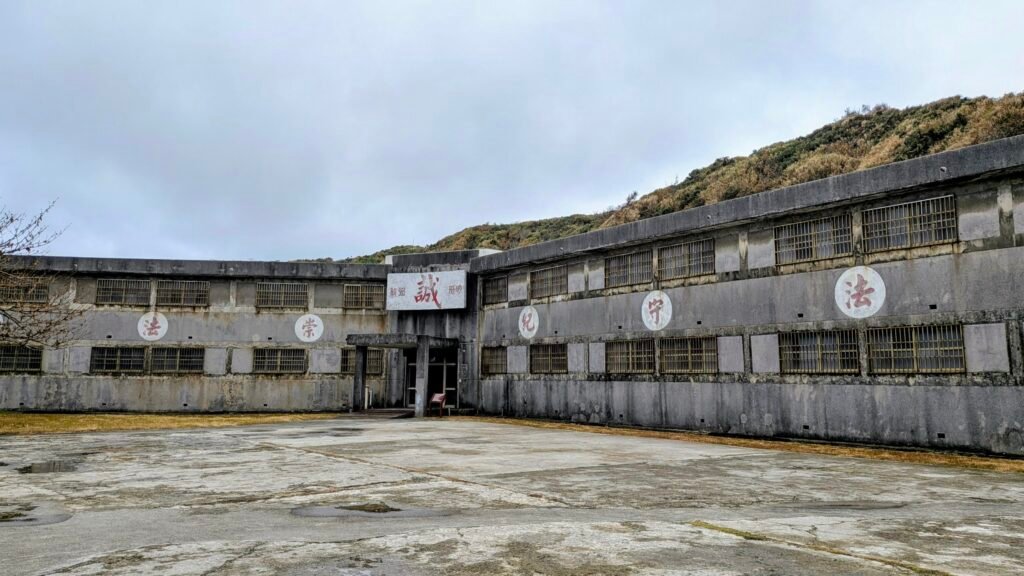
The name Green Island suited the island because it had a vibrant greenness with trees, ferns and bushes but this emerald isle was once a restricted area, a penal colony which housed political prisoners, sent there to be ‘re-educated’ during the ‘White Terror’ (decades of martial law and political repression under the authoritarian rule of the Kuomintang(KMT) from 1949 to the late eighties.)It was a place to be feared, a place that parents threatened their children with if they didn’t behave. Walking around the echoing corridors of the deserted prison cells, we wondered at the blood, sweat, and tears that must have stained the ground in the northern part.

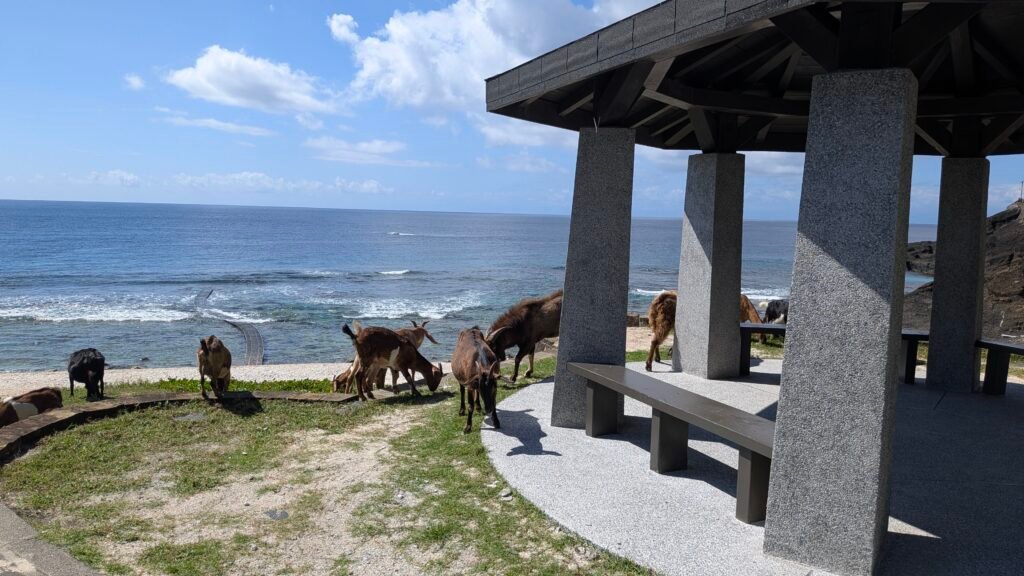
But now, tourists flock to this small island (19km to cycle around the circumference) during the spring and summer, creating employment and bringing cash and presumably noise with the volume of scooters available for rent. While we were there, wild goats wandered the roads; a variety of deer, unique to the island, roamed the mountains, and the warm waters were some of the clearest in the world.

The threat of sea sickness couldn’t quell my love of islands, or the lure of Lanyu (Orchid Island), especially as our return journey from Green Island was fine, thanks to the wonder of medication.
The Lanyu ferry looked large, modern and very similar to the Green Island boat, but inside, the seats were shabby. There was more luggage than people with the back rows of seats piled high with boxes, crates and an assortment of bags. Lanyu is sixty-five kilometres from the mainland, and virtually everything has to be transported there. The ferry operators cut the schedules to three or four trips per week during this off season, depending on the weather. The journey is notoriously rough at any time of the year. Although the ferry was already bobbing and creaking in the harbour, the journey was relatively smooth, and my stomach behaved despite my fears.

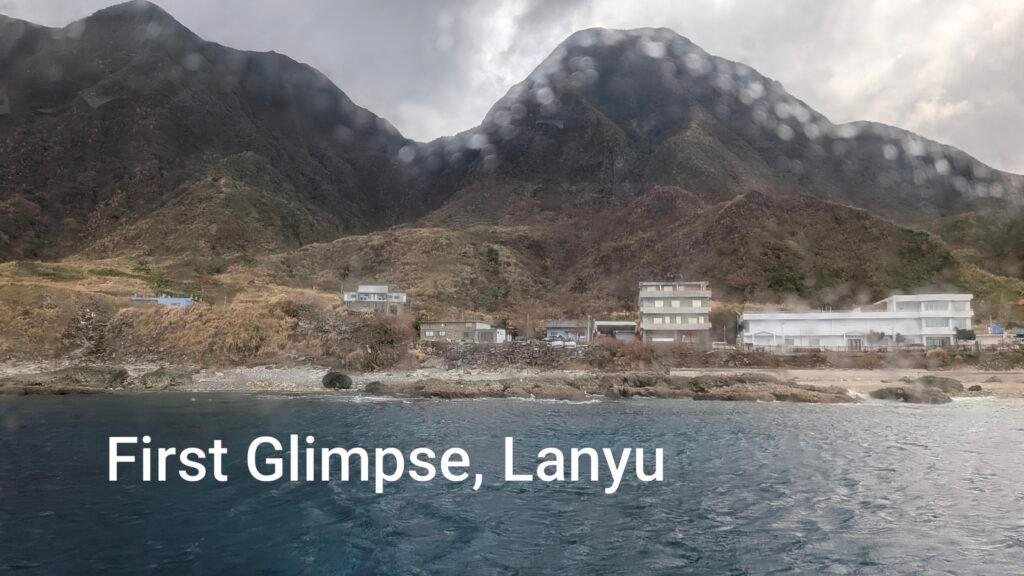
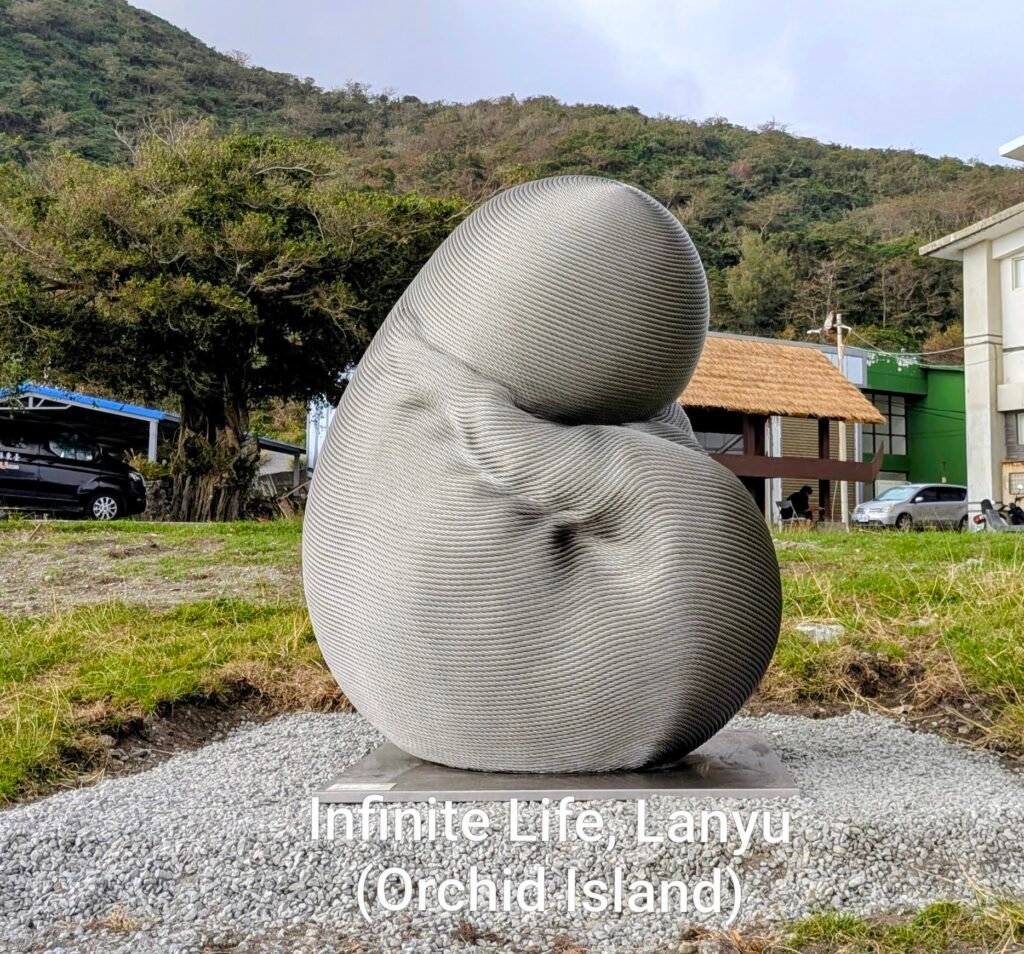
Our first glimpse of Lanyu was forbidding, a dark, hulking presence through the salt-encrusted ferry window, a few houses clustered in the port in the shadow of high mountains. Cycling uphill, we stopped to make a plan, and an old man sitting at the side of the road welcomed us and offered us a drink from a bottle he clutched to his chest. The sky darkened, and in sudden, torrential rain, we sought our usual refuge, the nearest 7Eleven, where many shelves were bare, waiting to be stocked by supplies from the ferry.
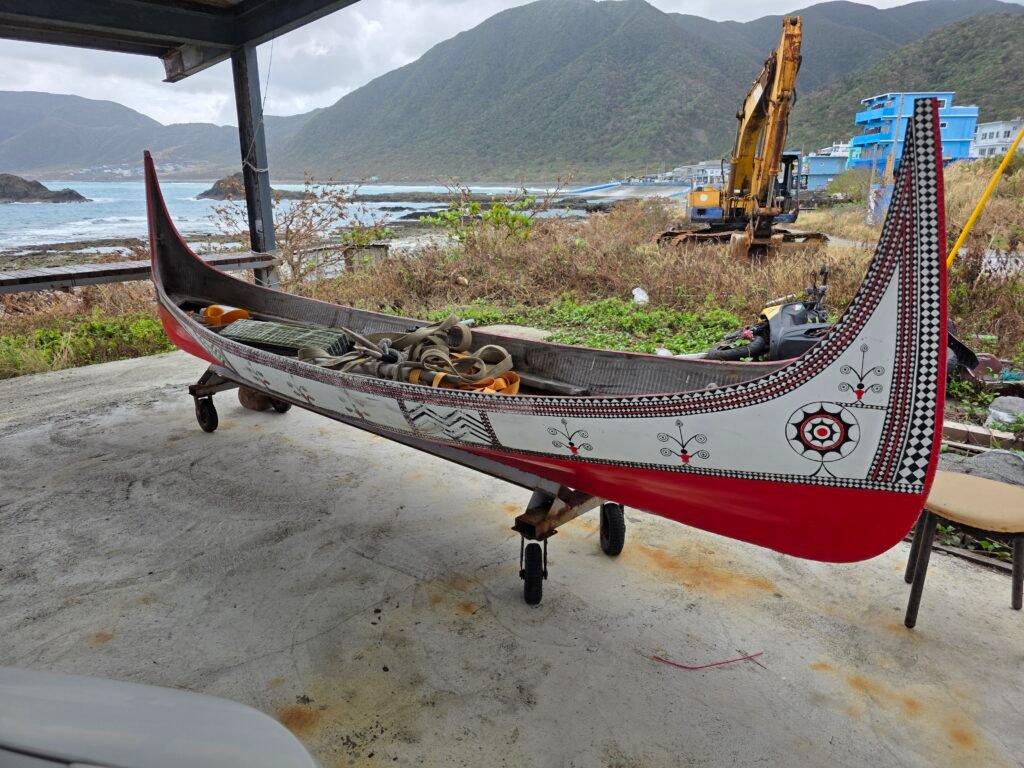
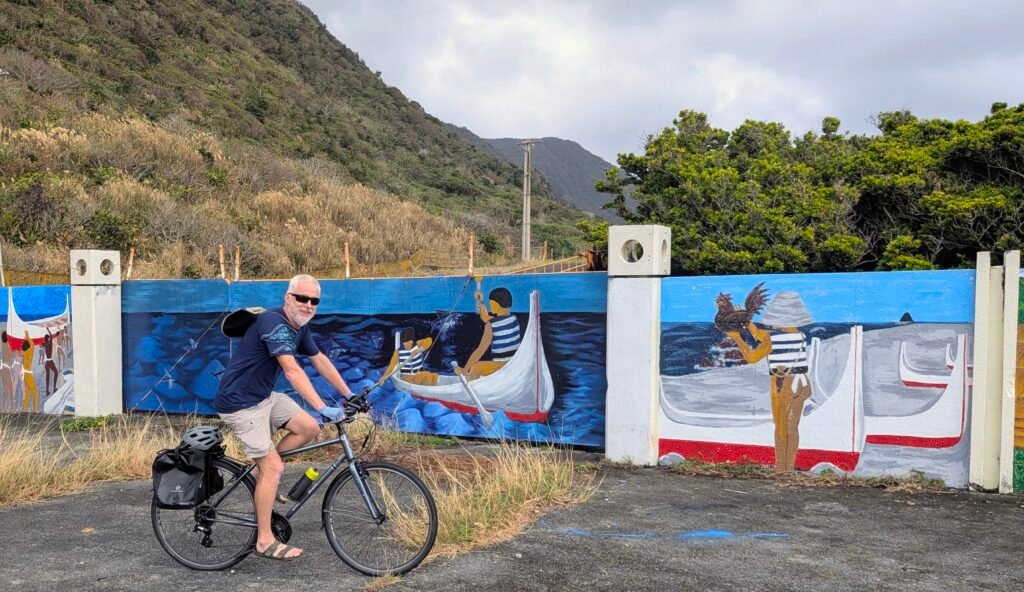
Our accommodation was basic and more expensive at €60 a night than what we usually pay, but we have sea views and a balcony in a little village about 7kms from the ferry. Lanyu felt different to Green Island, less touristy, far more remote and friendlier. It is home to the Tao, an indigenous people deeply tied to the ocean with traditional craftsmanship and seasonal customs. Their calendar revolves around the migration of flying fish (usually March/April). Hand-carved boats (Tatala), which are built without nails, are traditional red, white, and black plank boats, painstakingly assembled from dozens of pieces of wood and carved with geometric eye patterns (the eye of the boat) to ward off evil spirits and ensure safe voyages. Builders construct traditional Tao homes partially underground using coral rock and heavy timber to shield against intense typhoons and tropical heat.

One of the things that surprised us was that there is a nuclear waste depot at the southeastern tip of the island. Construction started in 1978 under the pretence of a fish-cannery project and began receiving waste in 1982 until shipments stopped in February 1996. Built without the consent or informed knowledge of the indigenous people, it has triggered decades of local protests and environmental concerns.
A bumpy ribbon of asphalt between the mountains and the sea took us around on the bikes, a slow 37 kms of undulating terrain and dramatic scenery. A troop of barking dogs greeted us as we pedalled through each of the six villages dotted around the coast with election flags flapping in the stiff breeze. Most of the villages were ramshackle…Typhoon Champi also recently battered this island, although not as extensively as Green Island. A typhoon in 2023 with the strongest wind speeds ever recorded in Asia tore the roofs off buildings. Perhaps that was what happened to the roofless church.
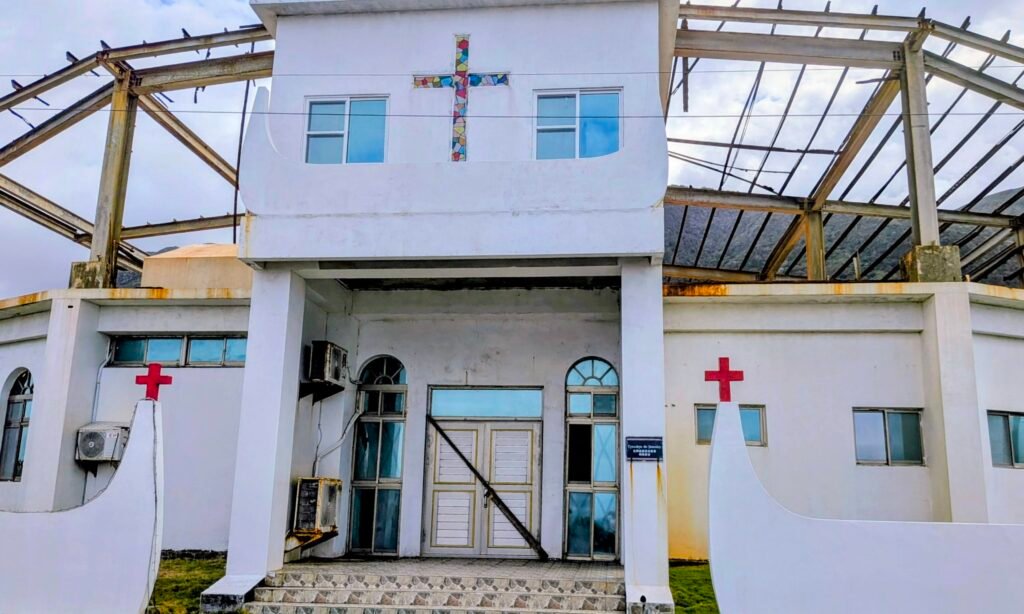


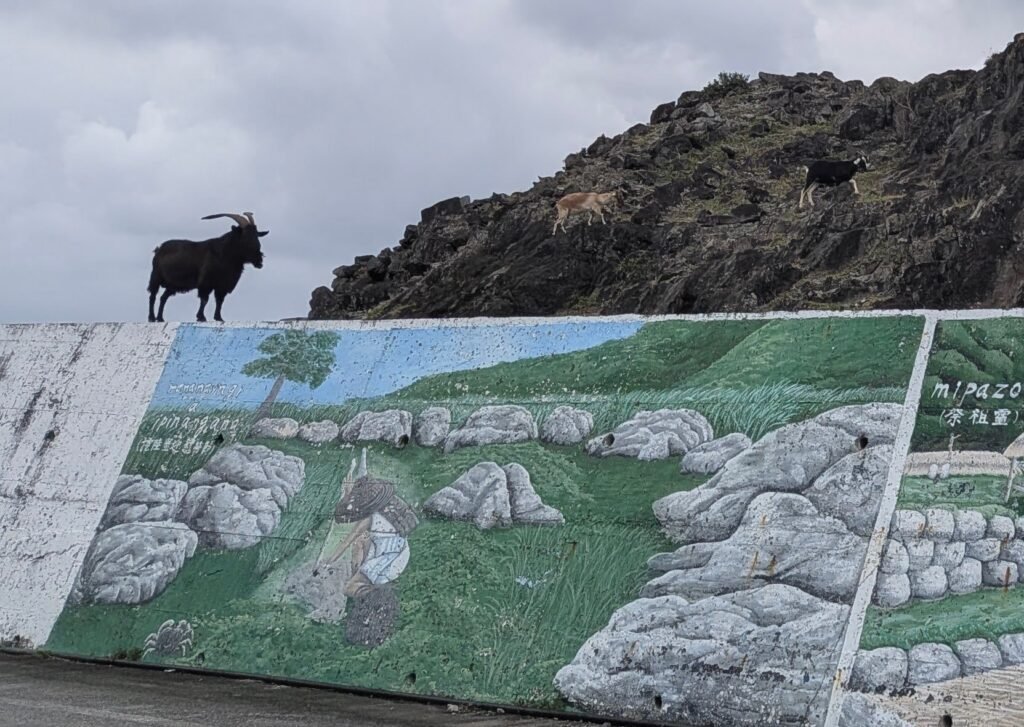
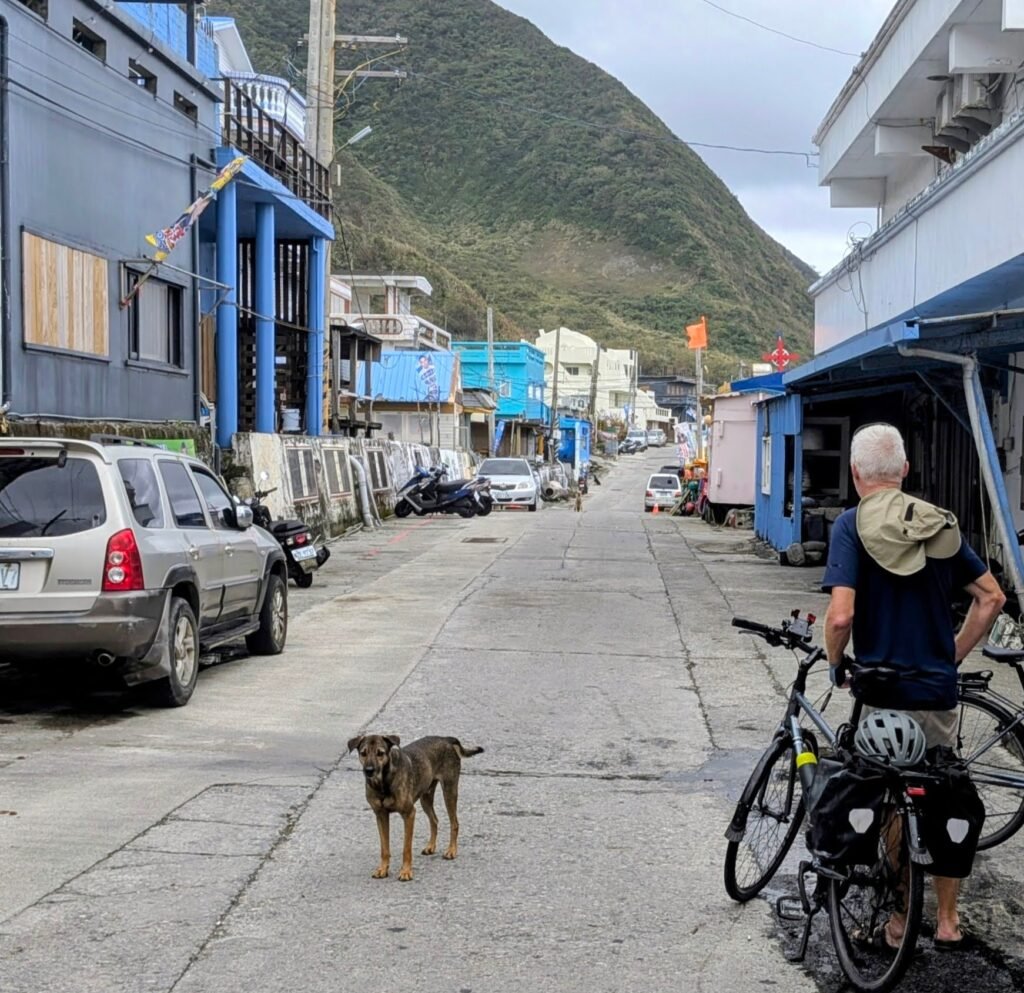
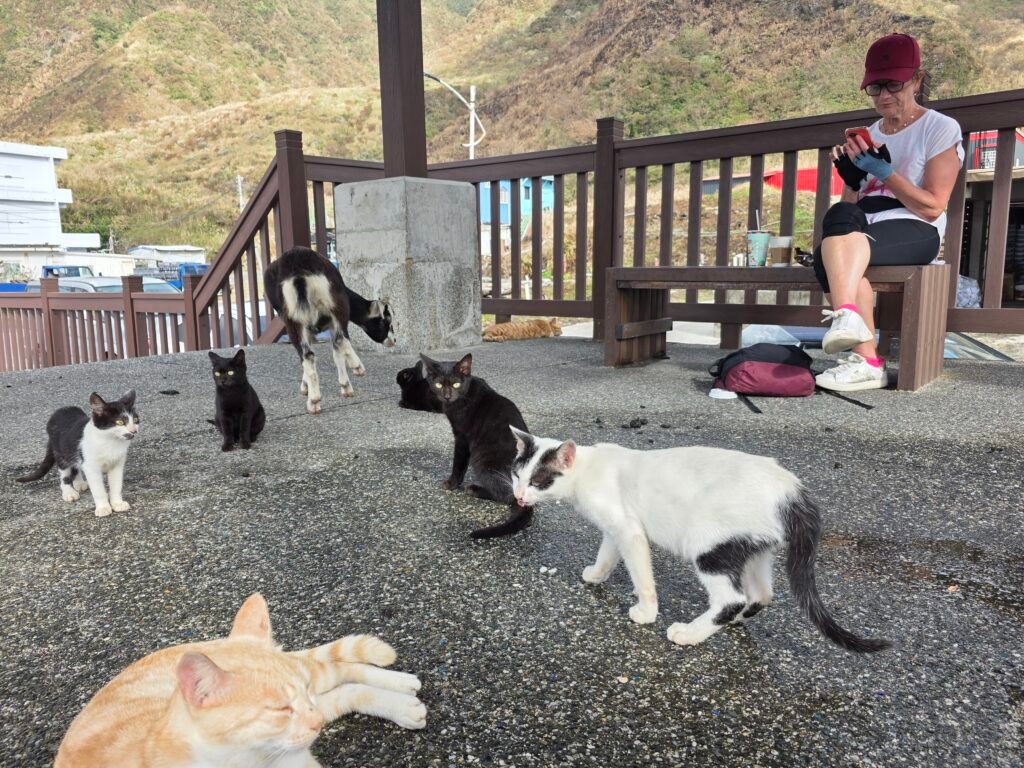
It takes a very resilient people to live in such an environment. It was an island of dogs and cats, goats and Christian crosses, a place of hardship and boats, art and community. Islands may appear separated by the sea, but the sea is also what connects them to each other and the mainland. But in many ways, we were reminded of home from the dramatic scenery, the constant threat of rain and the wandering goats…we could have been home in Passage East😄
On Sunday morning, there was a knock on our door. Using Google Translate, our landlord told us that the ferry we had booked for Monday was cancelled because of the impending weather forecast. The next one was Thursday…maybe…but there was an unscheduled boat departing in thirty minutes. Throwing clothes into our bags, including the wet ones, which were drying on the balcony, we packed hastily and loaded our bikes onto the back of our host’s dilapidated pickup. The truck groaned up the hills, but we made to the port with five minutes to spare. I swallowed down my motion sickness tablet and regretted the chocolate I had been eating all morning as I worked on this blog. Sure enough, the rough seas had me puking several times into the sick bags.., a journey to remember, or maybe best forgotten. Prepare for the unexpected on the islands!


You May Also Like

Malaysia/Thailand: Monkeys Everywhere
Japan: War and Peace
