Taiwan: Slow Pedalling in the Rift Valley
They told us that cycling in eastern Taiwan would be magical, much better than the industrialised west coast. They promised rolling hills, quiet country roads with rice fields, tea plantations and farming villages. ‘You have to go through the Rift Valley for beautiful scenery and clear air.’
Well, I guess all the truck drivers, the cement lorries, the scooters and buses were told the same thing. True enough, there was farmland in the expansive valley between the two mountain ranges that run down Taiwan’s spine, but I could hardly lift my eyes to look with the lorries barrelling past. Although we were used to cycling in traffic at this stage and the road was wide (the No 9 Highway), the almost constant roadworks pushed us into the centre of the road. The winds that compelled us to leave Lanyu (Orchid Island) a day early because of ferry cancellations were also energetic on this inland route, tunnelling down through the valley. Unfortunately, they were against us, forcing us to pedal hard even when going downhill.

Pedalling under telegraph poles and pylons into the town of Chishang, we were questioning everything we had been told, including that the area was completely free of overhead power lines and utility poles. The expected bucolic vibes were missing.
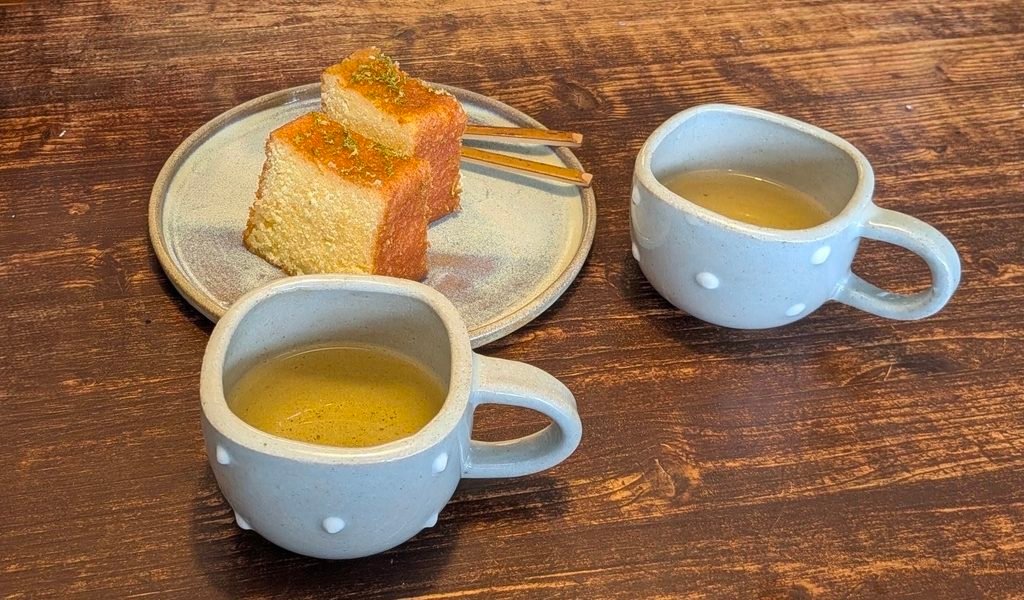
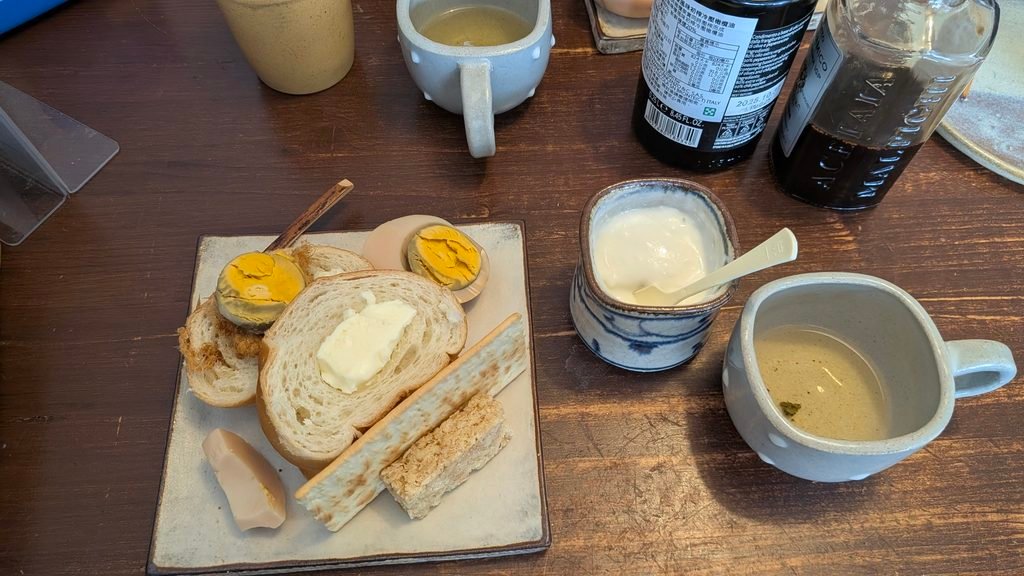
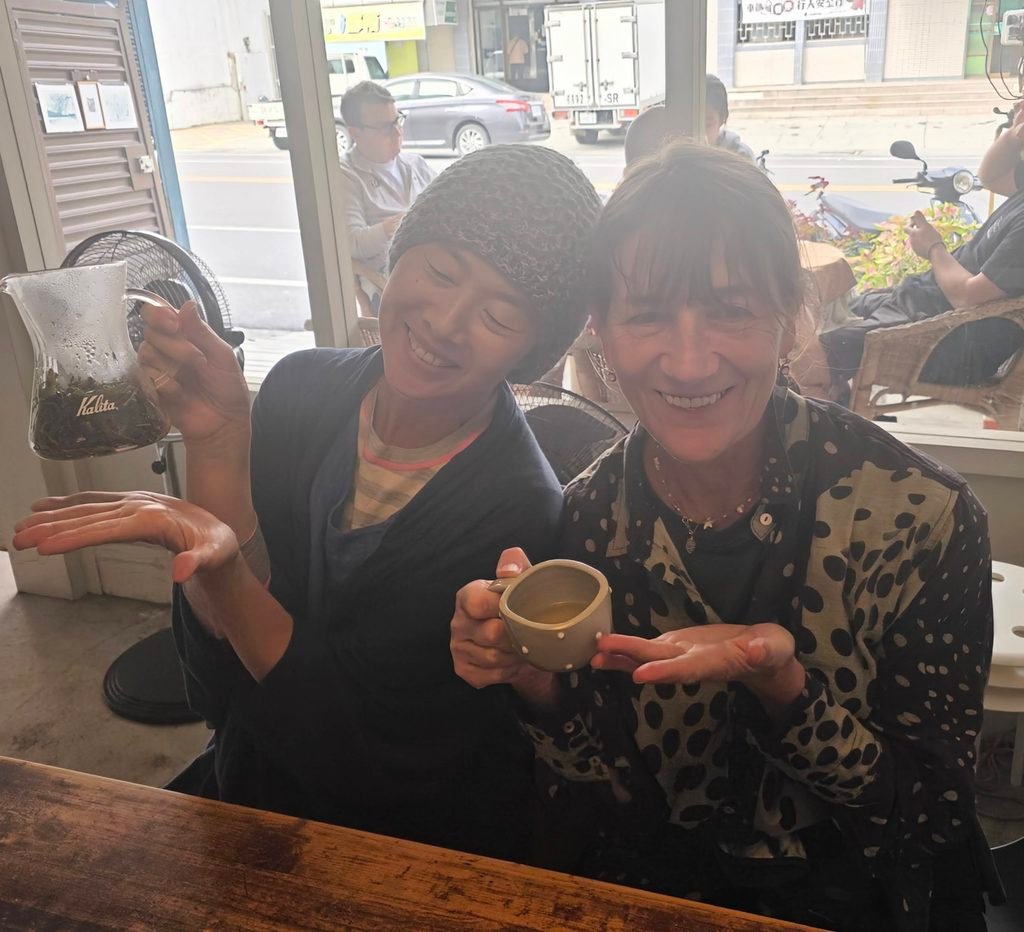
Chishang looked similar to a lot of towns with the usual plethora of local businesses – food stalls, garages, small shops, a couple of 7Eleven convenience stores. The coffee shop that we were aiming for was closed and so was the next one. We ended up in a chaotic little place run by a husband and wife duo, that looked as if it had only opened its doors for the first time a few minutes before. Plastic bags and jars, plates and boxes covered a long table. A highly excitable woman waved a map of the world in my face, indicating that I should write our names and where we were from on it. She squealed and clapped her hands when I said ‘Ireland’. She loves Dermot Bannon and watched his shows in Chinese, scrolling through her phone to show me. It was clear that none of Dermot’s fondness for bright ordered spaces had rubbed off on her. Our breakfast was slow to arrive, came in bits and pieces and was eye-wateringly expensive (about €24) and not even very filling although the lemon cake was delicious. The woman waved us off, jumping up and down and asking us in Chinese to give her love to Dermot, which we translated with Google Translate.
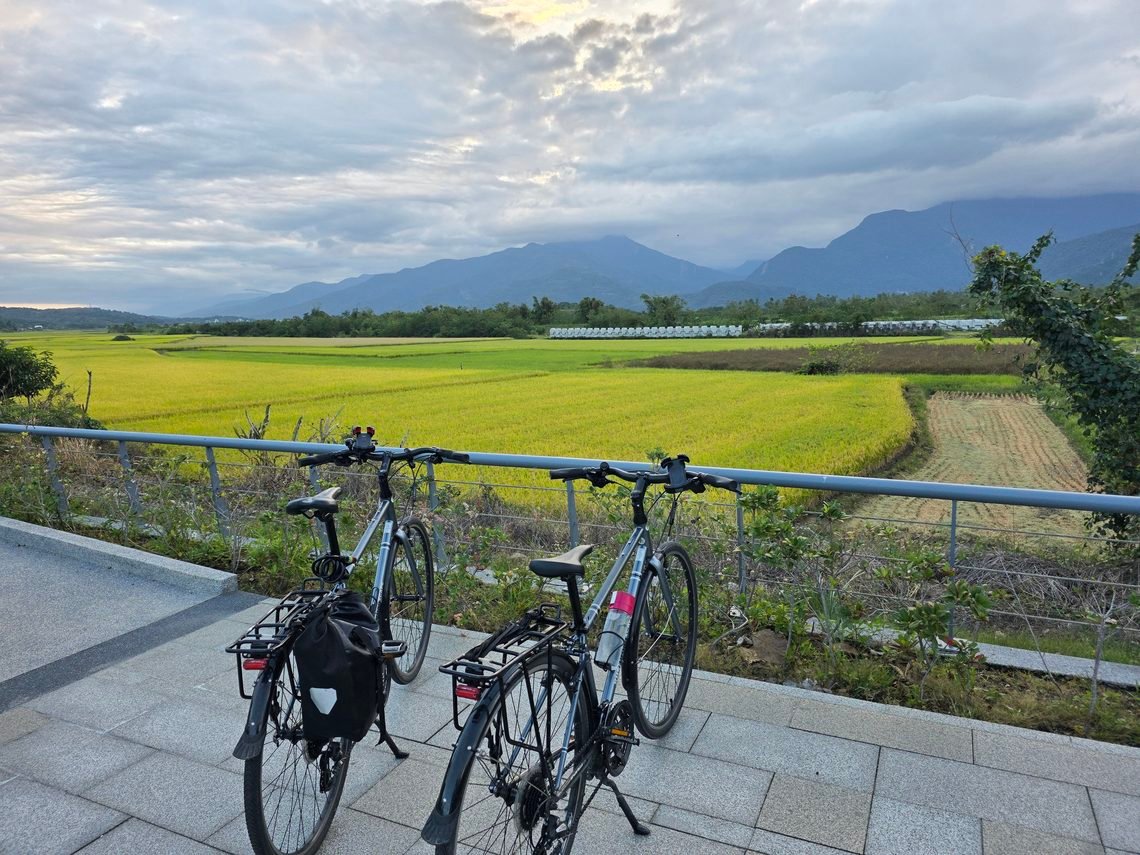
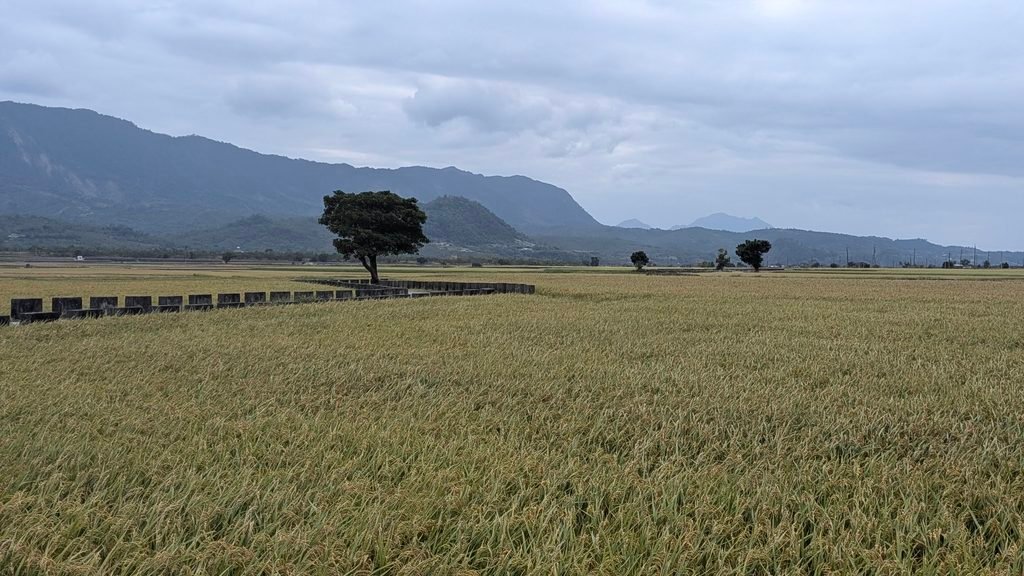
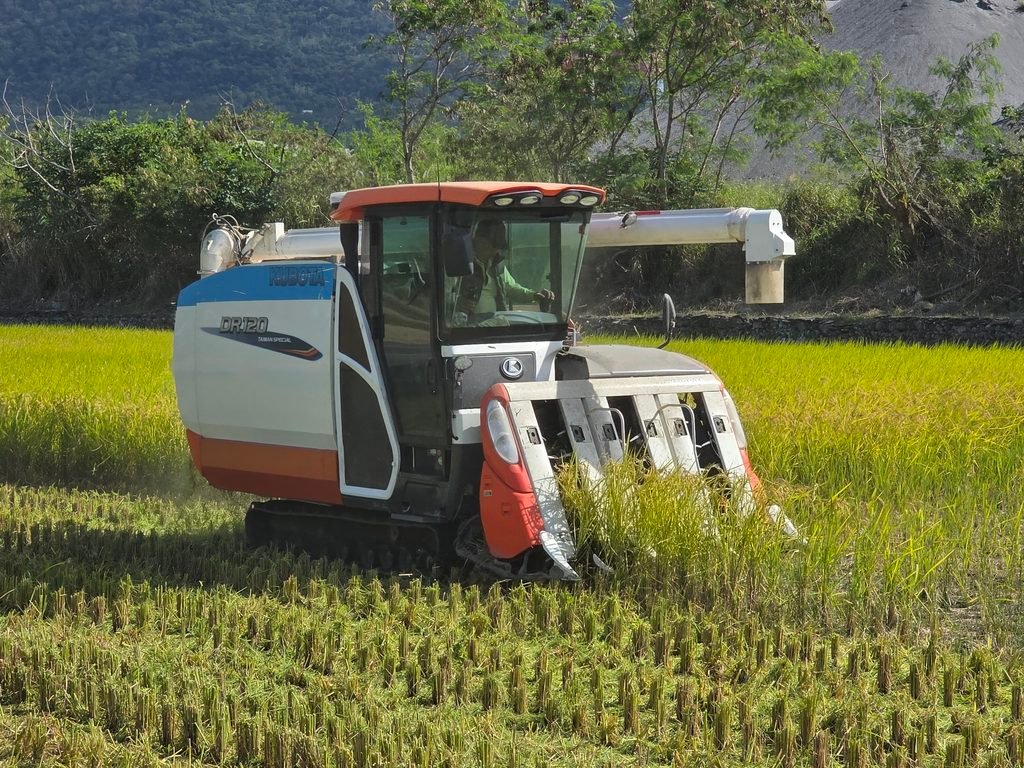
But a couple of streets behind the restaurant, we found what people had been telling us. There was the rustle of yellow-green rice stalks in large golden fields. The distinctive smell of growing rice, a greeny, slightly mouldy, grassy scent, filled the air. The whish of bicycle wheels replaced the traffic noise. A few white egrets flew over the rustling stalks to add some more beauty. The poles and pylons had disappeared as if airbrushed away.
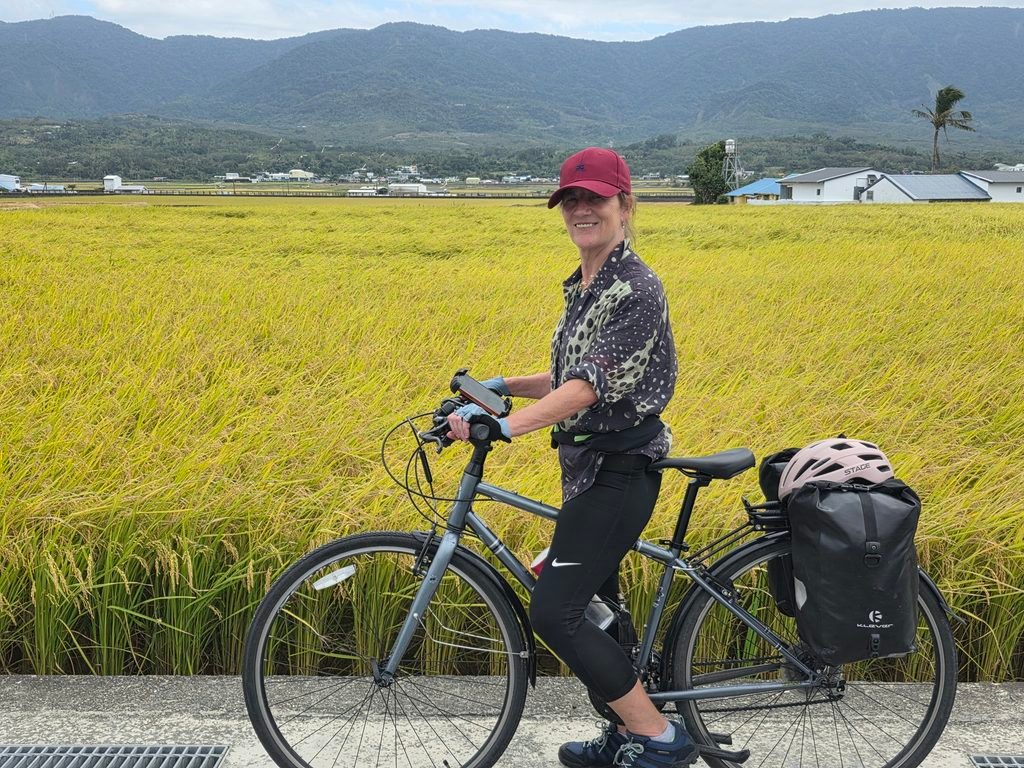
Before filmmakers shot two iconic commercials in the area—one for coffee and one for EVA airline, Chishang had a reputation for its organic rice and beautiful landscapes. The ads both highlighted the same stretch of pole-free country road, with a famous Taiwanese-Japanese actor cycling along through sweeping rice fields and pausing under a solitary tree. The ad turned the ‘tree spot’ into an overnight sensation. Everyone wanted to cycle by the rice fields in a white, billowing shirt. The sudden influx of tourists caused chaos with traffic jams, litter, and trampled crops. Farmers threatened to chop down the tree, but in July 2014, a typhoon did the job for them by uprooting it. However, Japanese and Taiwanese arborists worked together to replant and nurse it back to health, and it remains standing today, still pulling in the crowds. They expanded the number of paths and tracks, and every guest house in the place offered complimentary bikes. Cycling along the spider-web of car-free, flat lanes was gorgeous…and yes, not a pole or pylon in sight.
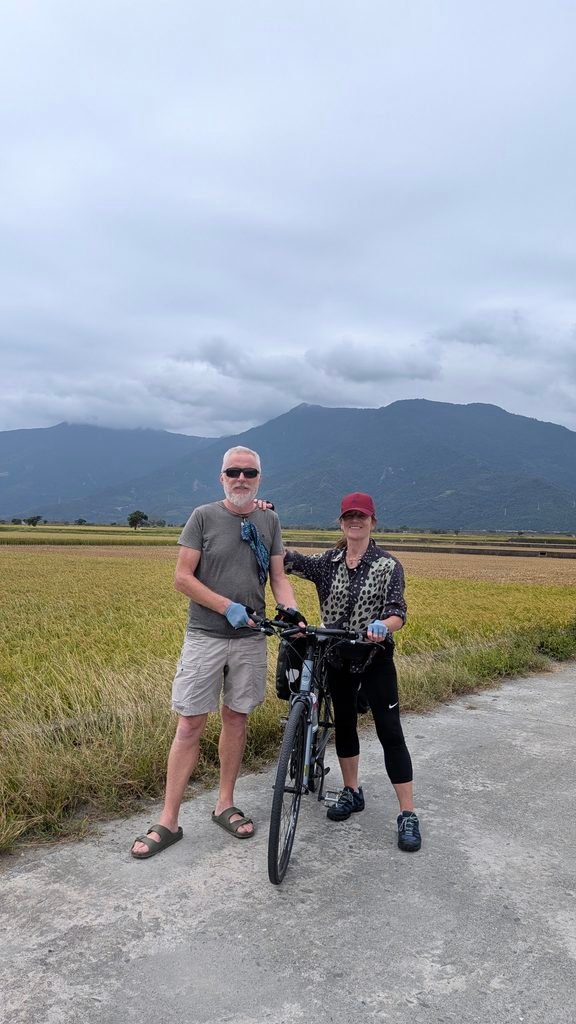



Yuli, a town about 30 kms north, had fewer tourists but was a charming with nice cafes, some great vegetarian restaurants, and a 10kms stretch of bikeway (Yufu Bikeway) which was converted from the old railway tracks. On the historic old railway bridge crossing the Xiuguluan River, we cycled and stood on the active boundary line of two colliding tectonic plates, theEurasian Plate and the Philippine Sea Plate. I’m not sure if there was any significance that we were there on the day of our thirty-second wedding anniversary. Constant plate collision causes the ground and the old railway structure to shift (averaging roughly 1.7 cm to several centimetres per year). This led to a new railway line being built nearby for safety.

Yuli is famous for ‘stinky tofu,’ a beloved but extremely smelly food in Taiwan. Our accommodation had signs on the wall prohibiting it from being brought into the house. A sign on a cafe door warned that customers should not enter if they had eaten it recently ‘for the purity of the interior environment.’ We had intended sampling it, but couldn’t quite bring ourselves to do so.

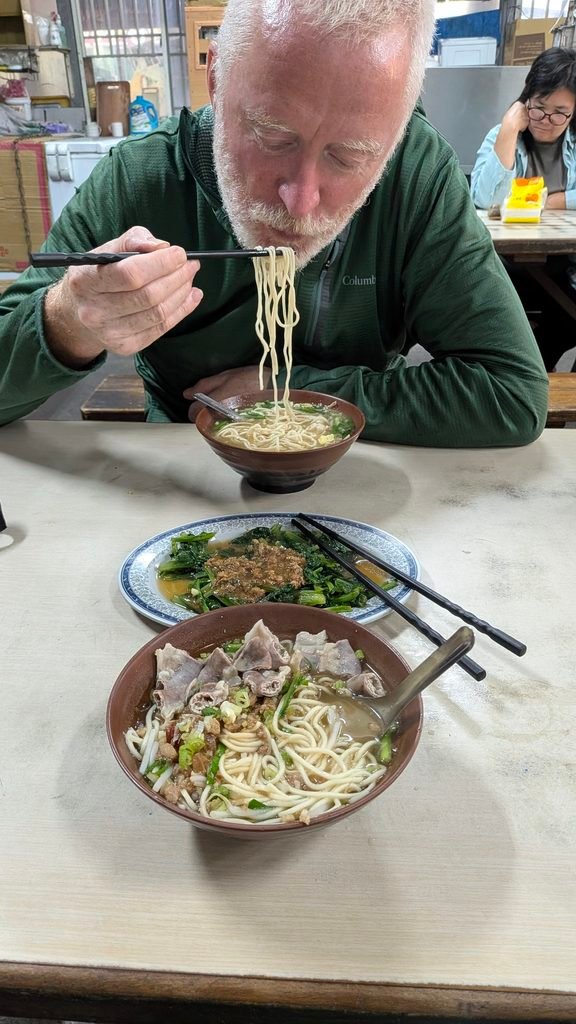
Hot Springs are common in the area because of underground thermal activity. Outside Yuli, natural pools of water were free to use, perfect for open-air bathing, although the air was sulphur-stinky. The smell was almost like flowers when compared to the dreaded tofu. Some pools were scalding hot, and the minerals turned of them an opaque muddy colour.

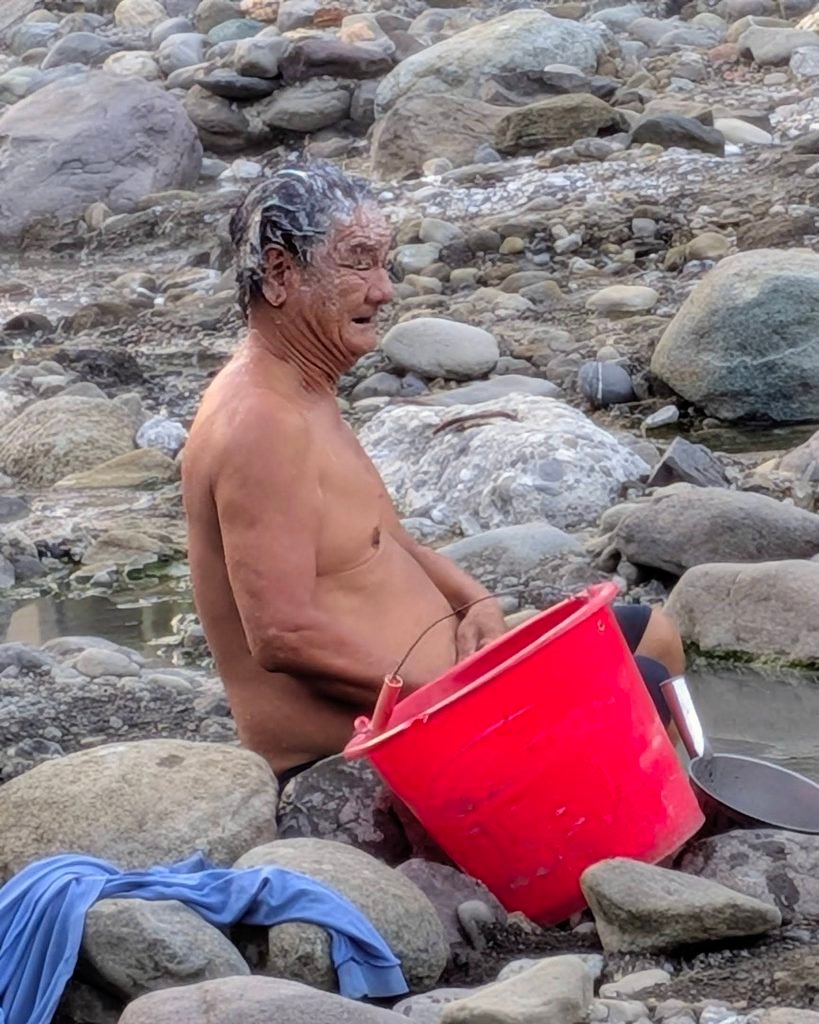

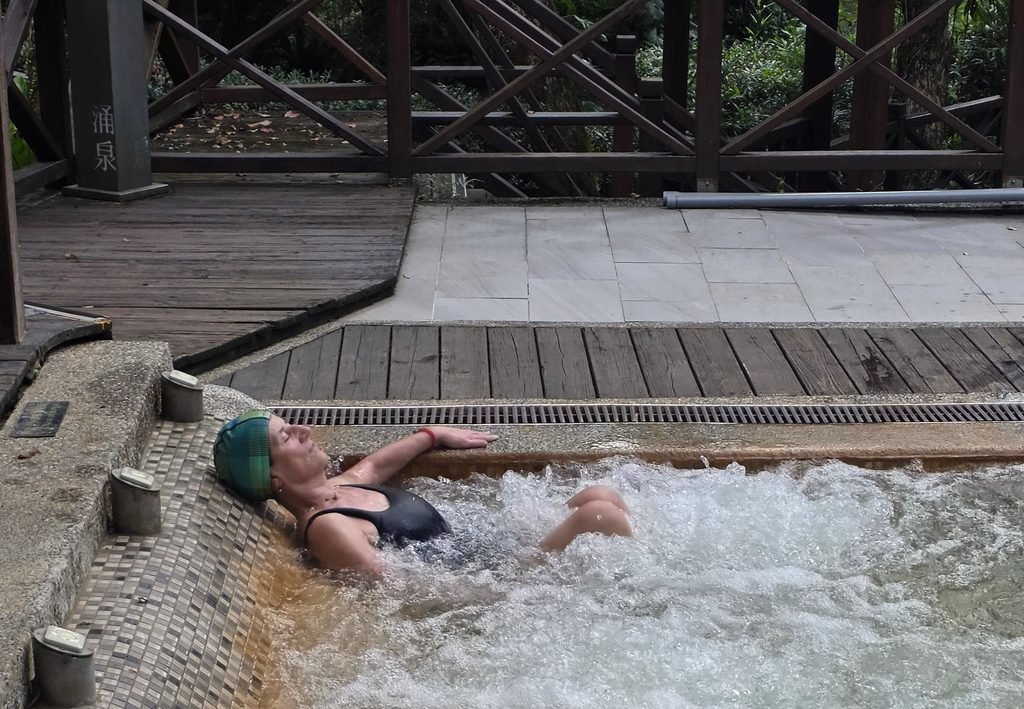
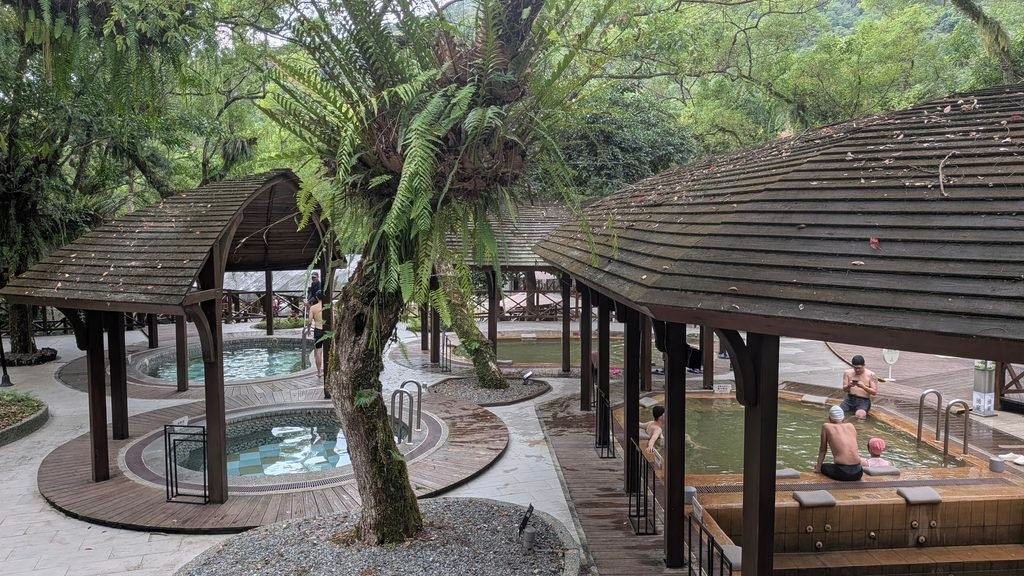
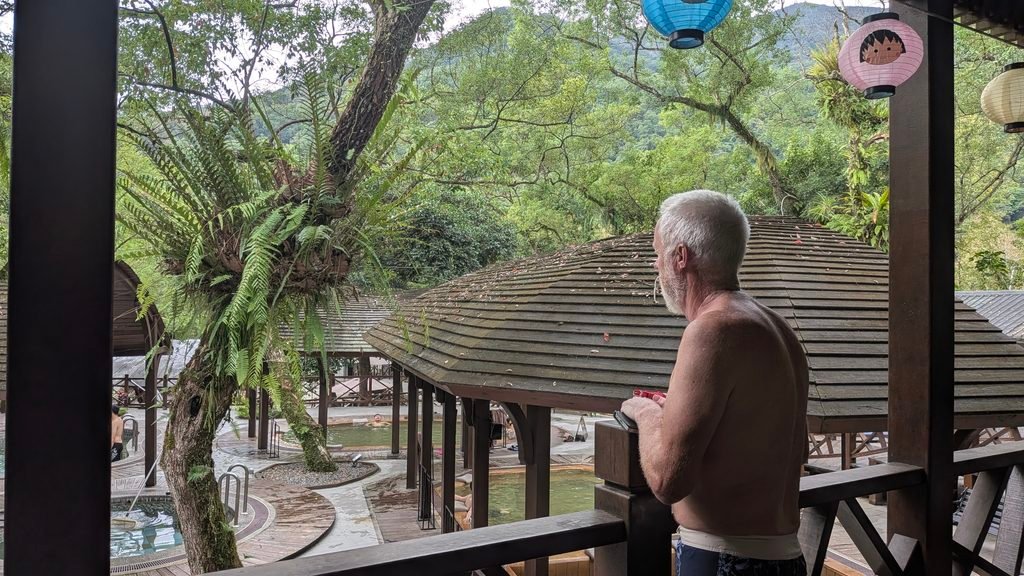
Farther north in Ruisui, the hot spring destination of Taiwan, we bathed in the ‘Eternal Spring’ in the Fuyuan Forest Park, part of a hotel spa complex in Butterfly Valley, so called because of the butterfly migrations at certain times of the year. The carbonate spring water turns golden (or brown if feeling less poetic) when it comes in contact with the oxidising effects of air. The Fuyuan forest also had preserved camphor trees. Taiwan used to supply most of the world’s camphor when there was a demand for it in the late nineteenth and early twentieth centuries. Although we had to cycle fifteen kilometres there and back again, the experience was worth it. We are finding real pleasure and independence in basing ourselves somewhere for a couple of days and cycling to all the (relatively) nearby attractions by meandering the back roads and country lanes, although main roads would get us there faster. The pleasure of the slow pedal. One thing that could definitely make me pedal faster was the country dogs. They either lay prone in the middle of the road, so we had to cycle around them, or else they barked like lunatics and even chased us. Then, there were the chained ones who bared their teeth and strained at their leashes with rolling eyes as if they’d like to devour us. Their owners probably tied them up for a good reason…or perhaps the dogs were vicious only because they were tied up.


We also met an Irish guy who was based in Berlin and was on holiday with his girlfriend. They had intended renting bikes to cycle around the country but there were none available anywhere. November is prime cycling season in Taiwan, so we were lucky we started in October.
The first cows we saw in Taiwan were on an open farm in Ruisui. It was Saturday and busy with people taking photos of themselves with some cows grazing in the background. Most of the animals were inside in sheds. It was a perfect backdrop to enjoy ‘all things milky’ in the cafe with tables set up overlooking the fields- ice cream, custard tarts, milk steamed rolls, corn milk soup and cream cake.

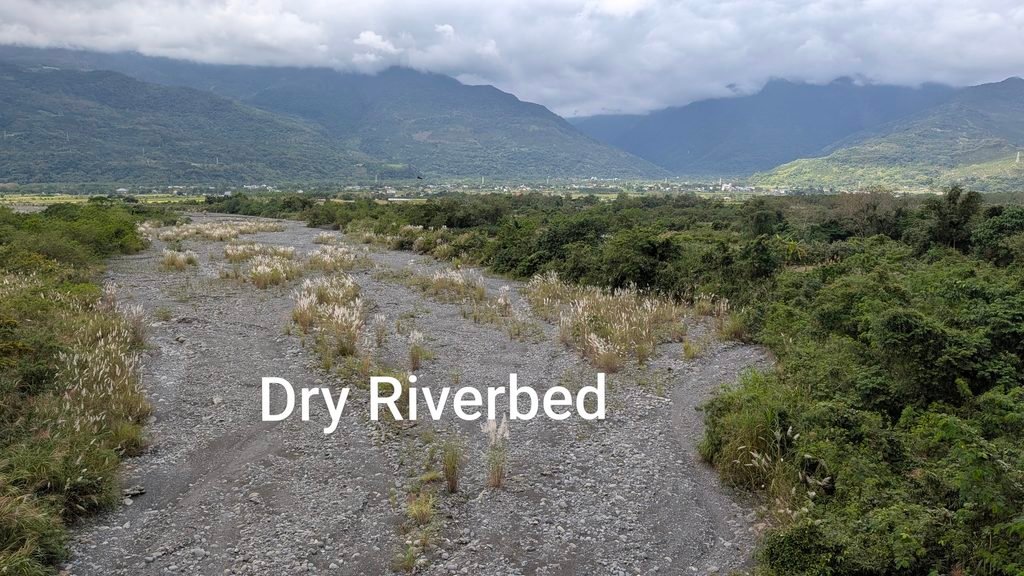
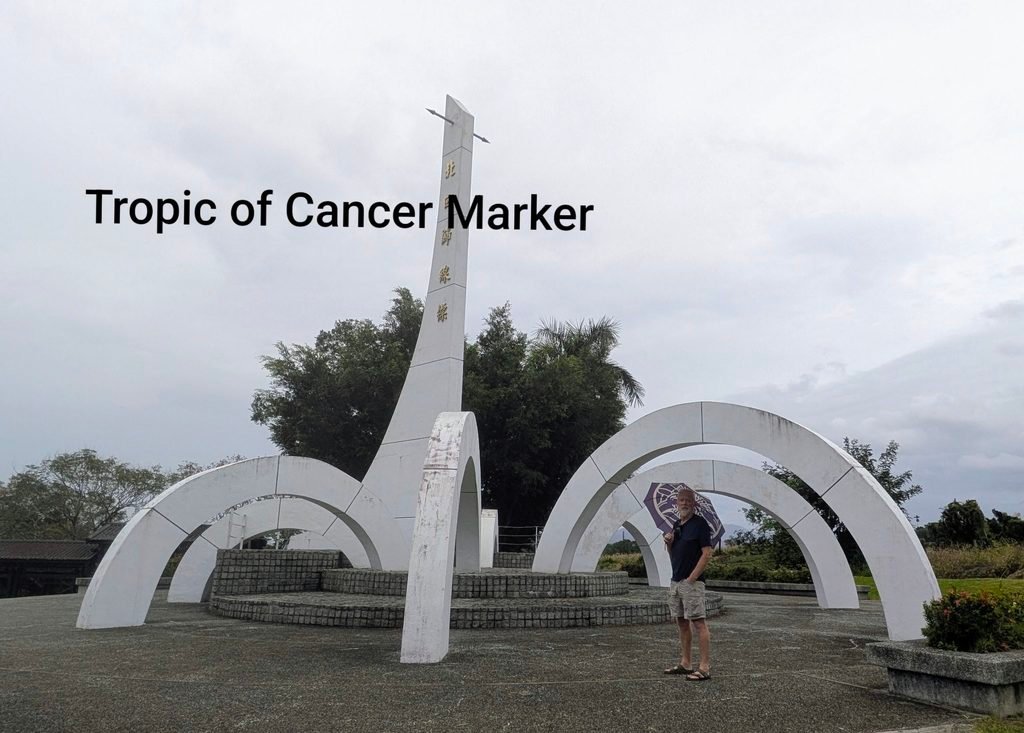
We paused at the Tropic of Cancer marker, a large white monument against brooding mountains. Just after we took the photos, the rains poured down heavily. We have had a few brief and occasional showers so far. Most of the wide, stony riverbeds are practically dry. October and November can be a nice transition before the winter monsoons set in fully with frequent torrential downpours. No wonder cycling season is in full swing at this time of the year.
A few days ago, for the first time since we arrived in Taiwan, the temperature dropped below 20C. It was a shock that sent us searching for jumpers and jackets in our bags, but the lower temperatures only lasted a day before climbing again to a sunny 26C (daytime) and dropping to another 22C (nighttime).But it will probably get cooler as we head north.
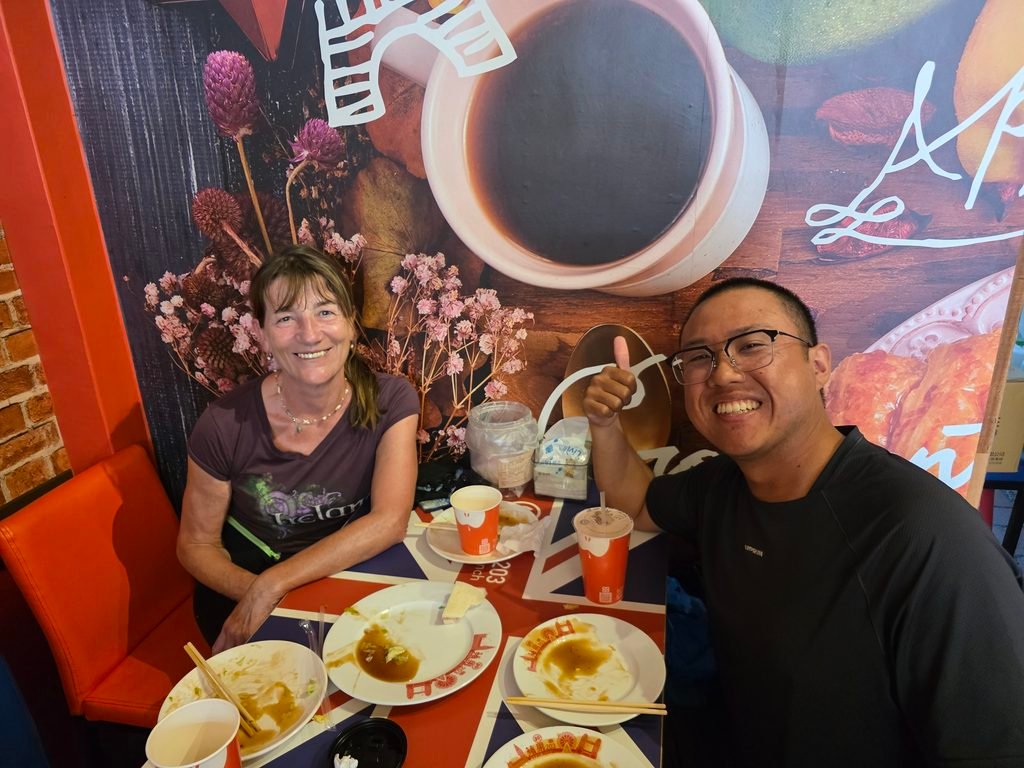
Part of the joy of travelling is the chance encounters. One morning, this week, we trekked around the breakfast shops in Fuli, a non–touristy place, trying to redeem some vouchers that our landlady had given us. Some places advertise breakfast as included but hand out a voucher to use at a nearby restaurant. The Chinese writing was meaningless to us, and every restaurant we went to gave us directions to somewhere else. Eventually, the woman behind the counter nodded ‘yes’. We were busy translating the menu when a friendly voice greeted us by name. Two weeks earlier, on the other side of the island, we met a lovely young Taiwanese man who was walking around the island. We stayed in the same hostel, and he shared his plum wine with us. Considering we were cycling (albeit with many diversions) and he was walking, what were the chances? Coincidence and Connection. We shared breakfast and laughs, but I feel certain that our paths will cross again.
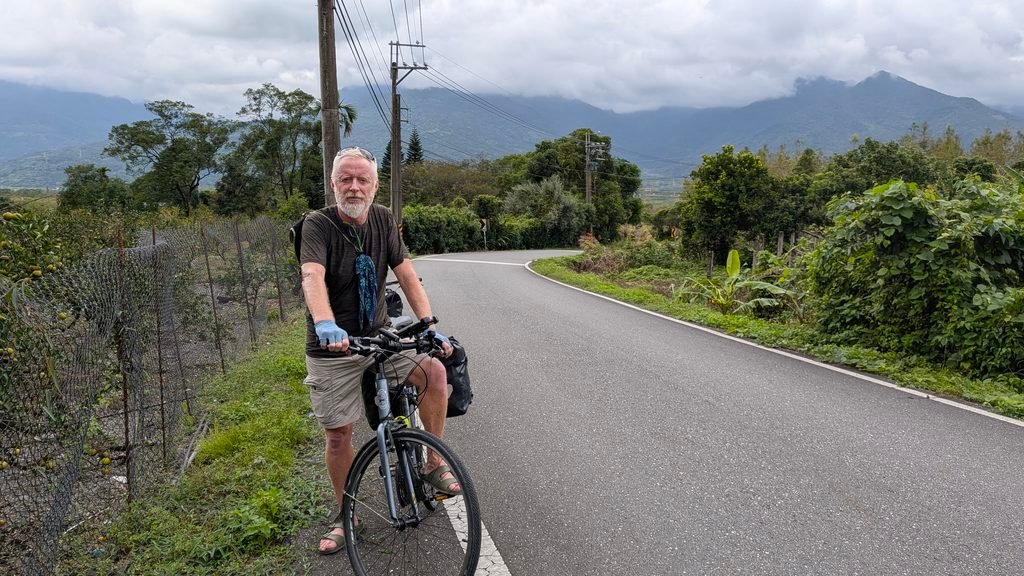
Despite our misgivings in the beginning, the Rift Valley is truly a Garden of Eden with flowers, abundant fruit dropping from the trees, fields of pineapples, rice paddies and tea plantations, but you have to get off the highways to truly appreciate it and take ‘the road less travelled.’


The lovely woman who cooked us fried eggs and veg rice although they dont normally have food on the menu


You May Also Like
Journey to Japan✈️✈️
Philippines- The Lost Week
