St Finbarr’s Pilgrim Path: Saints and Sunshine
Nobody warned us about the horseflies. They were out in marauding gangs, mainly attacking from behind. The pain was instant as the female used her scissor-like mouthparts to tear our flesh and lap up the pooling blood. I have an impressive selection of red bumps and lumps on the backs of my legs which I’m trying – unsuccessfully – not to scratch.
They were particularly ferocious on the second day of the two-day St Finbarr’s Pilgrim Way in West Cork, a thirty-seven-kilometre walk from Drimoleague to Gougane Barra. The hike follows the footsteps of the sixth-century saint on ancient paths and tracks, going up and over three mountain systems and four valleys.
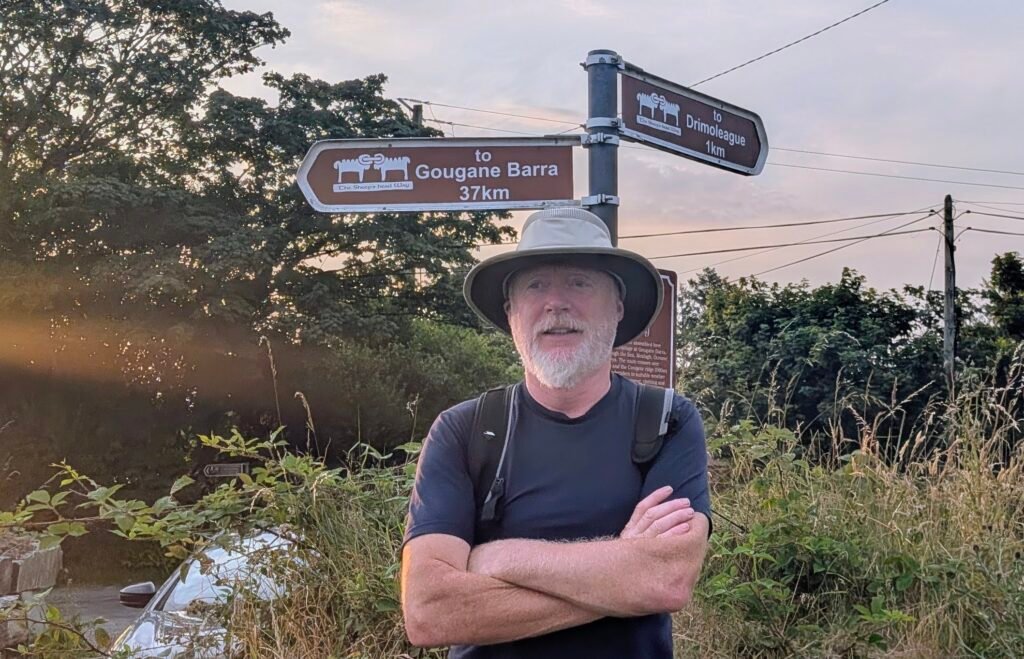
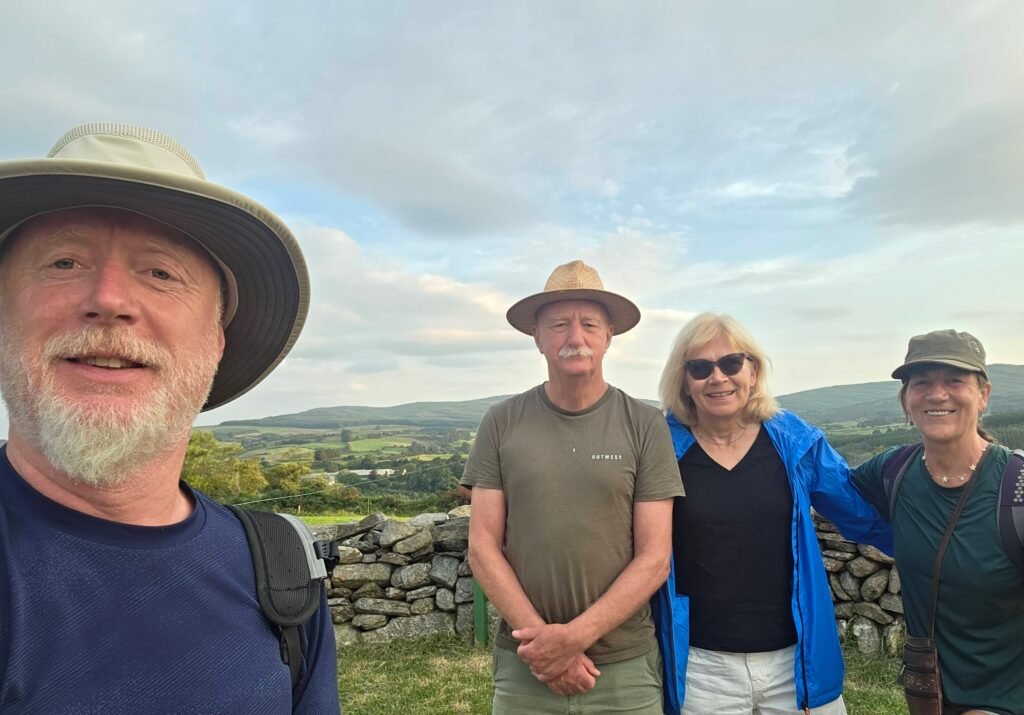
The weather forecast was not favourable for hiking, so we started early… to beat the heat—a very unusual occurrence in Ireland. We were parked up and ready to hit the trail shortly after 6 am with our friends, Clodagh and Feargal. The hike started outside the little village of Drimoleague at the Top of the Rock, a hillside farm with glamping pods, camping facilities and lots of info on the many walks in the area.
This is lovely countryside with farmland, hills, valleys and mountains. The Shehy mountain range was before us and a blue sign wished us blessings and peace in these quieter times…it wasn’t always so tranquil in these parts. It was the scene of fierce battles between the O’Donovans and the O’Sullivans from Beara. There’s a pond in the river called Poll na Fola (the Hole of Blood) where the O’Donovans reputedly cleaned up their battle wounds.
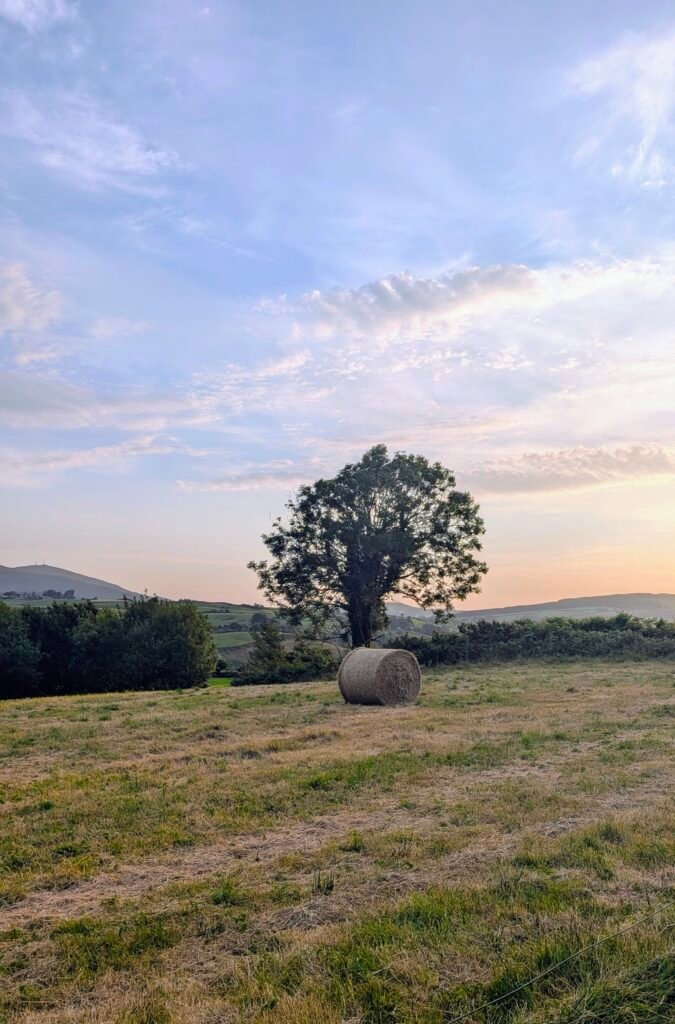
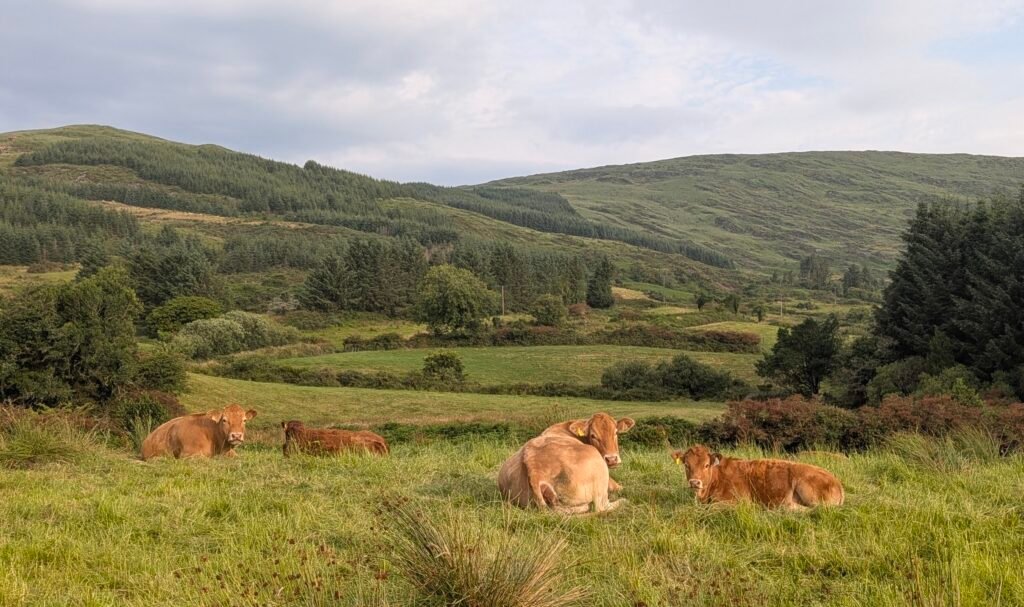
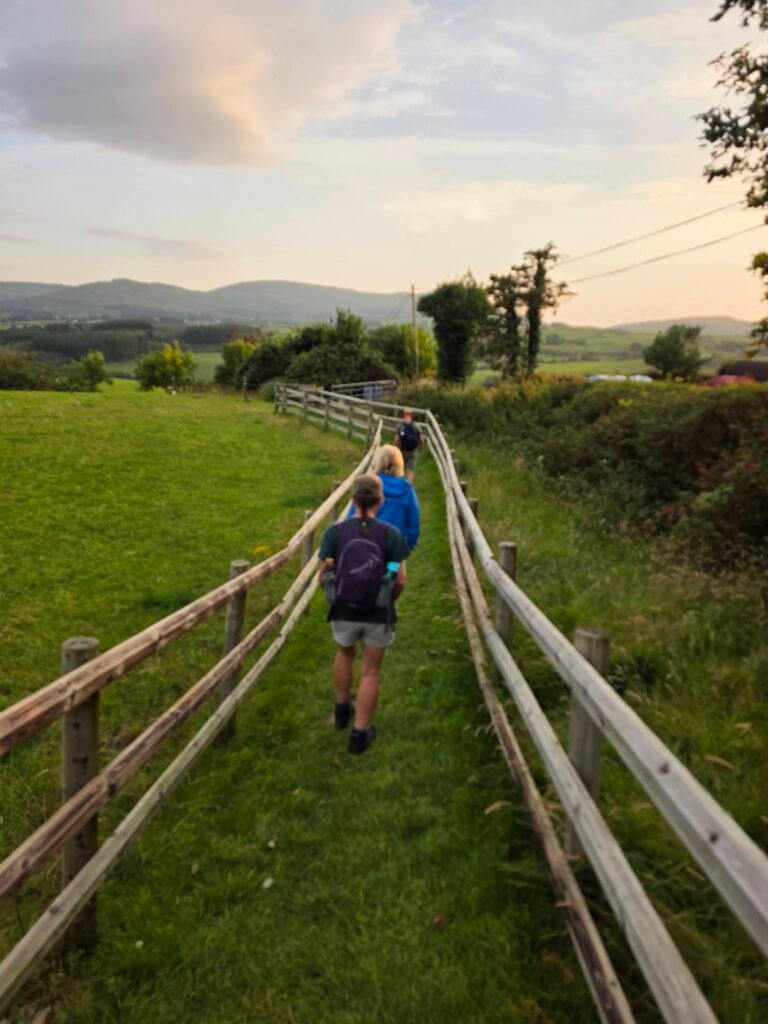
At first, the path was narrow, descending between an electric fence and a hedgerow overflowing with wildflowers. The whiff of honeysuckle was in the air; there was the orange glow of montbretia flowers, the gurgling of streams, small waterfalls and curious cattle.
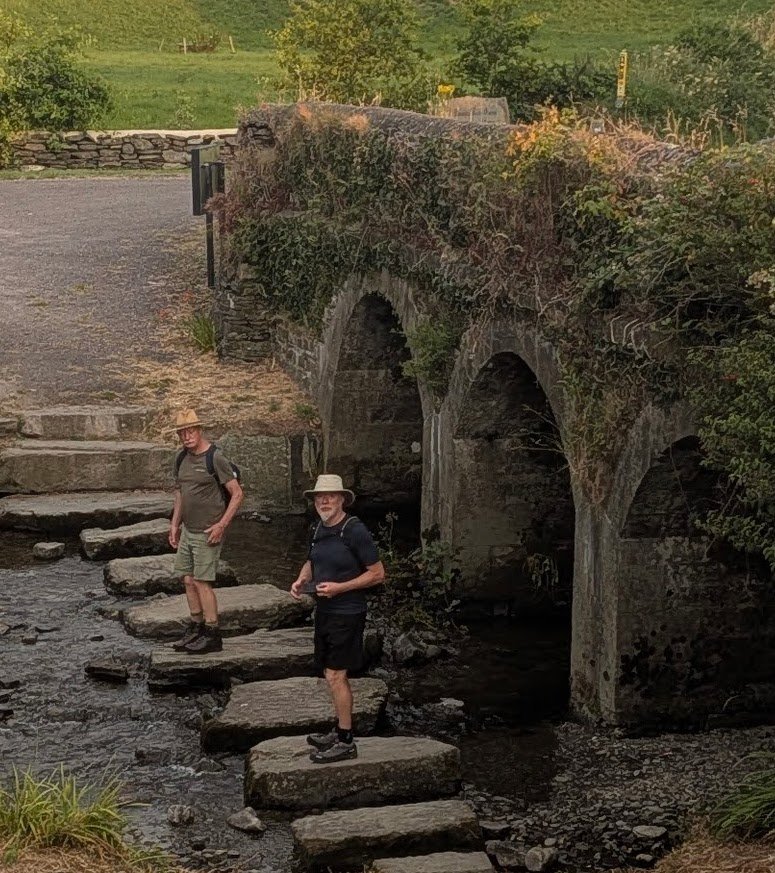
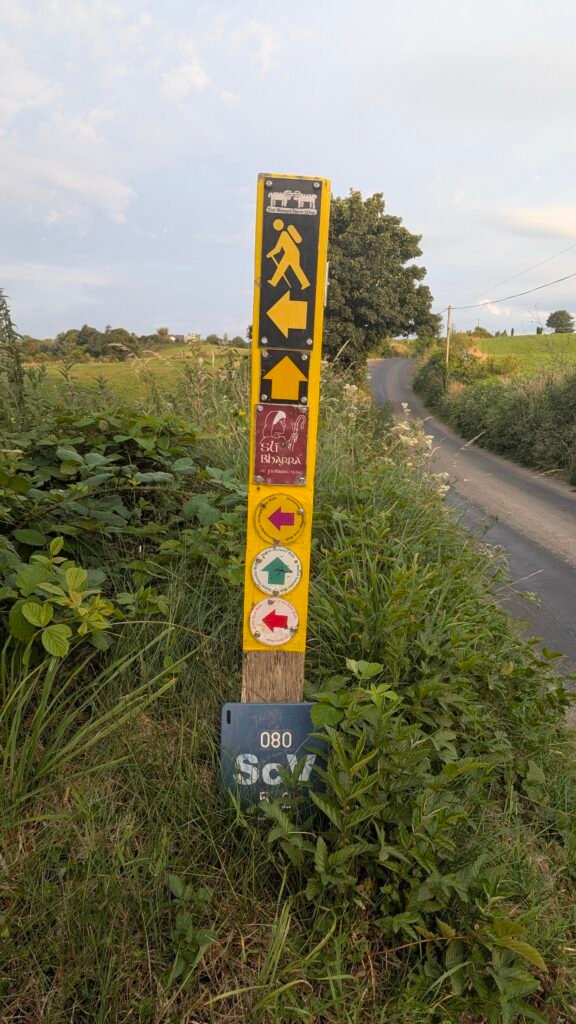
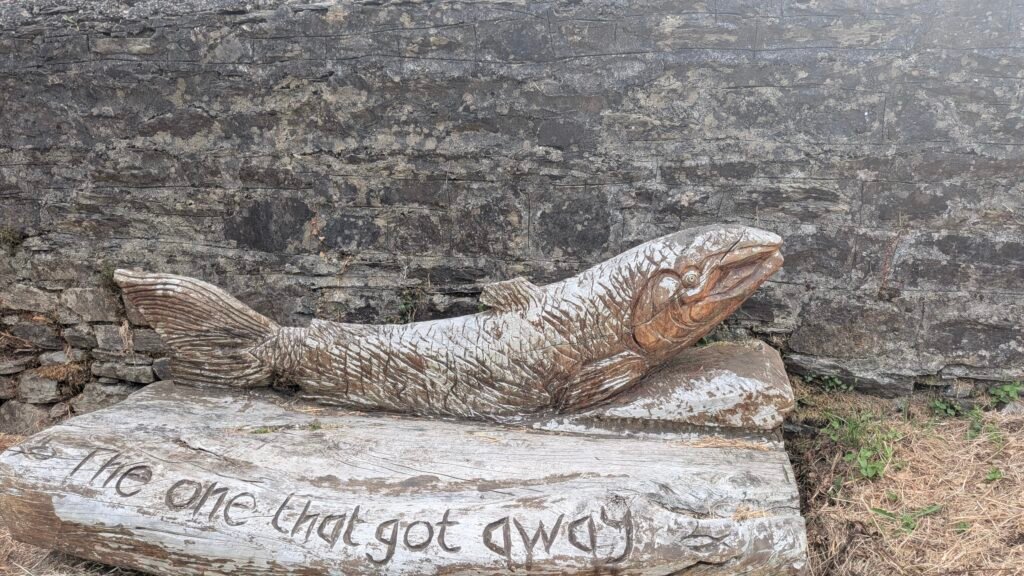
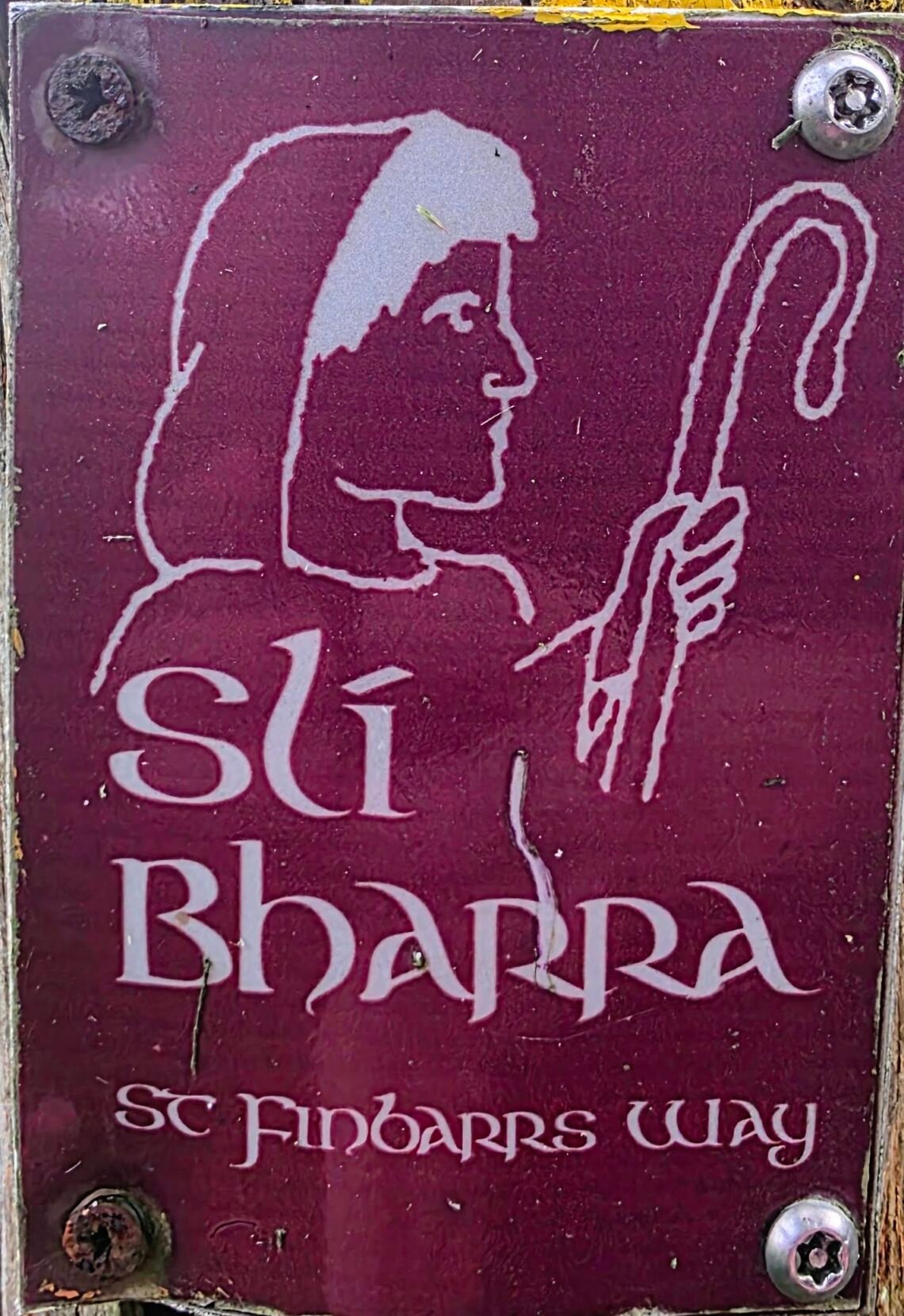
Coming down to a road, we admired the fine stone bridge (Ahanafunsion Bridge) over the Illen River, which we crossed using stepping stones. There were options for several different hikes – this is fabulous walking country – but we followed the signs for Slí Bharra – St Finbarr’s Pilgrim Path.
This route converged with The Sheep’s Heads Way as we passed the ruins of Castledonovan and ascended the Mullaghmesha mountain, past huge boulders and onto grassy, wide-open countryside. A sign pointed to the isolated ruins of a house, belonging to George O’Mahony, a hill farmer known as George the Sky. His house was built so high on the mountainside that it was next to the sky.
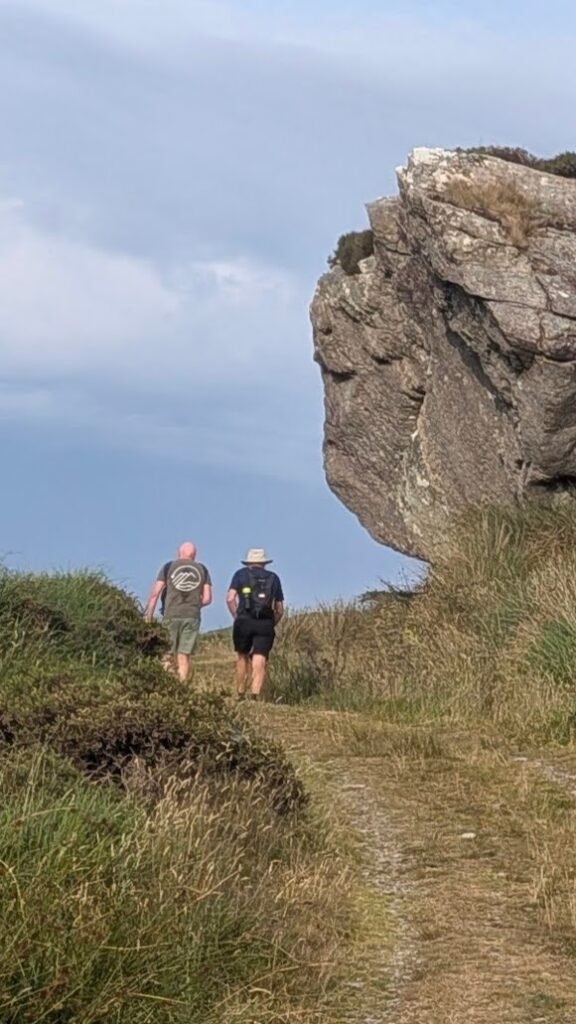
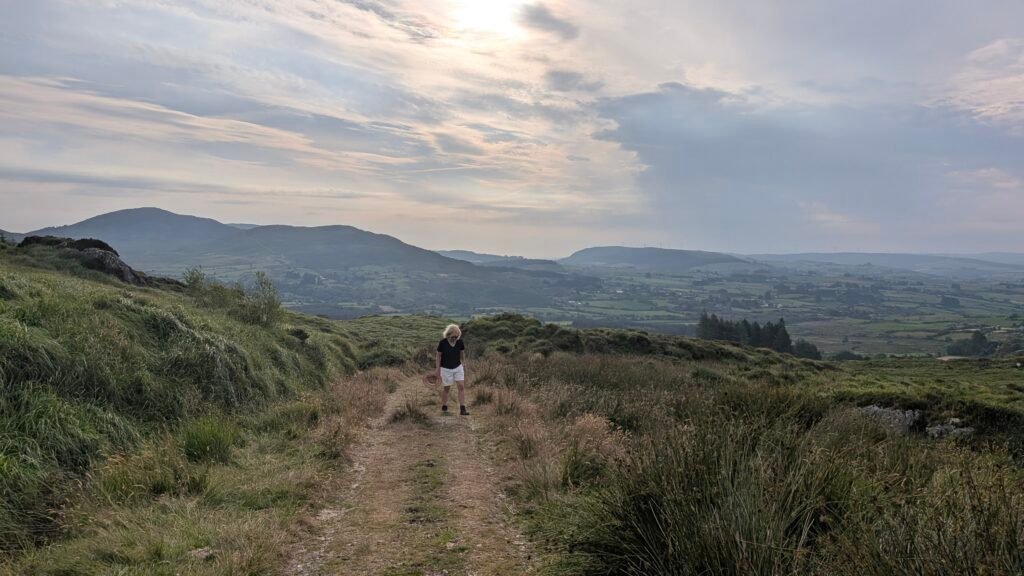
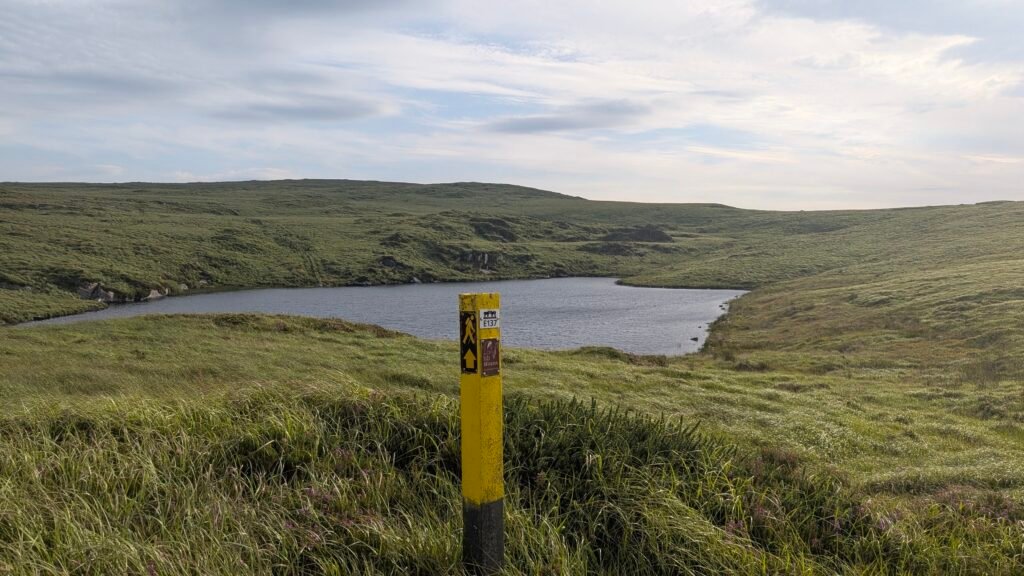
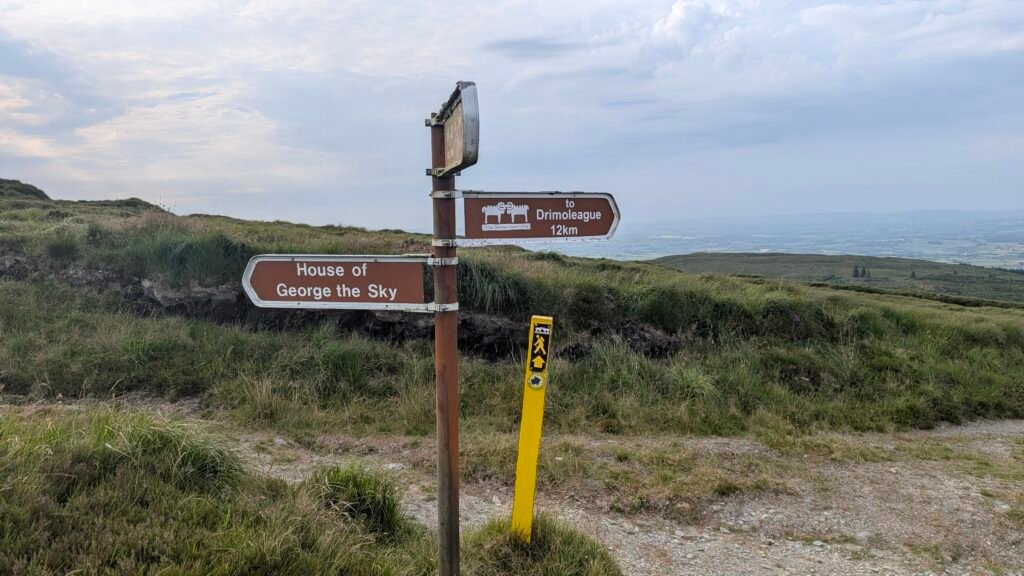
A strong breeze made the grasses sing with pops of pink heather and little yellow tormentil flowers. Contrary to the forecast, the first day stayed cloudy. Bantry Bay, Whiddy Island, the Beara and Sheep’s Head peninsulas were visible in a blue haze, and the high bog lakes looked dark and forbidding. Cheese and egg sandwiches tasted divine as we crouched down out of the wind and even donned light jackets….always be prepared even in a heatwave!
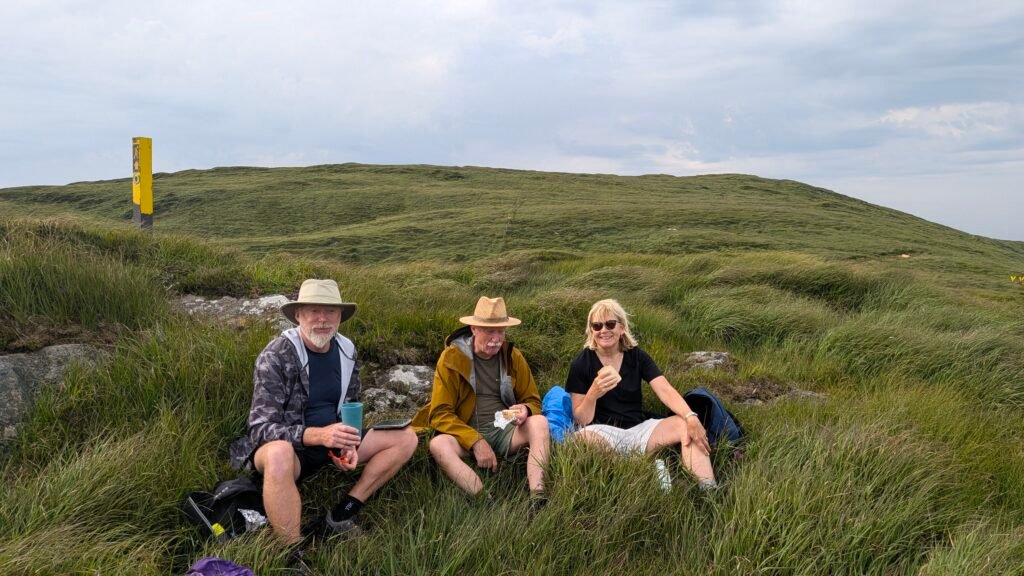
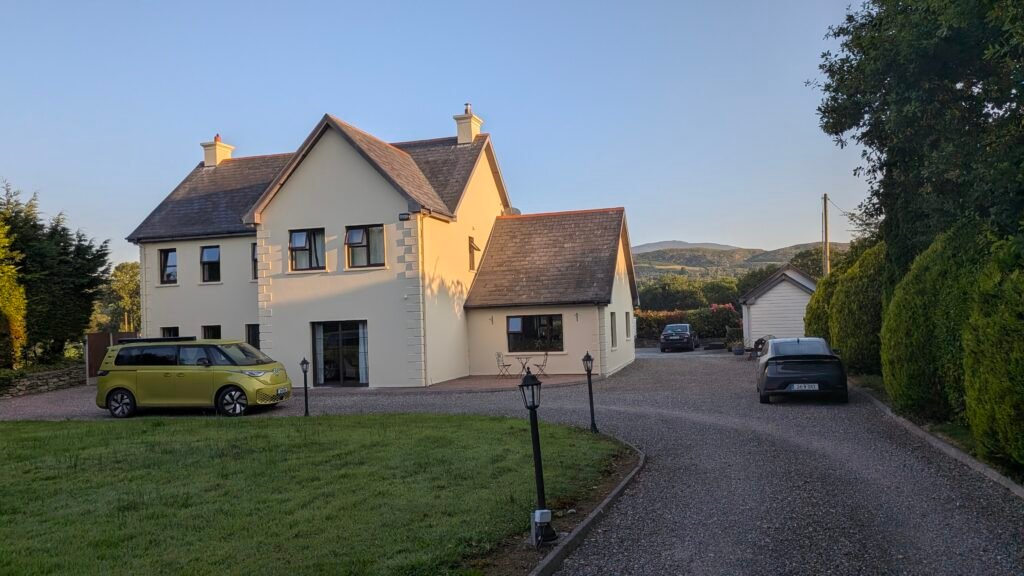
The route was very well marked, taking us along the ridge with panoramic views of the Mealagh Valley before a long descent into the valley and onto the village of Keelkil, where we took off our boots with relief and rested our weary bodies. This first stage took more than six hours. As this was a linear walk, we had to collect the car left at the starting point, but luckily we had two cars, as I’m not sure about the availability of public transport or taxis. We stayed in comfortable accommodation, West Cork Way, on the edge of Keelkil with a lovely garden room and access to a well-equipped kitchen. Our room had the bonus of a large bath, perfect for soaking tired muscles.
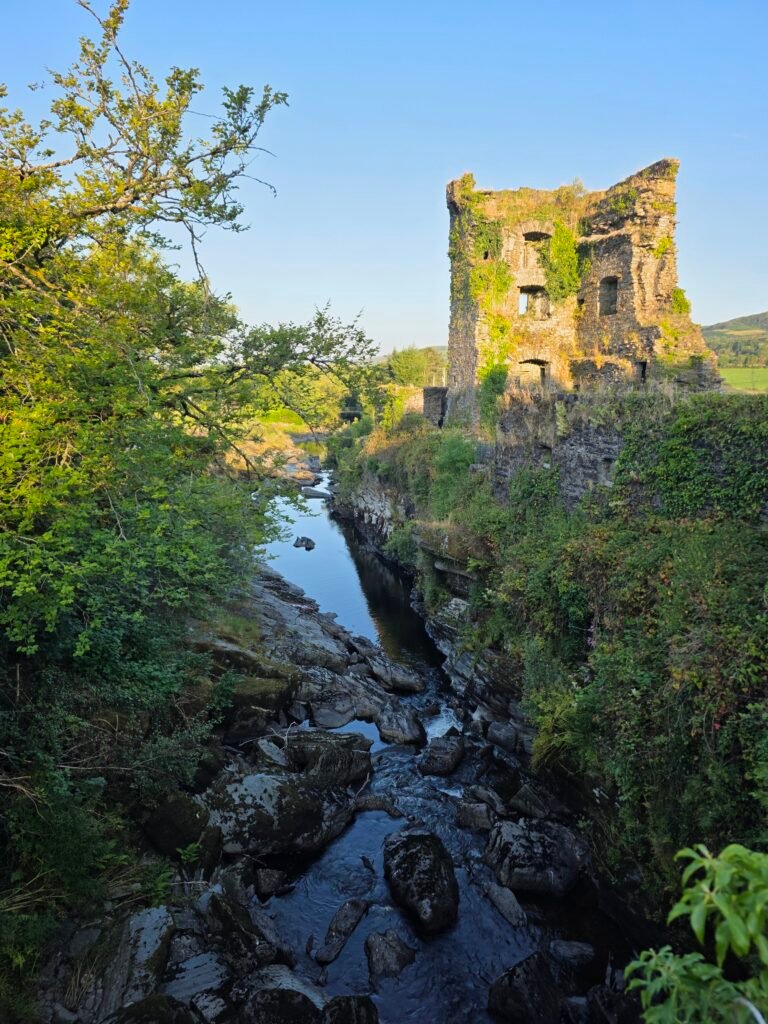
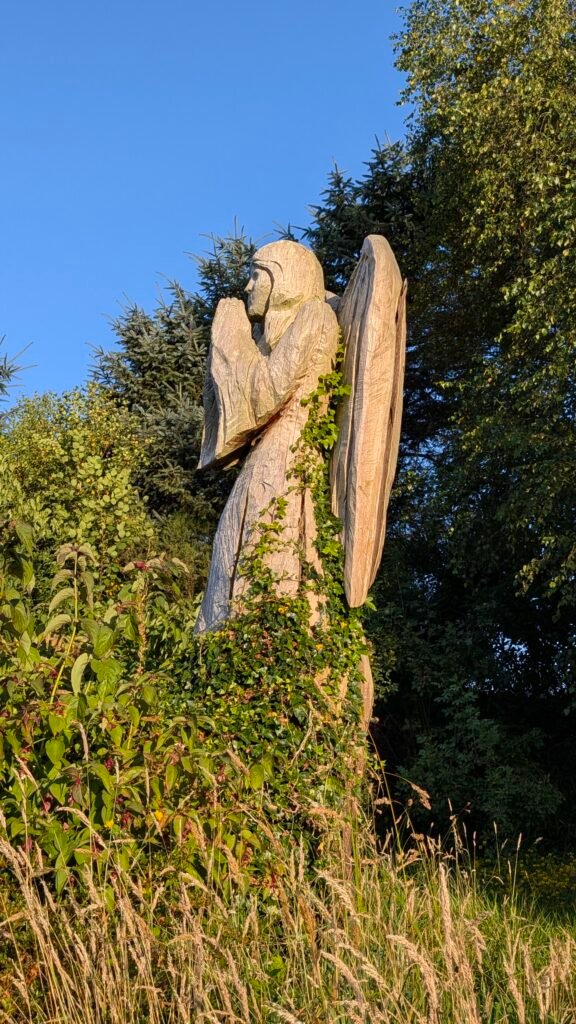
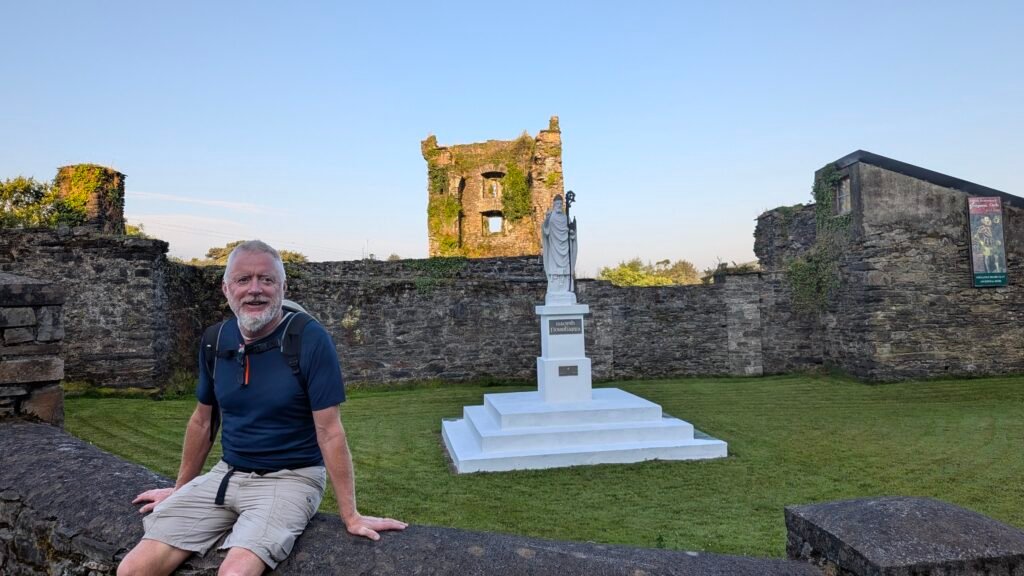
Keelkil is a lovely village, rich in history. Leaving the village on the second morning, we walked past the white, luminous statue of St Finbarr in the shadow of ruined Carriganass Castle, built in 1541. Ivy crawled up the spine of a beautiful wooden carving of a large angel. This second day was a scorcher, the sun beamed on us from early morning, we were thankful for the shady roadside with frothing meadowsweet perfuming the soft morning air.
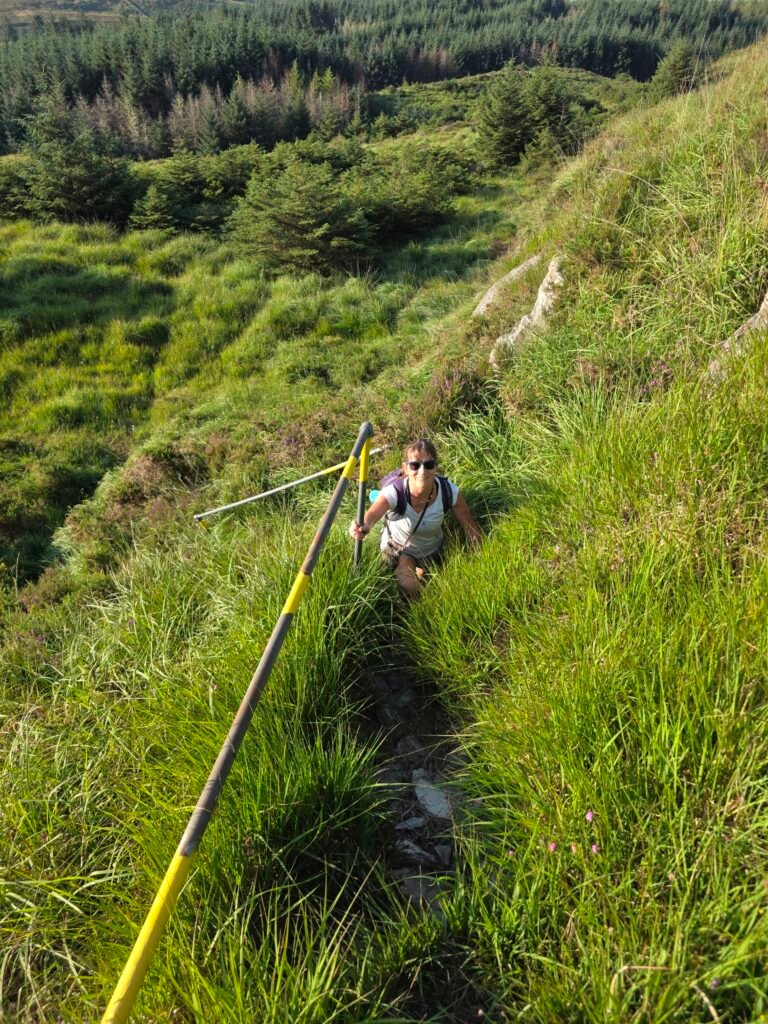
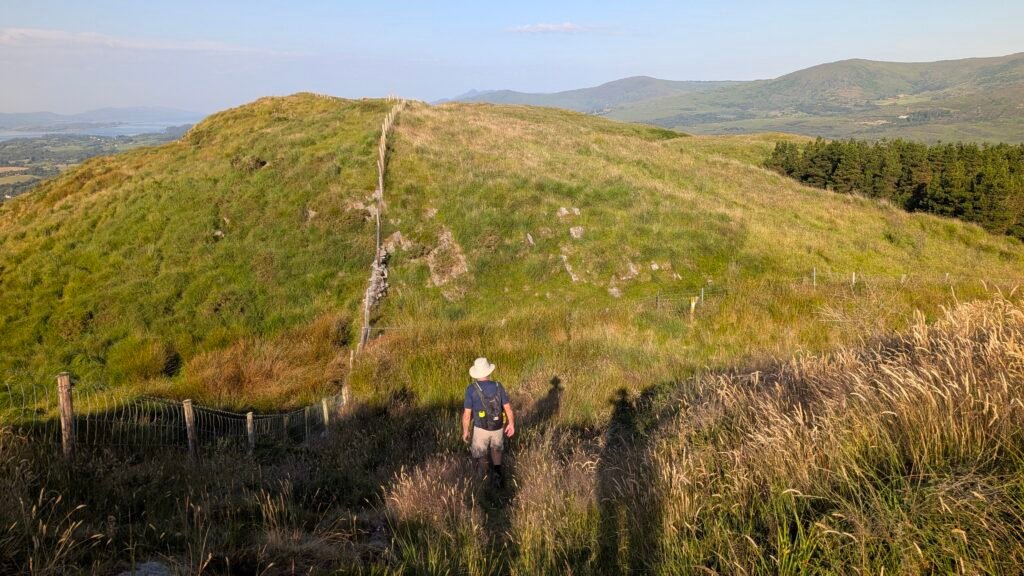
After about an hour, we clambered over a stile and climbed sharply. Railings by the side of the path in the really steep spots gave us support and helped to haul ourselves upwards. We continued through fields of rushes and Coillte forests with their dead undergrowth, past small farmyards with rusting machinery.
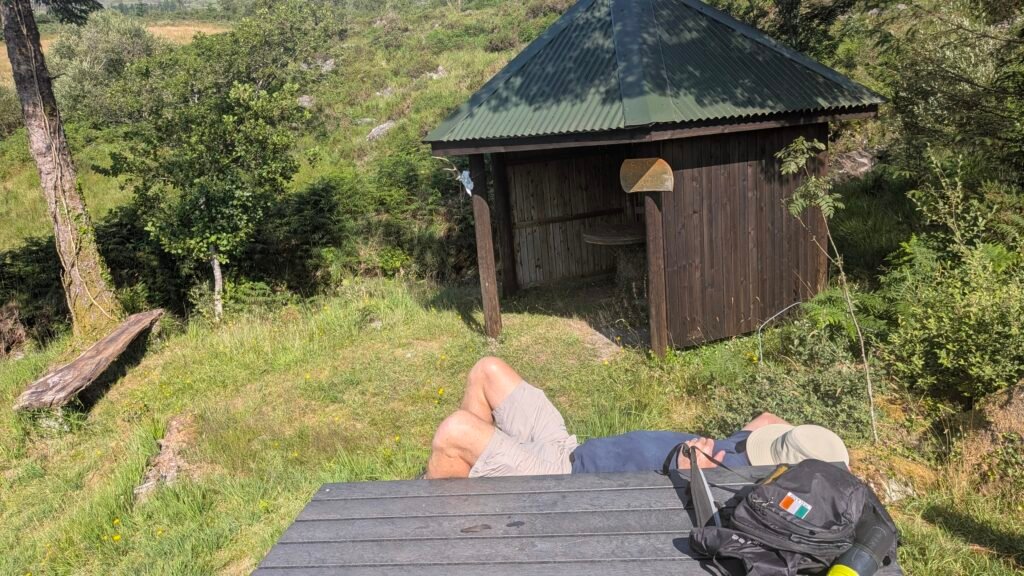
We came to a welcome rest stop and shelter with a picnic table by a river. Butterflies fluttered around us and despite the aches, there was a sense of peace in this beautiful isolated area.
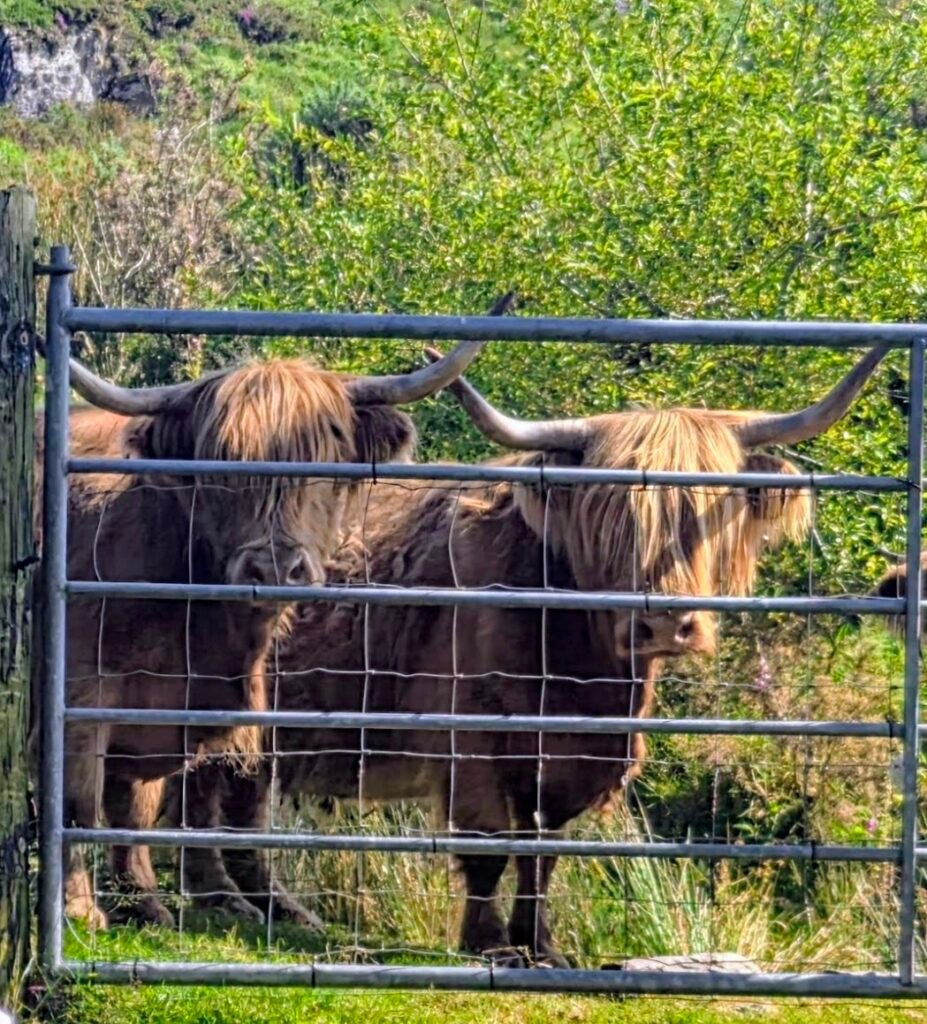
We admired some Highland Cattle on the other side of a gate until we realised there was a bull loitering in their midst and our path took us right by him. We proceeded cautiously but thankfully, the bull was uninterested in us.
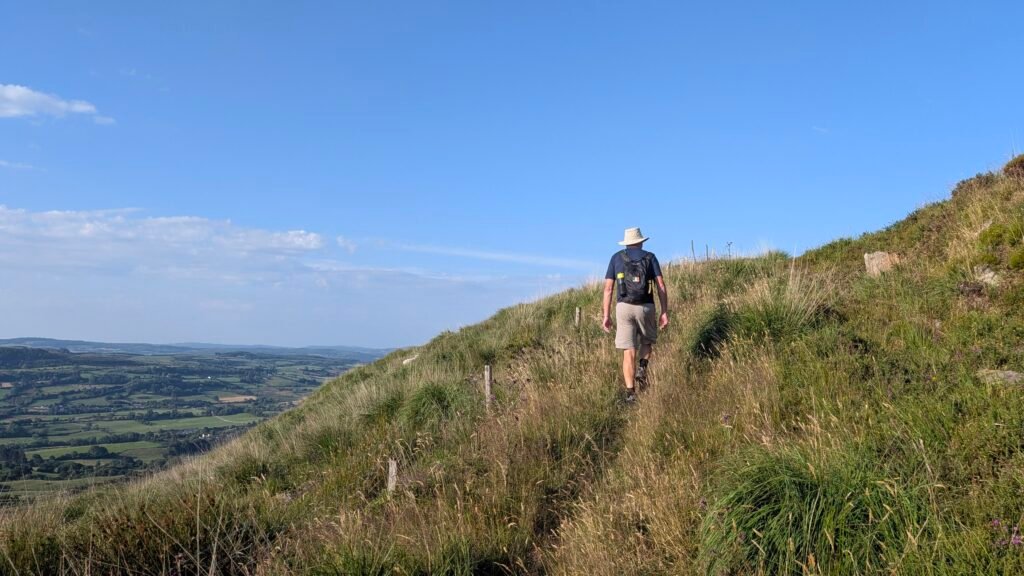
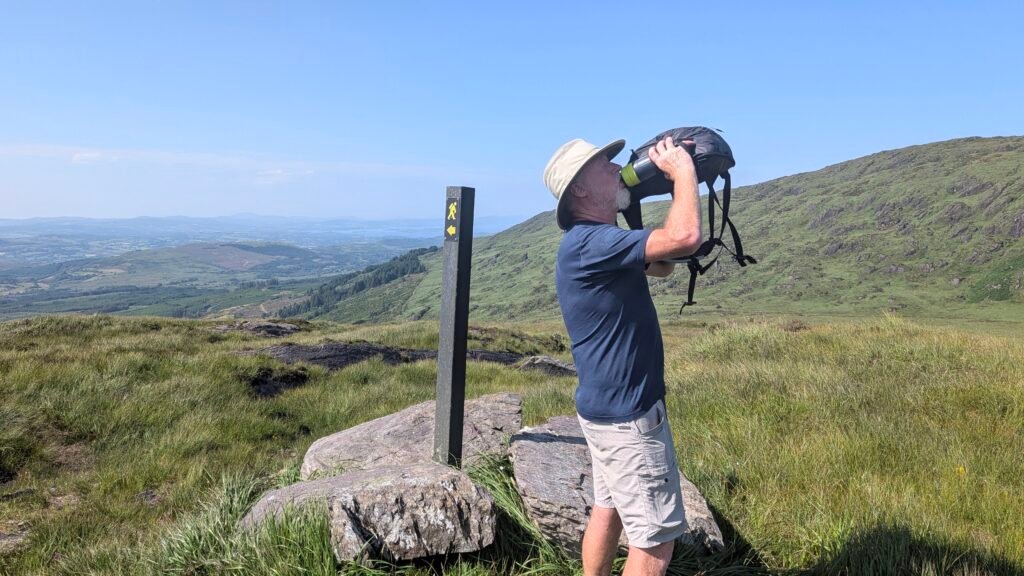
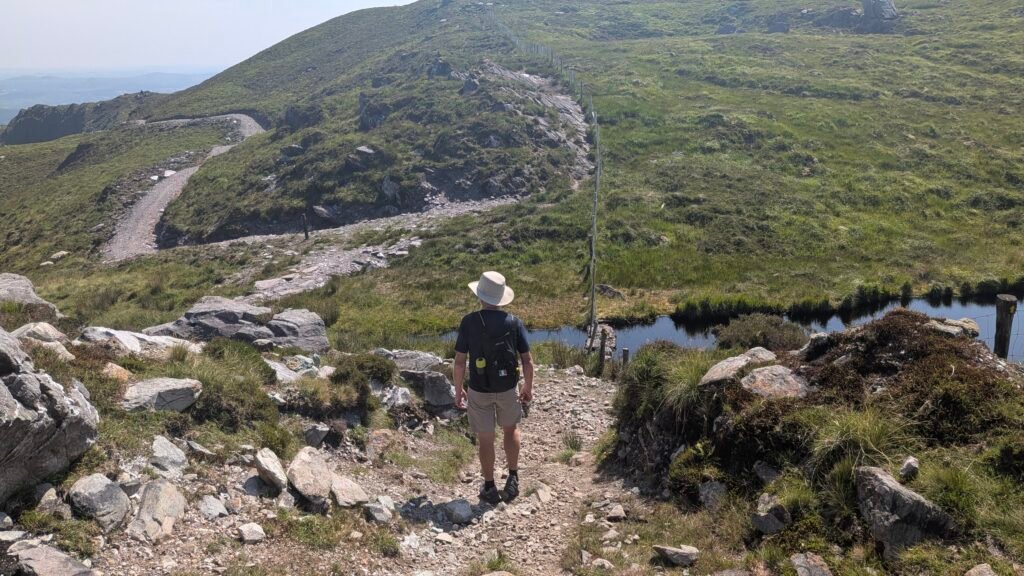
But then the climb started in earnest with a long pull up to the Conigear Ridge at over 500m through paths that were slightly soggy even in this extended hot dry spell. The sky was a blinding blue, the many lakes a shimmering brown. The way markers were often silhouetted against the sky, making us think that we had reached the summit but there was always another ridge, another incline. Sheep crouched behind giant rocks, looking for a bit of respite from the sun. There’s something soothing and meditative about simply putting one foot in front of the other.
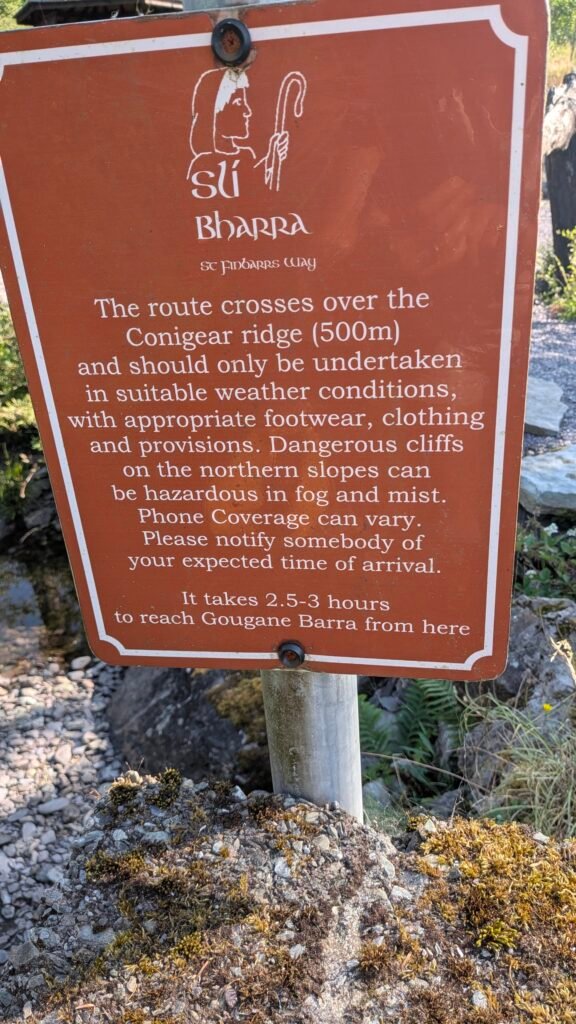
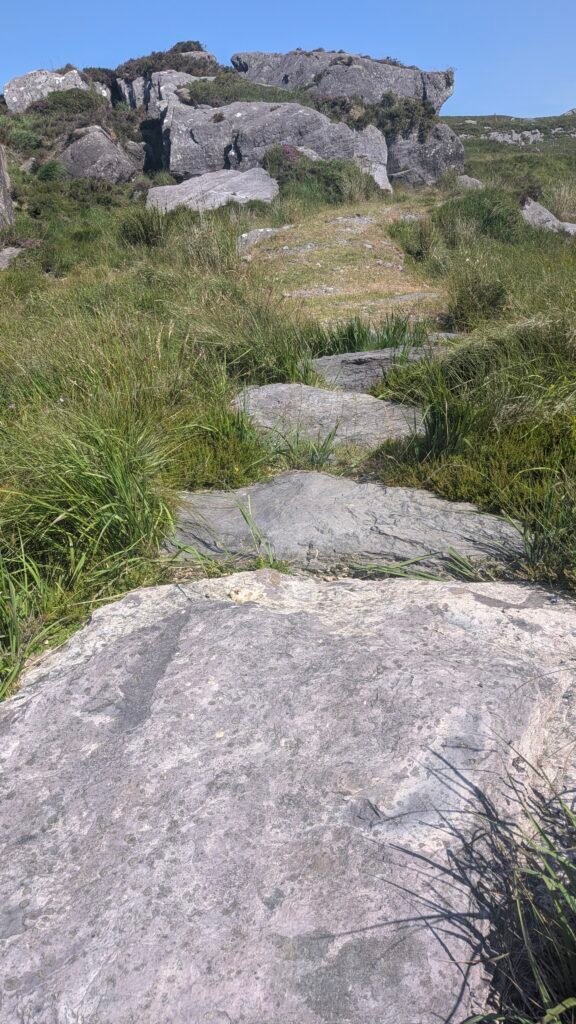
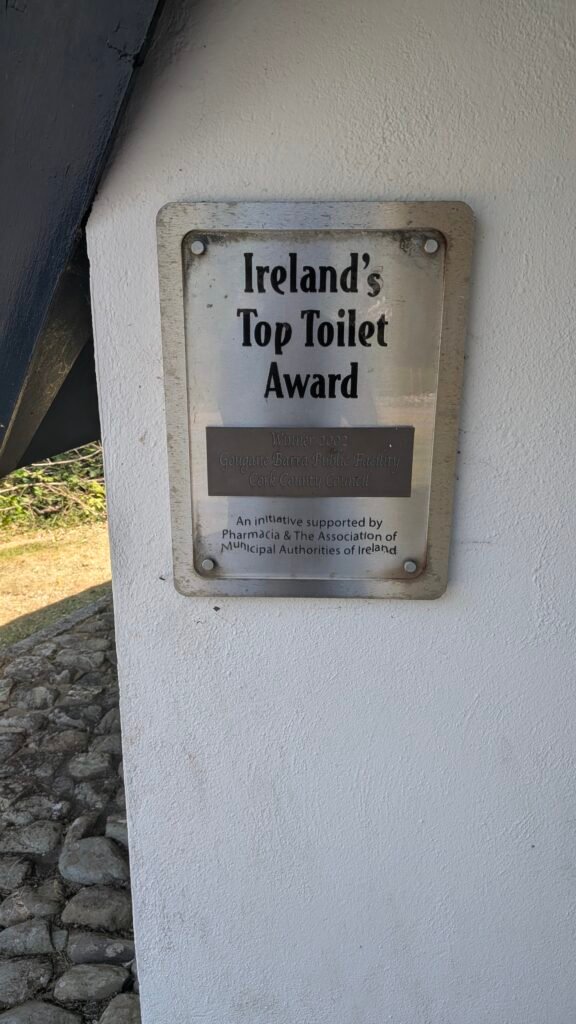
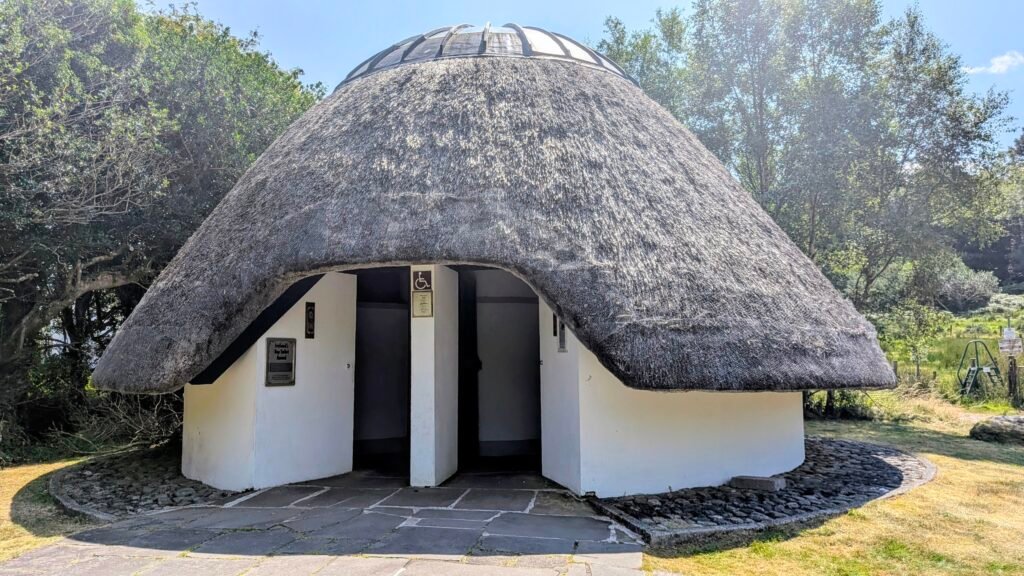
Like a mirage, we saw Gougane Barra, far below us, the lake waters still and shining in the distance. A long, stony path meandered down to our destination with more sheep sheltering from the heat. When we arrived to the water’s edge, I popped into a round thatched building with a wall plaque declaring that it had won Ireland’s Top Toilet Award.
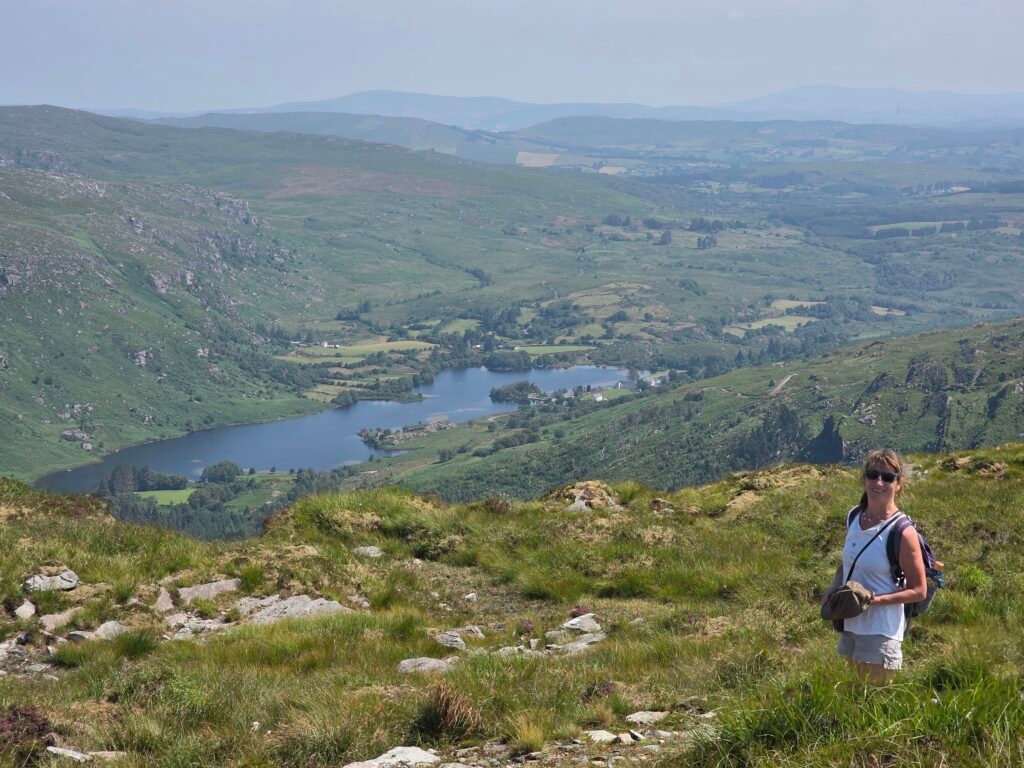
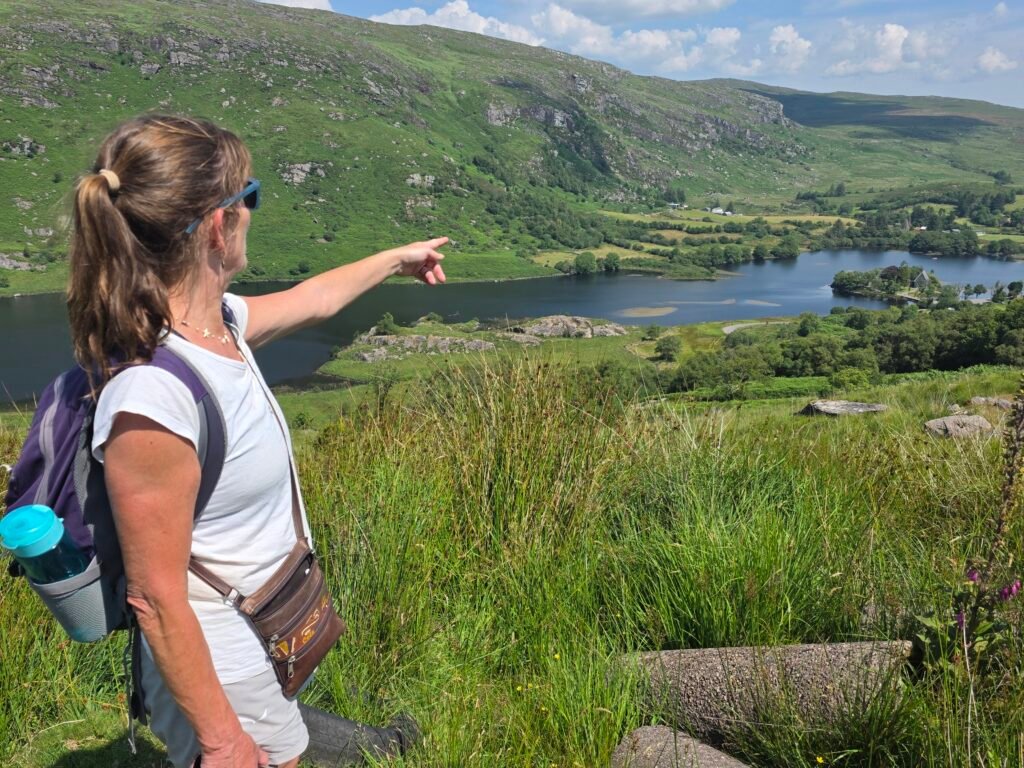
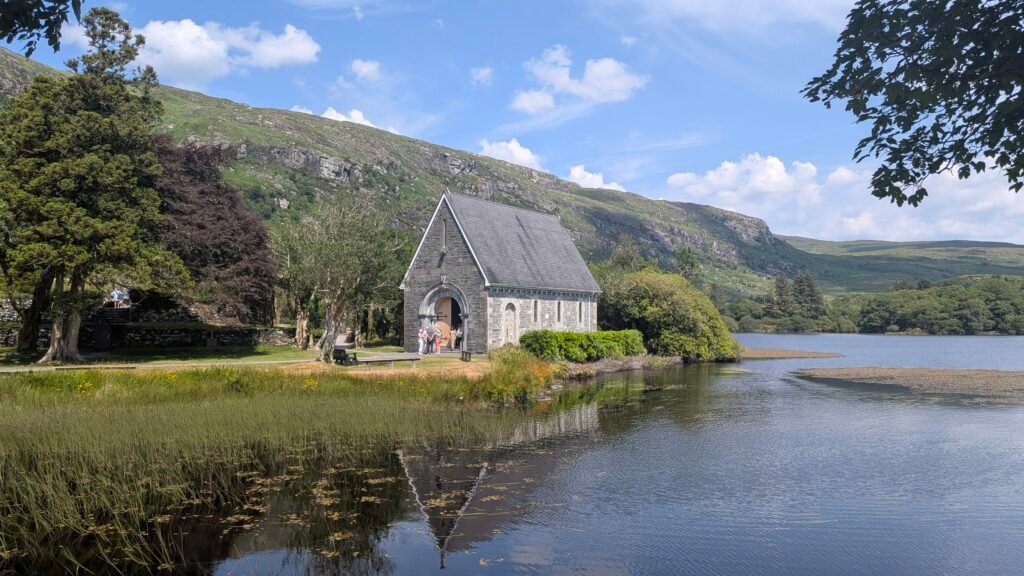
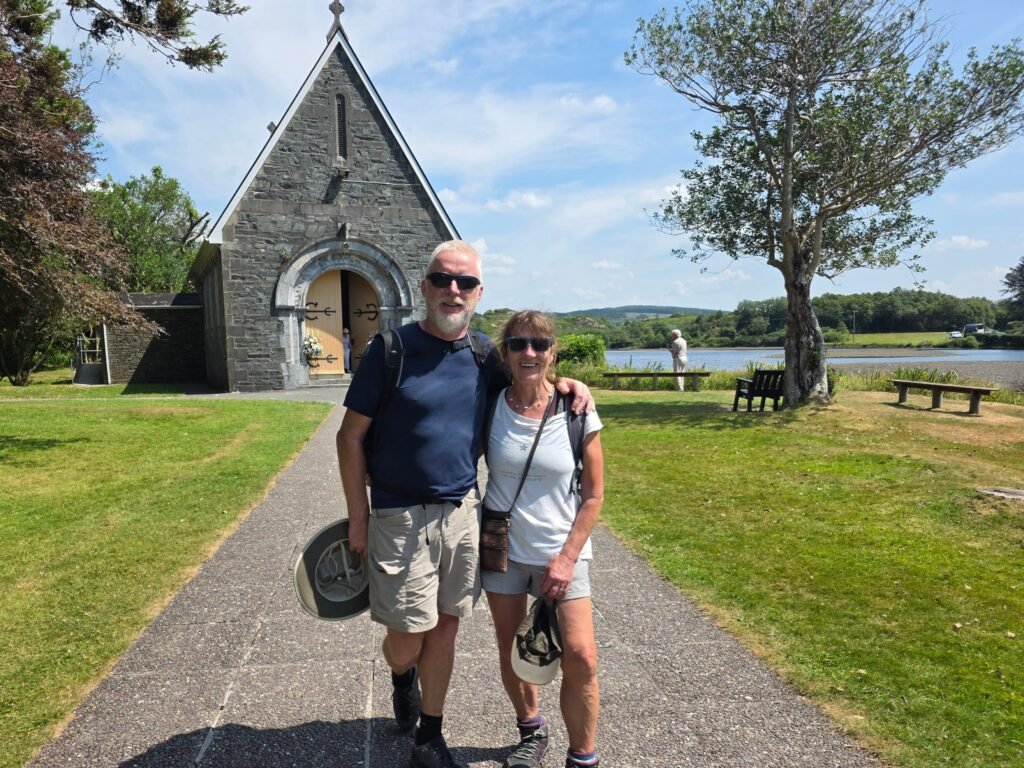
The current church, a 19th stone oratory, marks the spot where St Finbarr built his hermitage in the 6th century. This tranquil hallowed place is a popular spot for weddings. As I lit a candle in the tiny church, an organist rehearsed for a wedding scheduled that day.
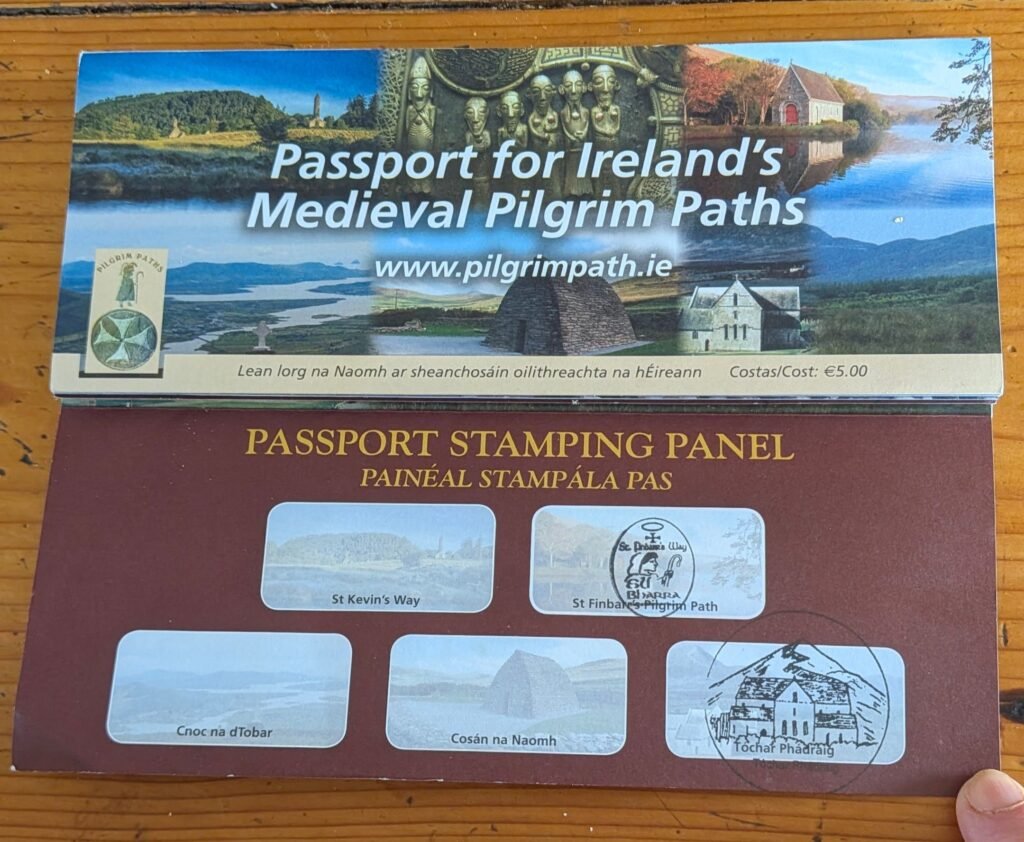
We acquired a Pilgrim Passport last year when we walked the Tobar Phádraig in Co Mayo from Ballintubber Abbey to Crough Patrick. We got our second pilgrim stamp in the foyer of the hotel where we dripped sweat on the reception desk and the manager offered us water and a seat. We have now completed two of the five official Pilgrim Paths in Ireland. The remaining three paths are St Kevin’s Way, Co Wicklow, Cosán na Naomh, Co Kerry and Cnoc ns d’Tobar, Co Kerry and of course, there are countless more.
Despite the horsefly harassment and my blistered feet, we were delighted to have completed another of Ireland’s ancient pilgrim paths, walking in the footsteps of saints.


2 Comments
Ciara O'Brien
Sounds like you definitely earned a few indulgences on that walk Marie!! I feel your pain re the horseflies! They’re my least favourite insect!! Sounds like a great hike though. Fair play to you all. X̌
Bernie Finan
Fantastic read and well done to you all Just amazing