Great Blasket Island: Sleeping with Seals
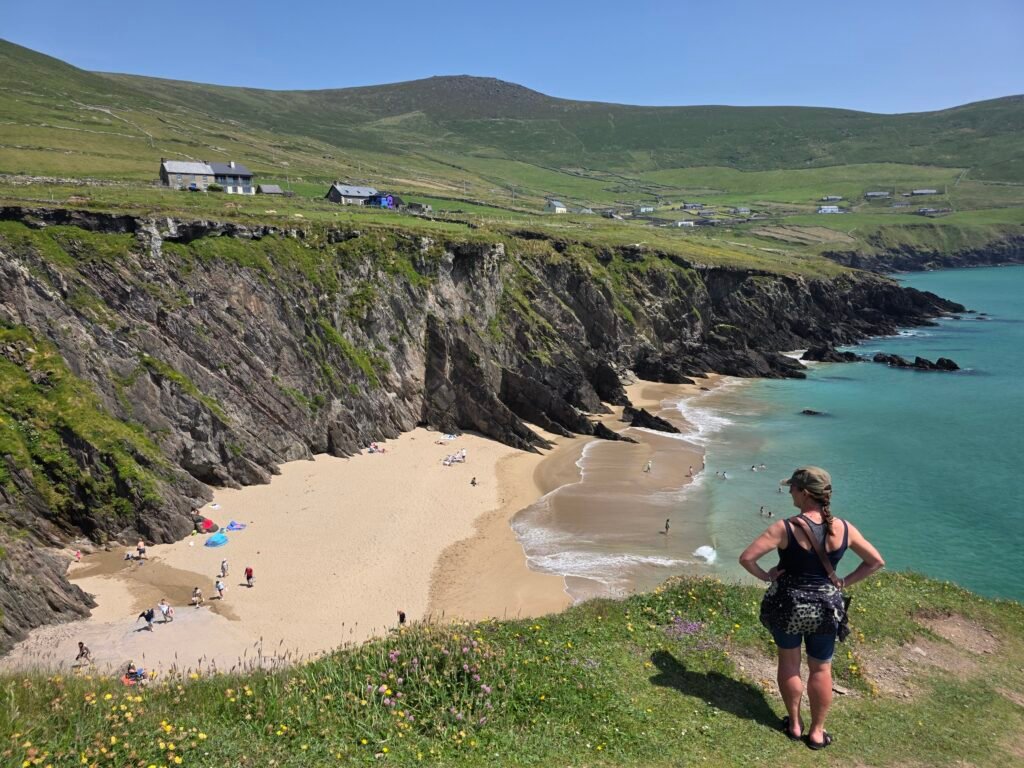
The path wound steeply down to the little pier at Dún Chaoin (Dunquin), with its dramatic cliffside setting and views of azure-turquoise water. I wiped away the sweat trickling down my face, waving my sunhat to generate a breeze, and wondered if we were really in Kerry – it felt and looked like Greece. There wasn’t a scrap of shade on the pier, the sun beating down on the rocky, kelp-strewn waters. We watched the shimmer of the white beach (Trá Bán) of the Great Blasket Island in the distance, three miles across the bay and chatted to a fair-haired boy who sat on the pier wall minding a basin of three large pollock as he waited for his father to moor their small boat.
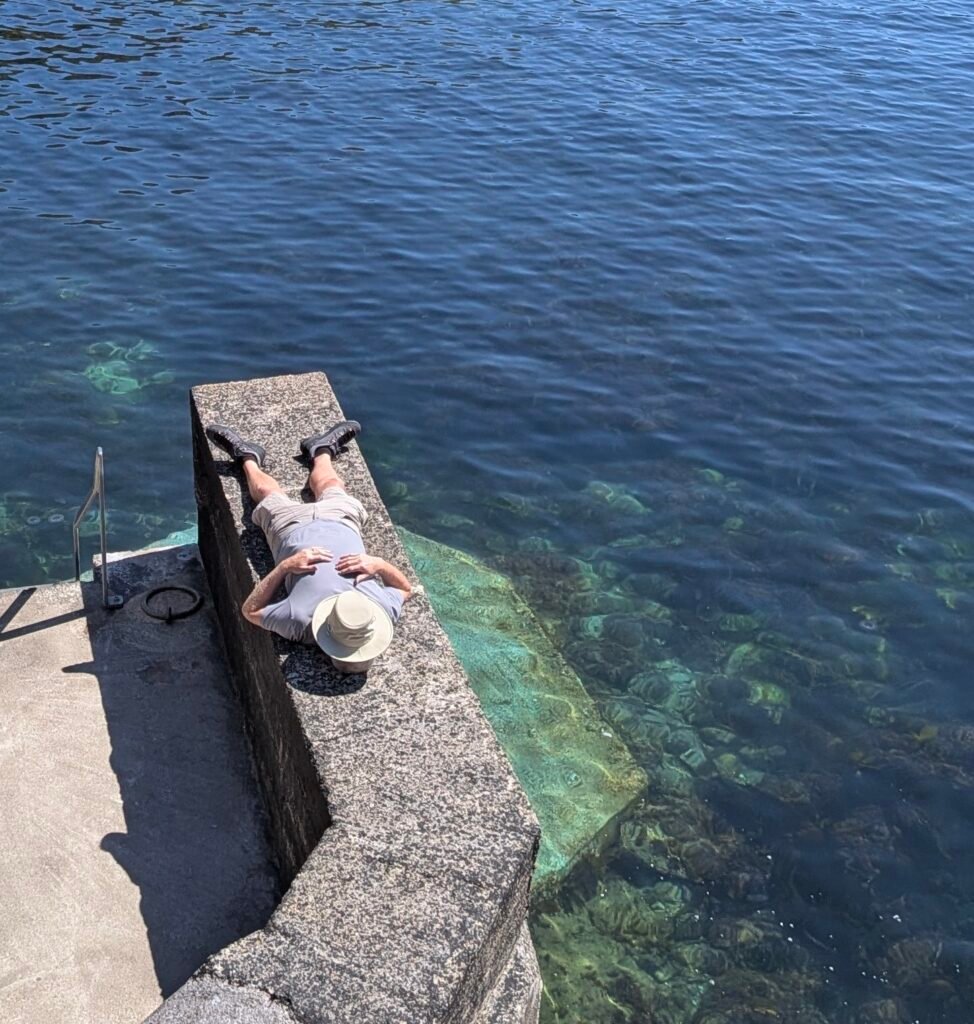
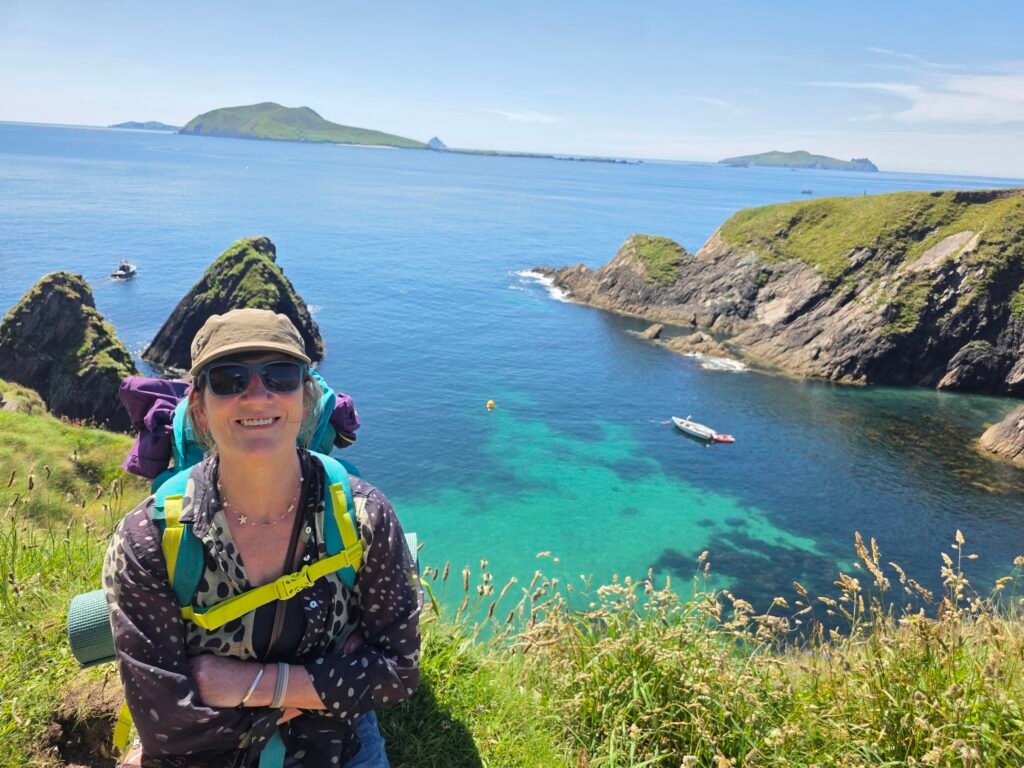
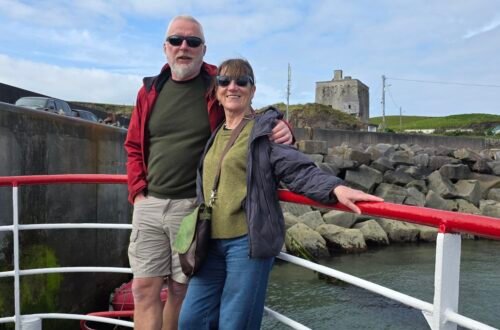
Caoimhín and I were the only passengers taking the afternoon ferry to the Great Blasket Island, the largest in the archipelago of six islands. Most visitors are day trippers, deposited on the island in the morning and collected in the afternoon after four or five hours. The small boat transporting us to the island was on its way to bring back the passengers who had been dropped off earlier.
All travel in this exposed area, open to the Atlantic, is subject to the vagaries of the weather, which can change on a whim. The ferry website had advised having a plan B, just in case the boat was cancelled. On this June afternoon, the sea was smooth as silk and clear as crystal, with no sign of the characteristic powerful currents, fast-moving tides, and huge swells which are so characteristic of this tricky, treacherous crossing.
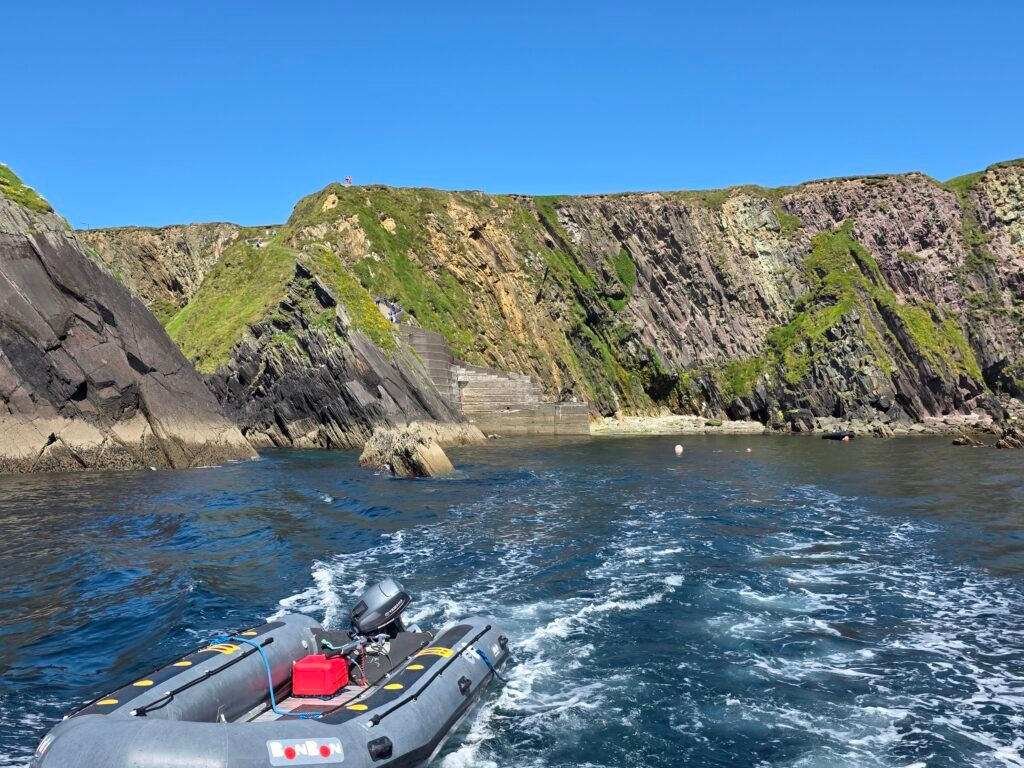
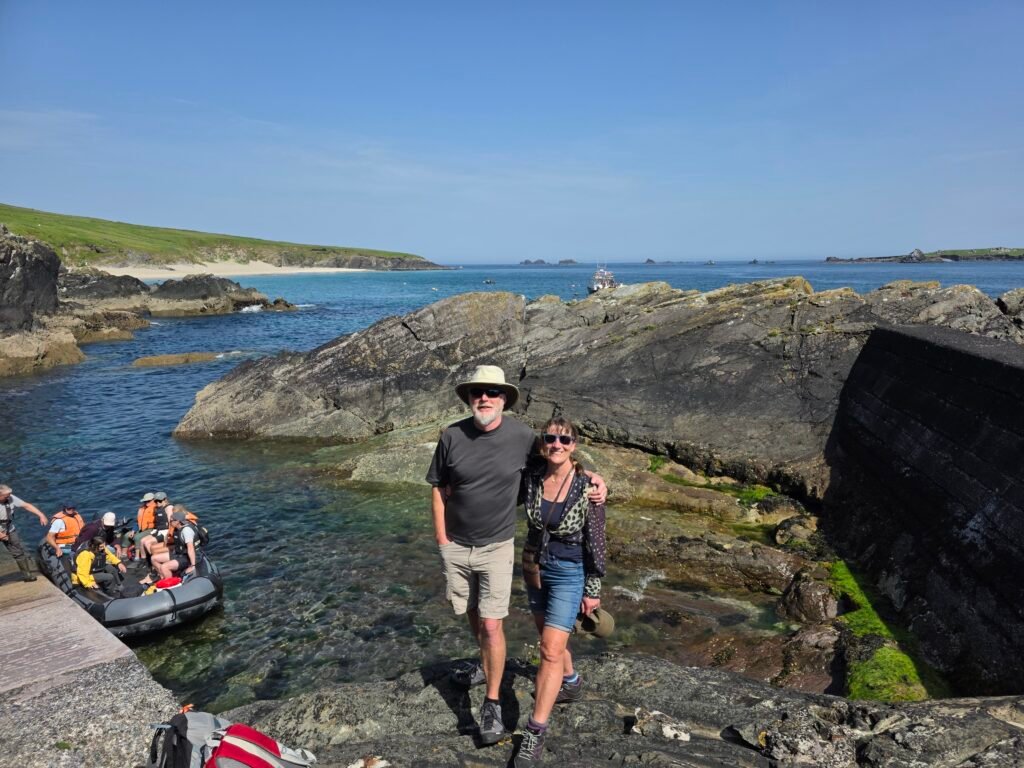
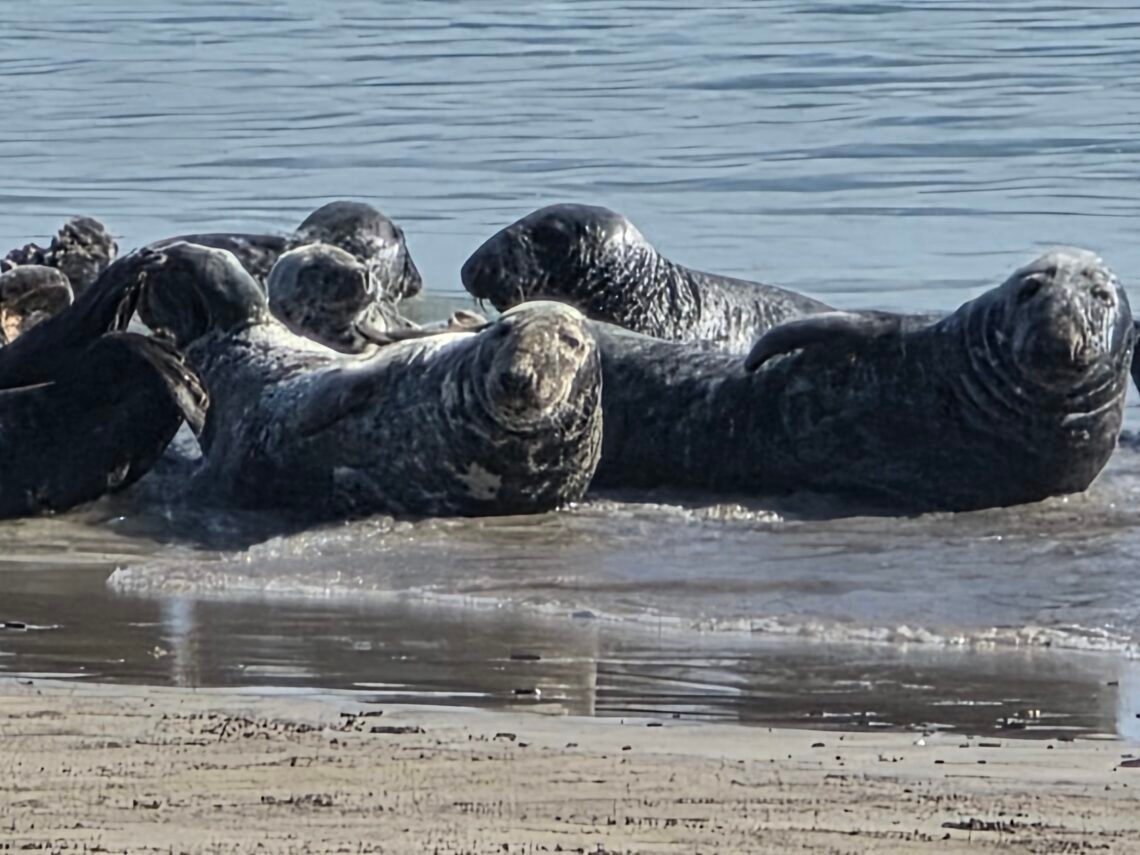
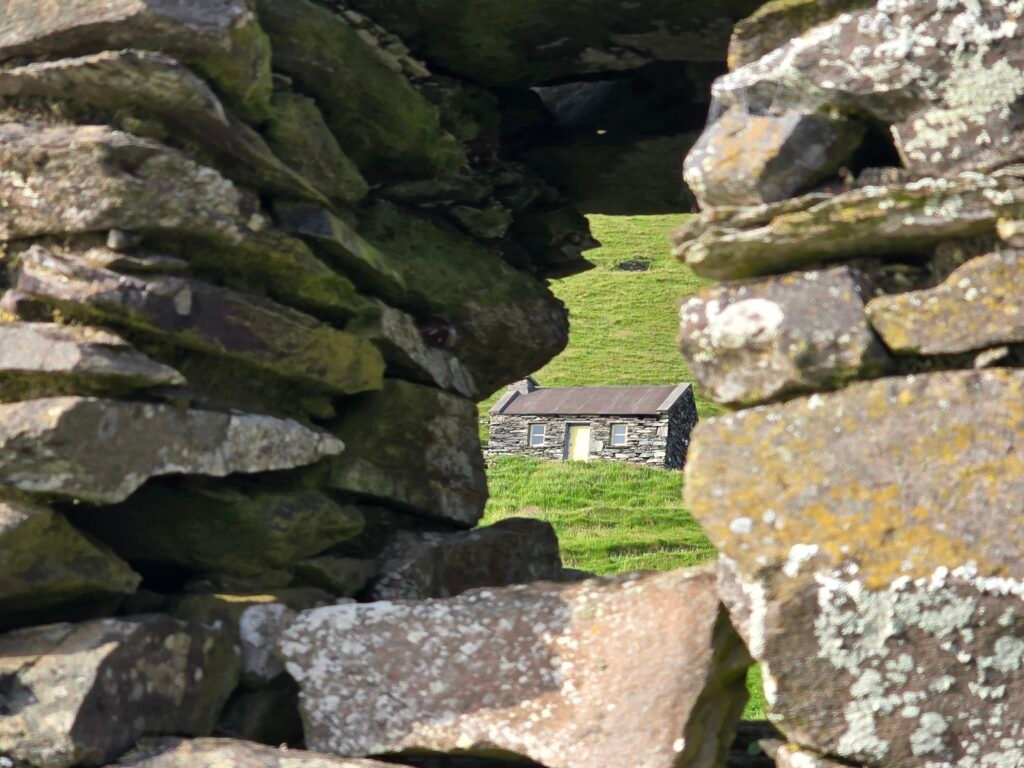
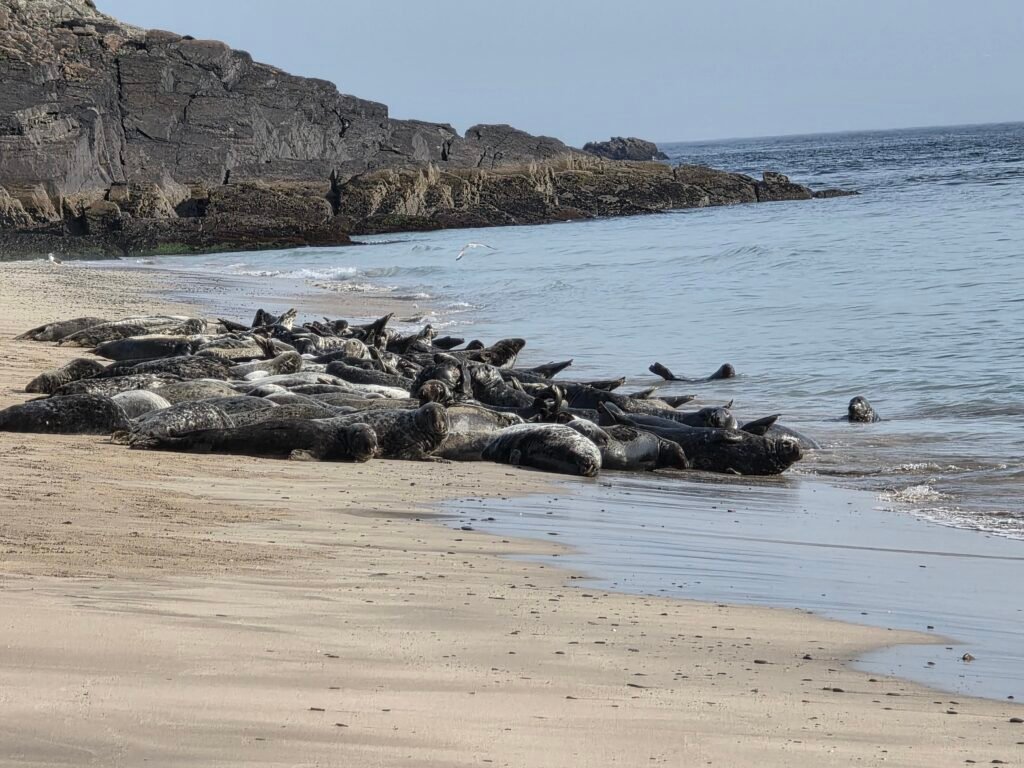
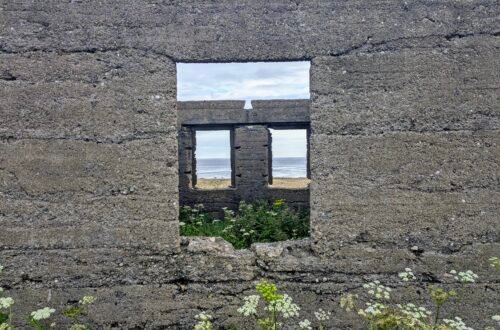
The island doesn’t have a sheltered harbour, so we clambered from the ferry with our rucksacks into a small bobbing dinghy, which took us ashore. The island is hilly, very hilly; the initial climb from the landing area sets the tone. We wandered to the right, past the deserted village, many of the stone houses without roofs, with moss and lichens growing in the crevices. Continuing toward the gorgeous white-sand beach, a large hare stopped to look at us before bounding away, and rabbits scurried along the path. From the hillside, the grey rocks at the far end appeared to move… maybe it was a mirage? But then they became a cluster of seals, squashed together on the beach. The Great Blasket has Ireland’s largest colony of grey seals, and they were pretty vocal, making a series of groans and grunts.
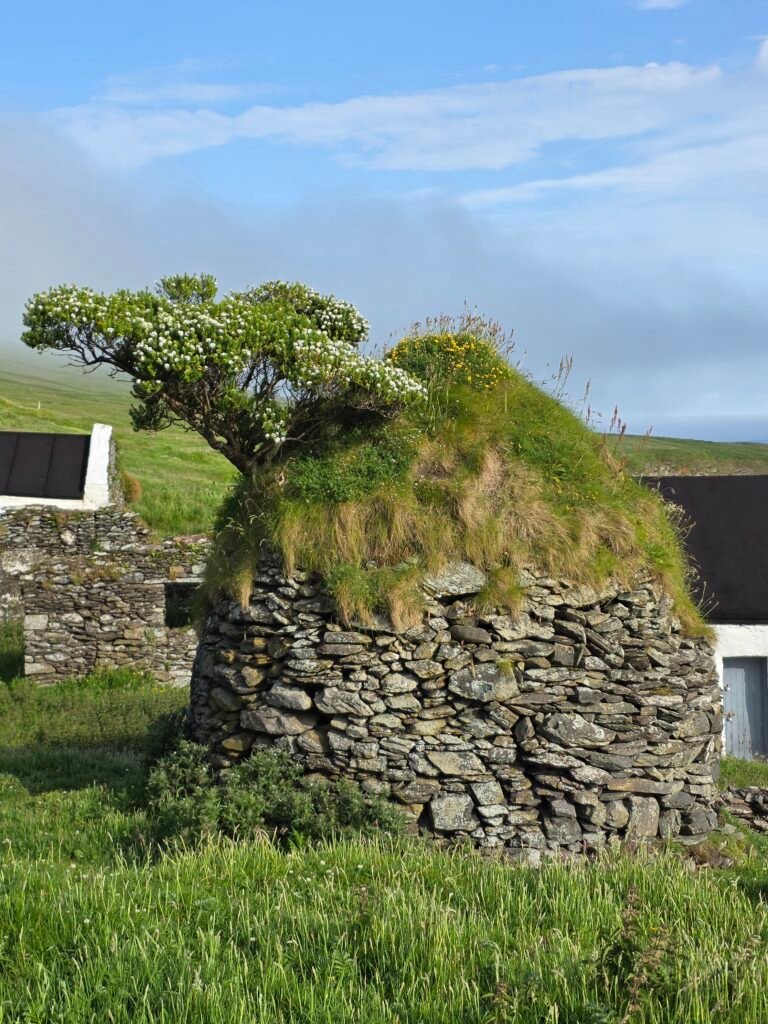
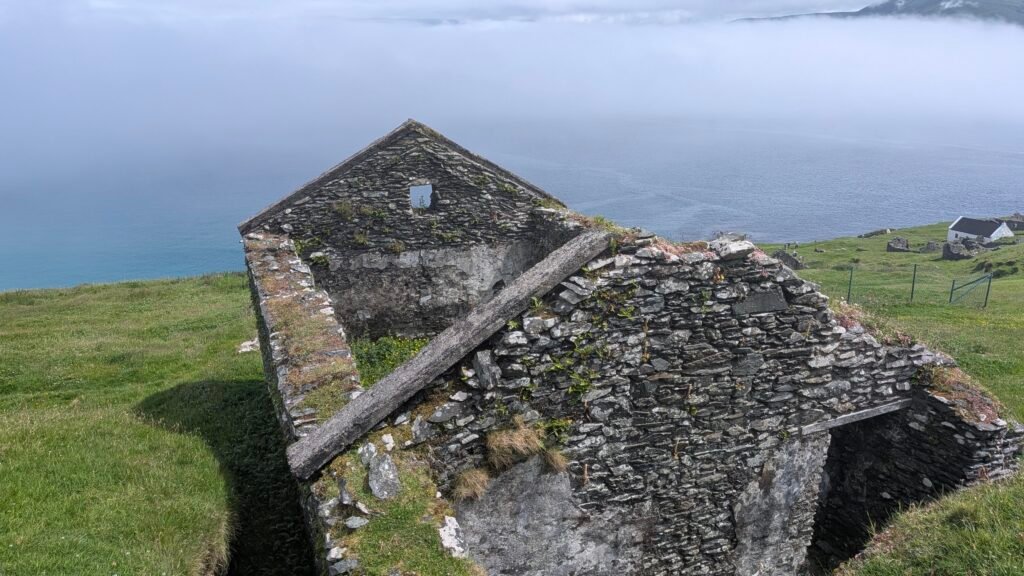
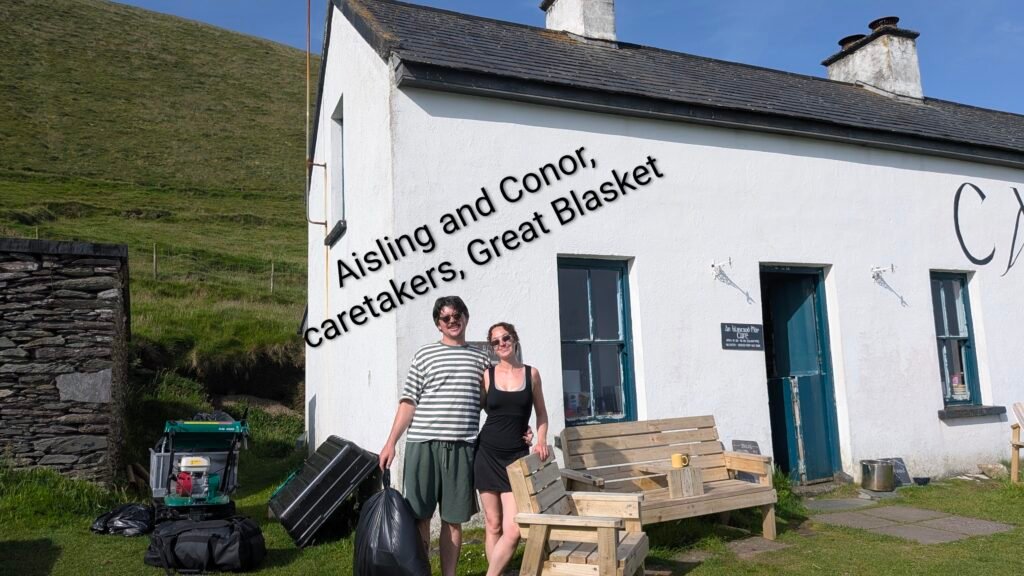
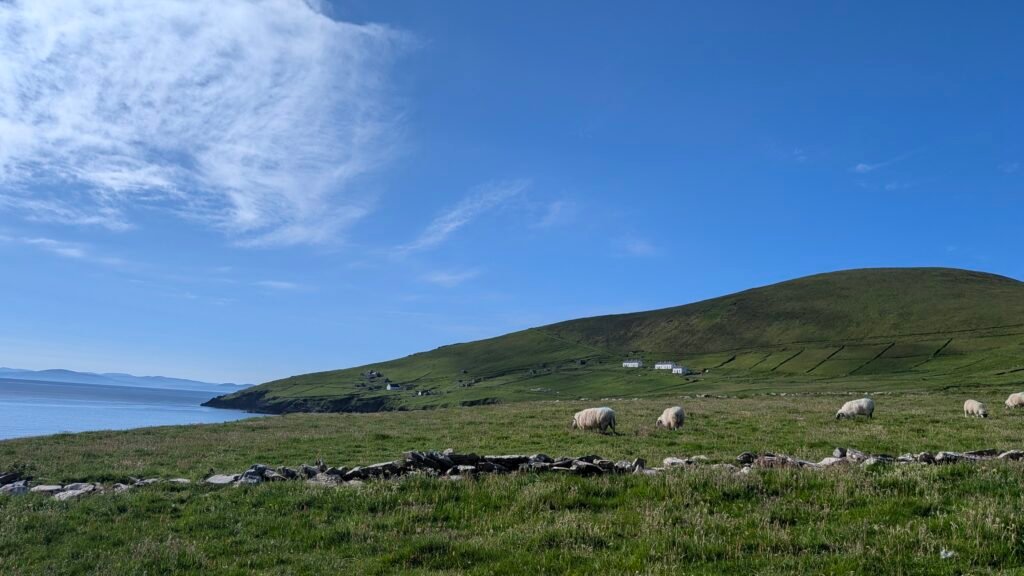
Above the crumbling village, a couple of houses stood halfway up the hillside, more substantial than the ruins, painted white and almost luminous against the bare green backdrop. One had “CAFÉ” written in black letters. Although the Great Blasket, the largest of the six islands in the group, has been uninhabited since 1955, caretakers live on the island to look after the rented cottages from April to early October, and run a basic café, little more than a hatch takeaway with teas, instant coffees and a selection of snack bars, but no real food. This job receives a huge number of applicants each year from people all over the world. This year’s applicants were Conor and Aisling, a lovely couple from Wexford and Kilkenny.
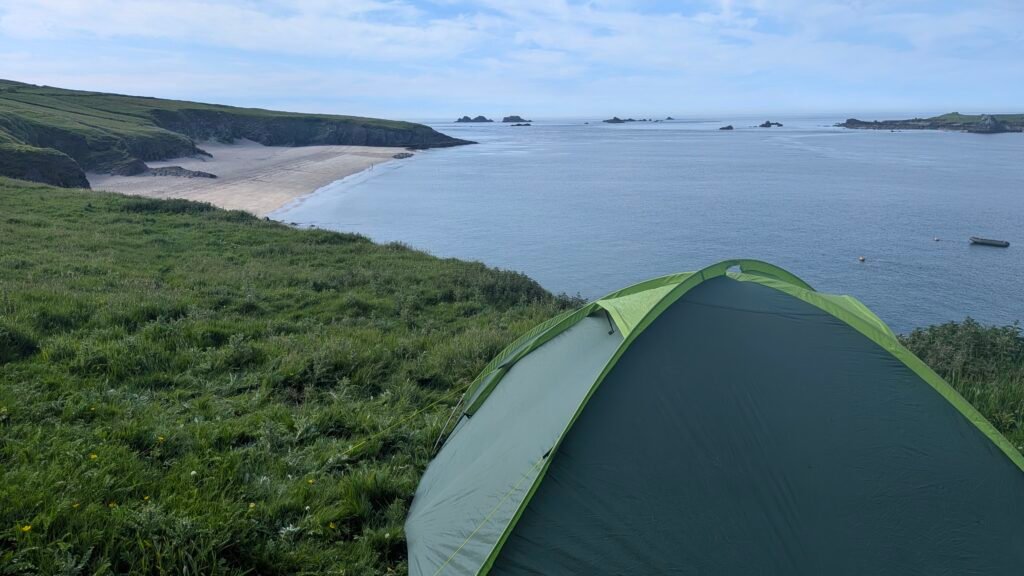
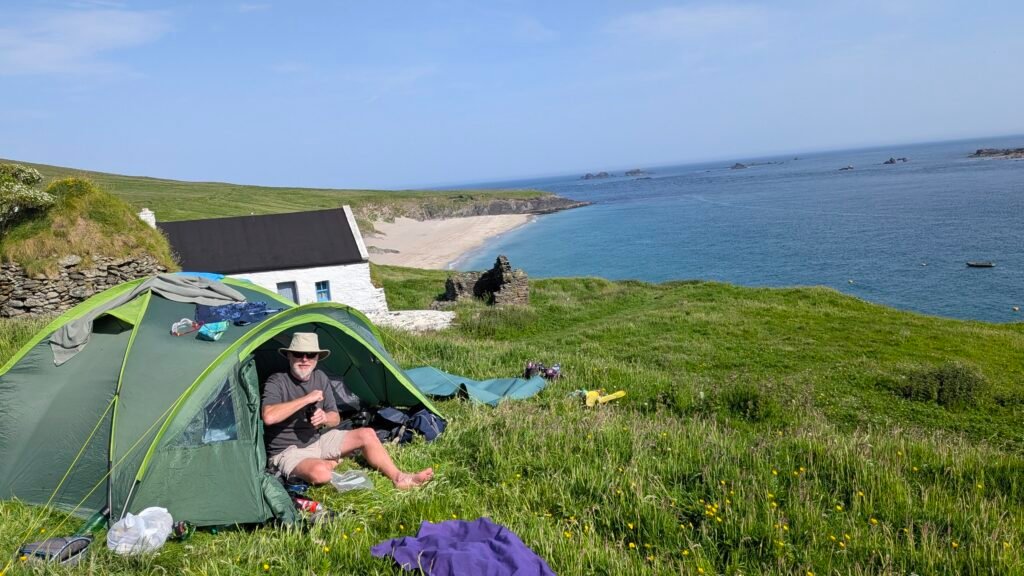
Although camping is permitted everywhere, finding a relatively flat area wasn’t easy. Eventually, we settled on a hillside spot with a view of the beach, where we could watch the seals through our binoculars without disturbing them and track the black shadows of the many cormorants flying low over the water. Our spot had a profusion of thistles and nettles, but they still made a soft mattress. We were on a relatively gentle slope and kept sliding out of the tent. It was so warm that we slept with the flap open and had views of the sunset that first night. There’s something glorious about camping during the longest days of the year, when it is bright until 11 pm and lightens again shortly after four.
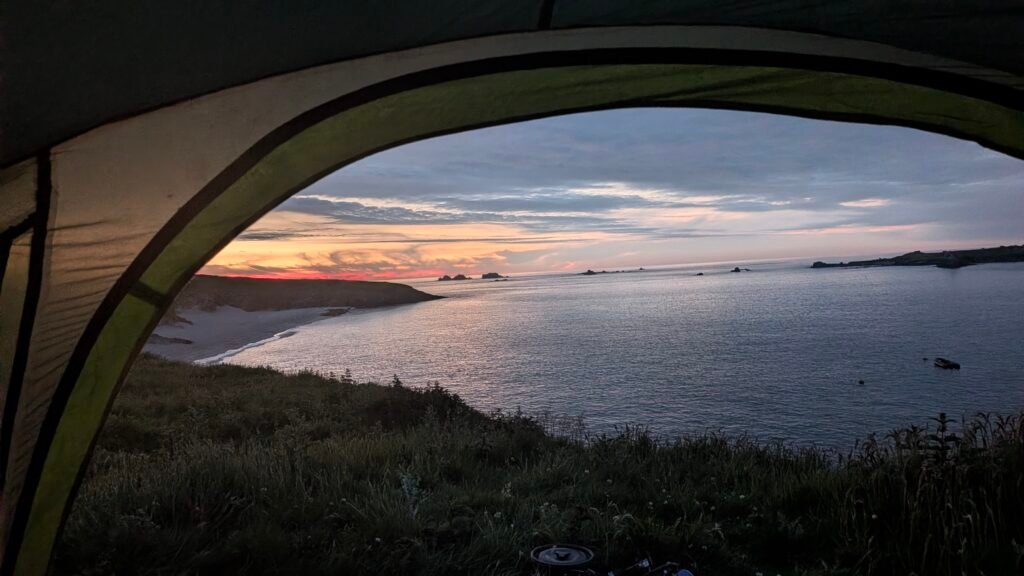
The evenings were tranquil, especially when the daily intake of visitors had been exhaled, leaving only the caretakers, the cottage guests and ourselves, the only campers. But during the nights, all hell broke loose, and the peace was shattered, particularly during our cloudy, moonless second night. At the darkest part of the night, the air was rent apart by hoarse, hysterical shrieking. These were the Manx Shearwater birds who came in from the sea to mate, lay eggs and feed young under nighttime cover. Although the birds spent their days fishing in silence, they made up for this with a cacophony of wild howling, like insane spirits wandering without aim or restraint. If that wasn’t enough, the noise of the seals on the beach, which had seemed cute and background noise during the day, amplified at night to become an eerie moaning that would make your hair stand on end. We could fully understand why legends often connect seals to the souls of drowned people. Nevertheless, it was a privilege to share the island with these ‘locals.’
The island, although small and remote, is famous for its storytelling tradition and has produced an impressive array of authors. Today, the Blaskets are managed by the OPW, which has preserved a few cottages, including those of local writers such as Peig Sayers and Tomás Ó Criomthain. The OPW gives fabulous literary tours several times a day during the summer…weather permitting. Up to last week, they had only managed four days in June because of high swells. Cáit, our guide, seemed to be on a mission to show Peig in a more favourable light than the one portrayed in her book, where the woman’s earthiness and humour were watered down. The islanders of the late nineteenth century and early twentieth century were conscious that their way of self-sufficient living was becoming endangered… with young people emigrating and the population dwindling. Without a priest or a doctor, the end was in sight. But they were also acutely aware of the importance of recording ordinary daily life, the simple tasks, before they were gone. And although life was hard and often tragic, there was also fun, music, and storytelling. The islanders valued themselves and knew that their likes wouldn’t be seen again. Ní fheicfear a leithéidí arís
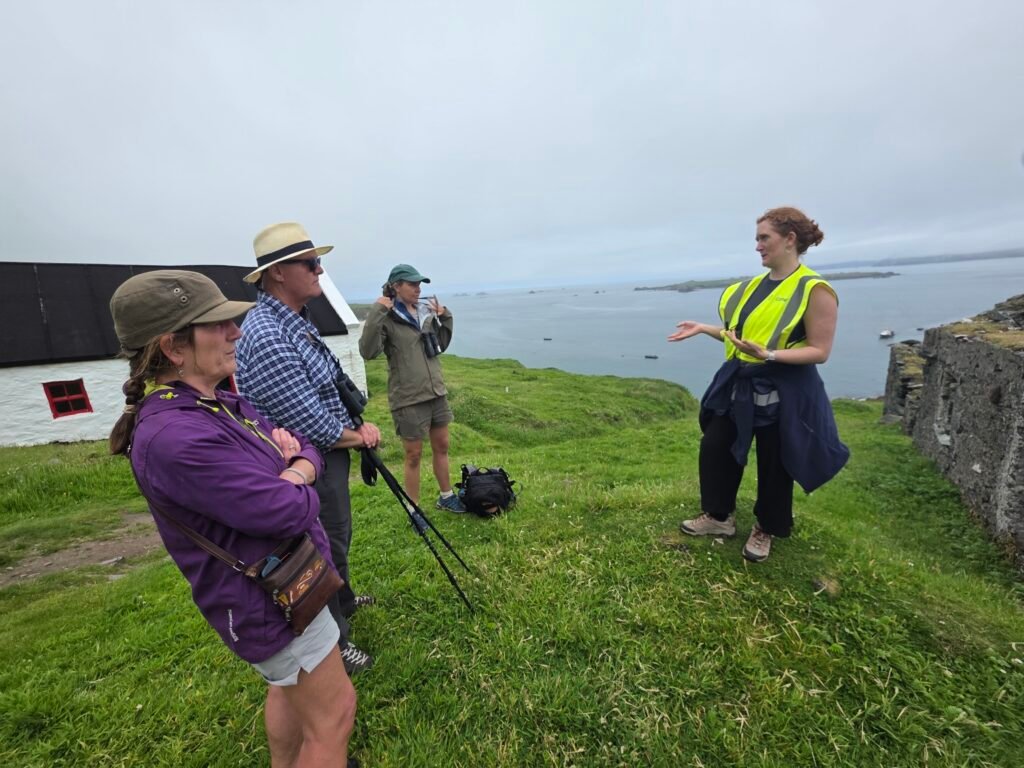
All the original cottages faced south and were clustered together for shelter. When Peig was widowed, she moved to a house higher up the hill, which had stunning views, but she complained that she couldn’t keep her door shut because the wind was forever blowing it open; the house faced the ‘wrong’ way. On our third evening, the temperatures dropped, and the winds picked up, so we decided to reorient our tent in line with the island’s accepted wisdom. Peig was entirely correct – it made a big difference.
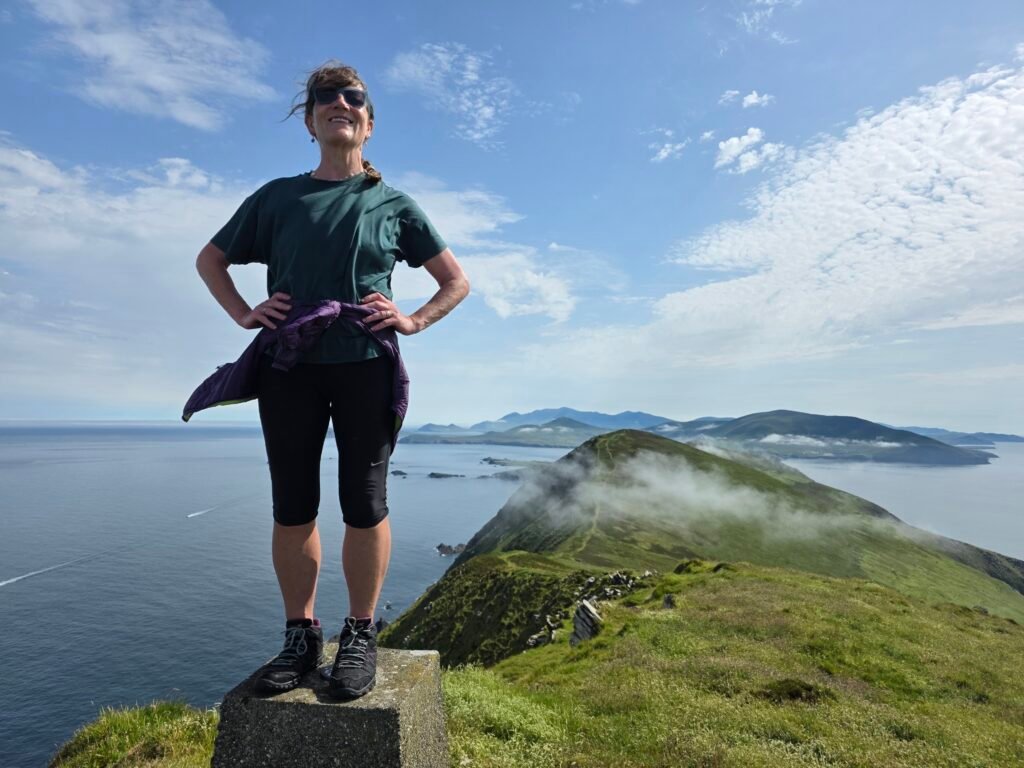
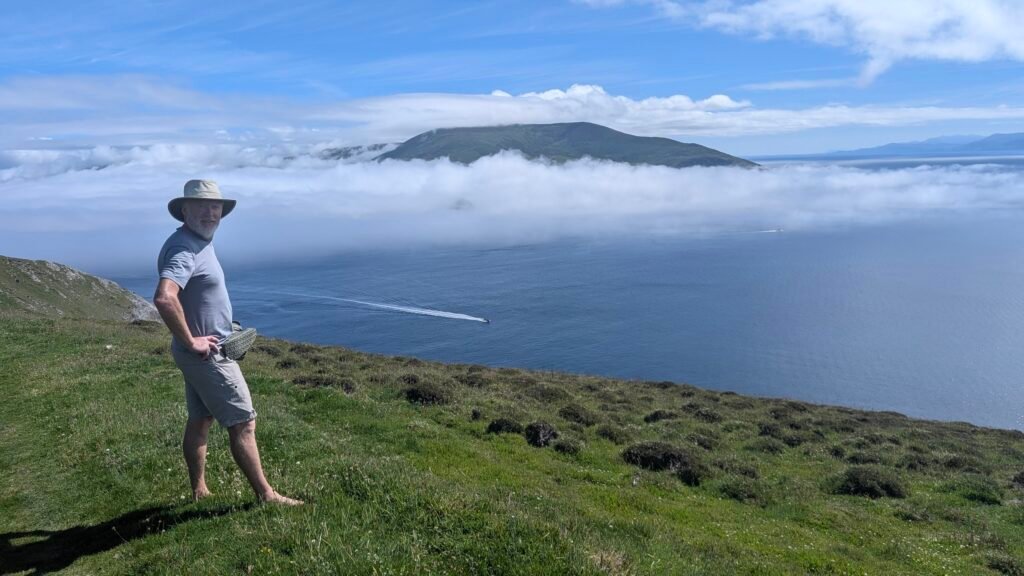
There are no cars on the island – there aren’t any roads, only grassy walking tracks, often boggy and spongy in parts. A fourteen-kilometre trek took us to the peak at Cró Mór with views of cliffs, seabirds, grazing sheep and islands, Skellig Michael in the distance and the next stop, America. There’s a shorter 5km loop, which takes about an hour and a half – this is the one that most of the day trippers do.
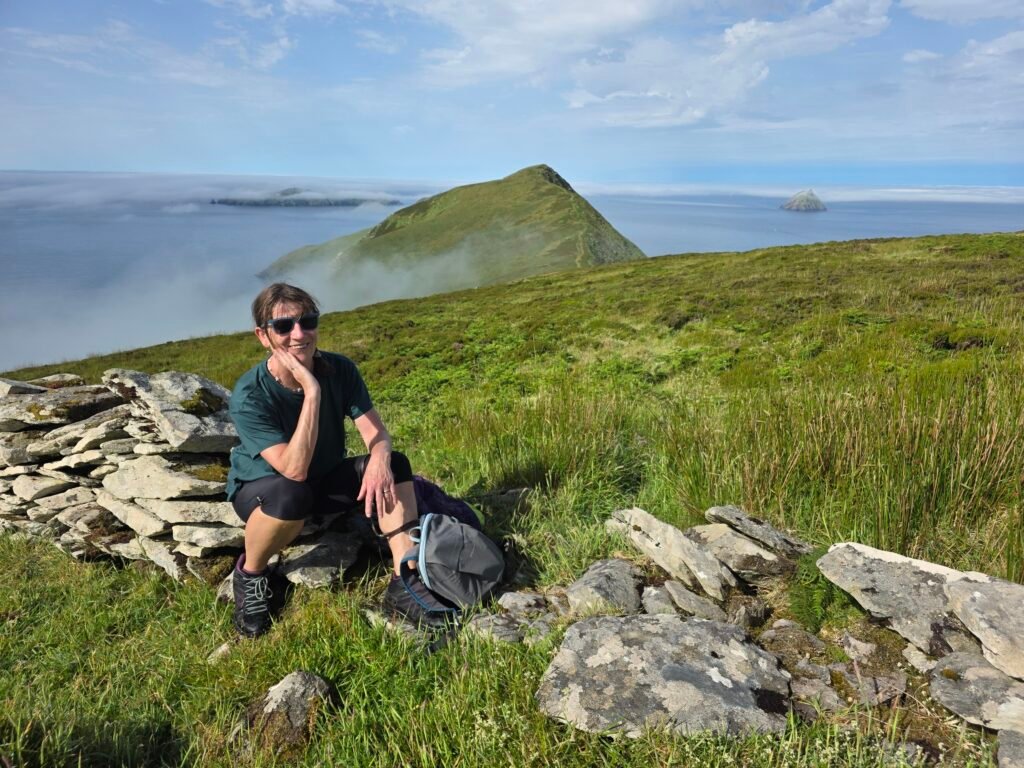
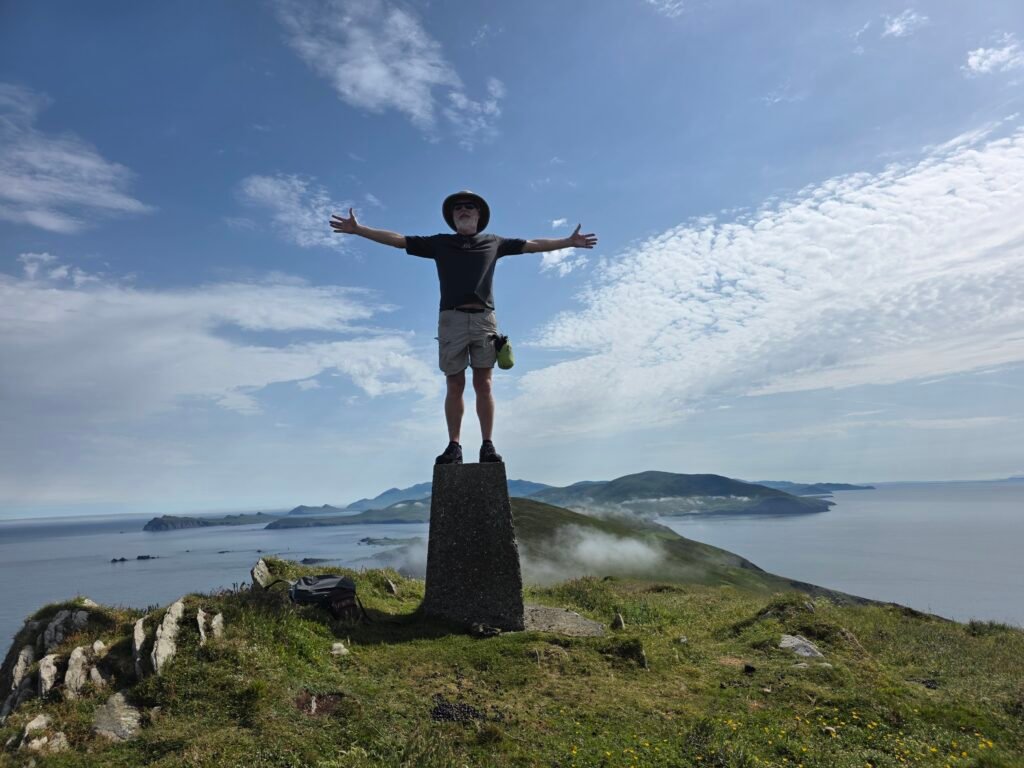
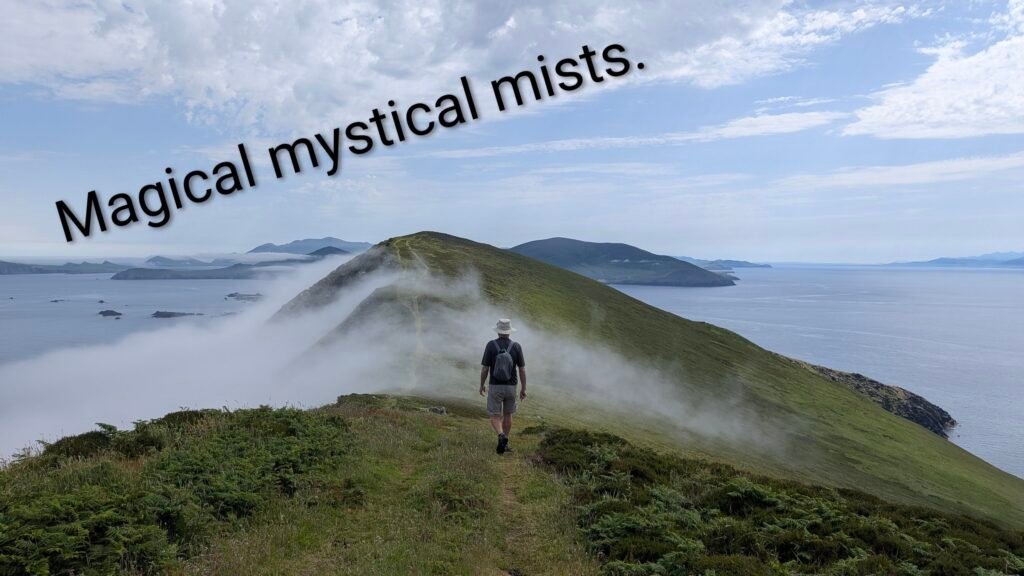
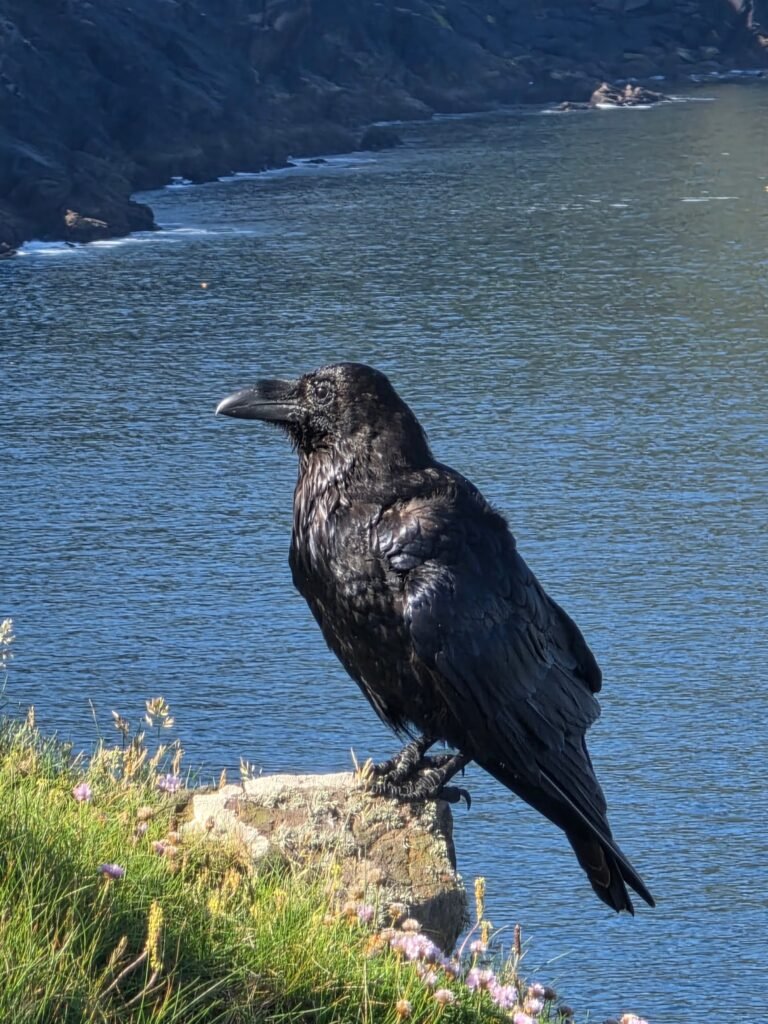
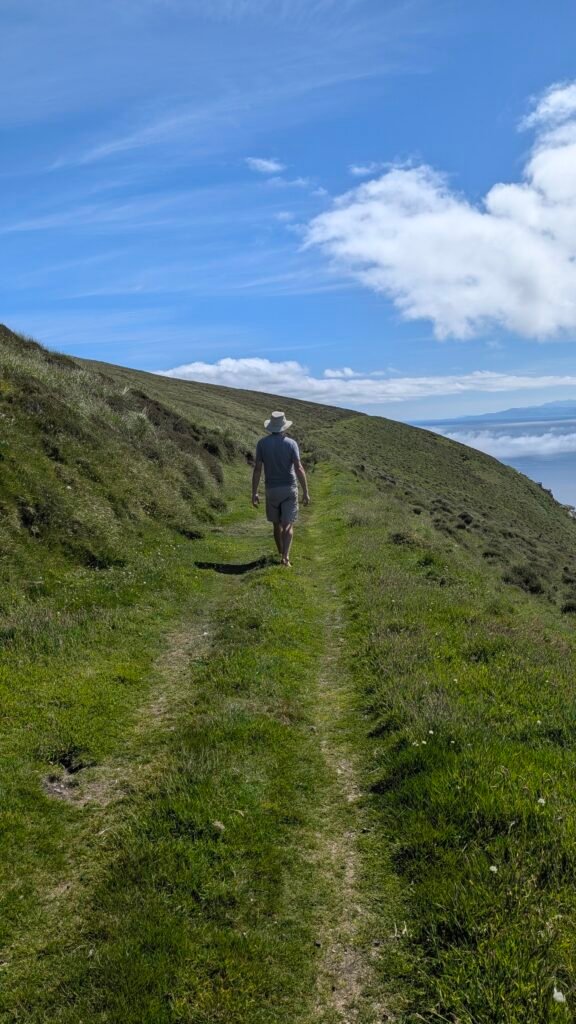
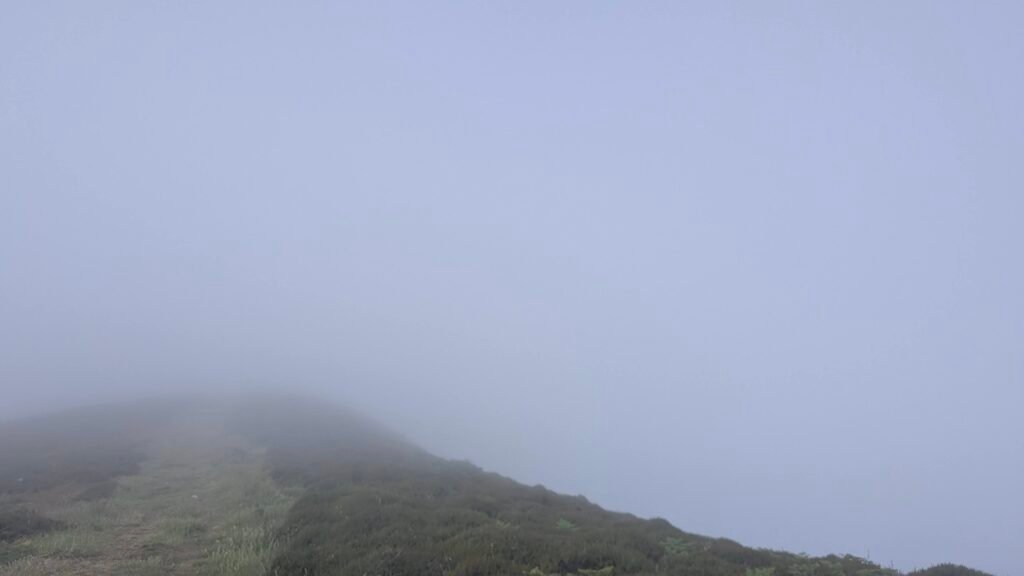
During our four-day island stay, we experienced what our boatman described as ‘bipolar weather’ – heat with blinding blue skies, fog so thick it was a ‘white-out’ and the boats didn’t travel, some cool, breezy conditions, a few downpours, some drizzle, and the mystical mist that came and went. The temperatures hovered in the teens and occasionally climbed into the twenties, but the mainland was under heat warnings. We witnessed firsthand the island’s changeable weather, even in summer.
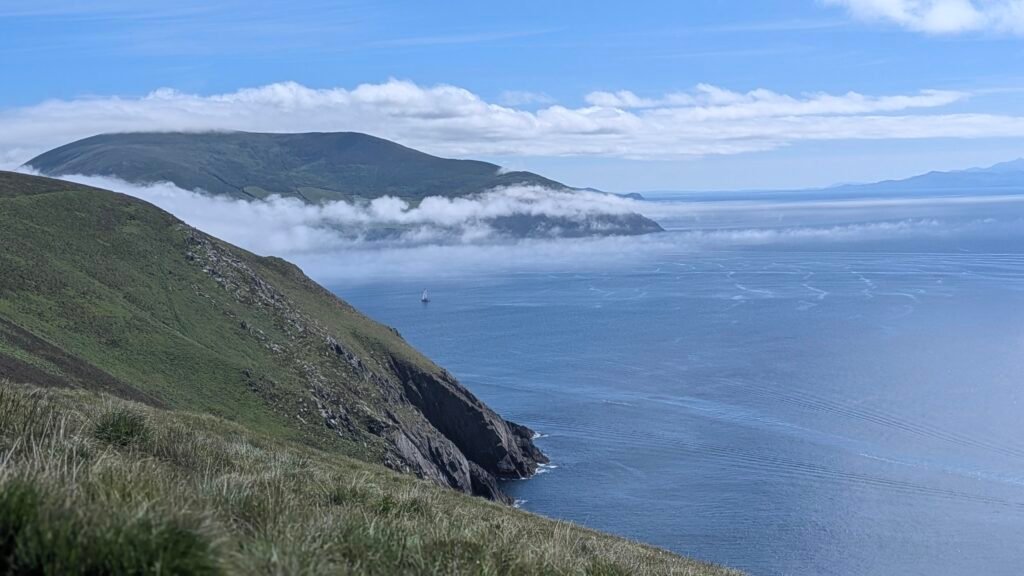
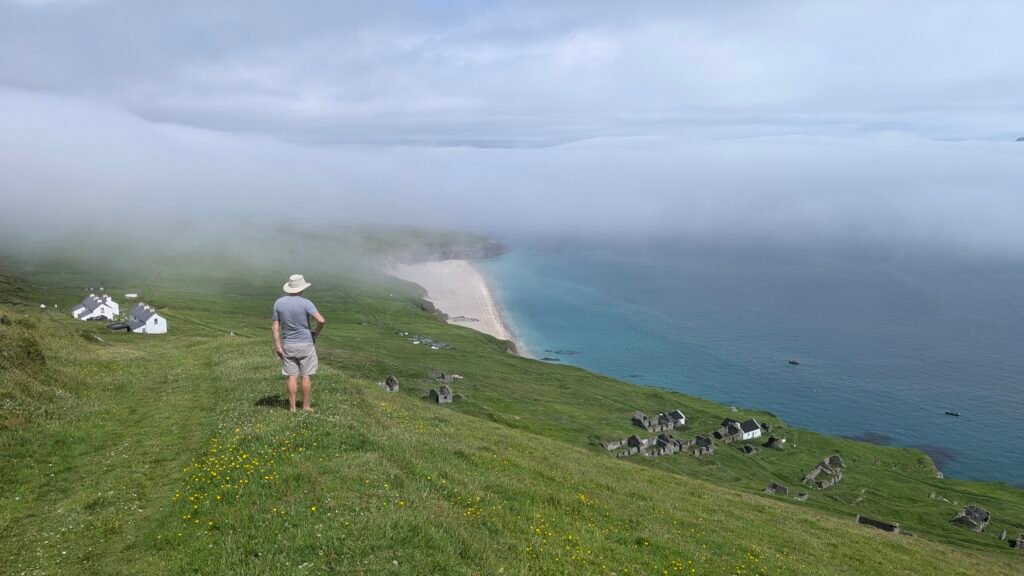
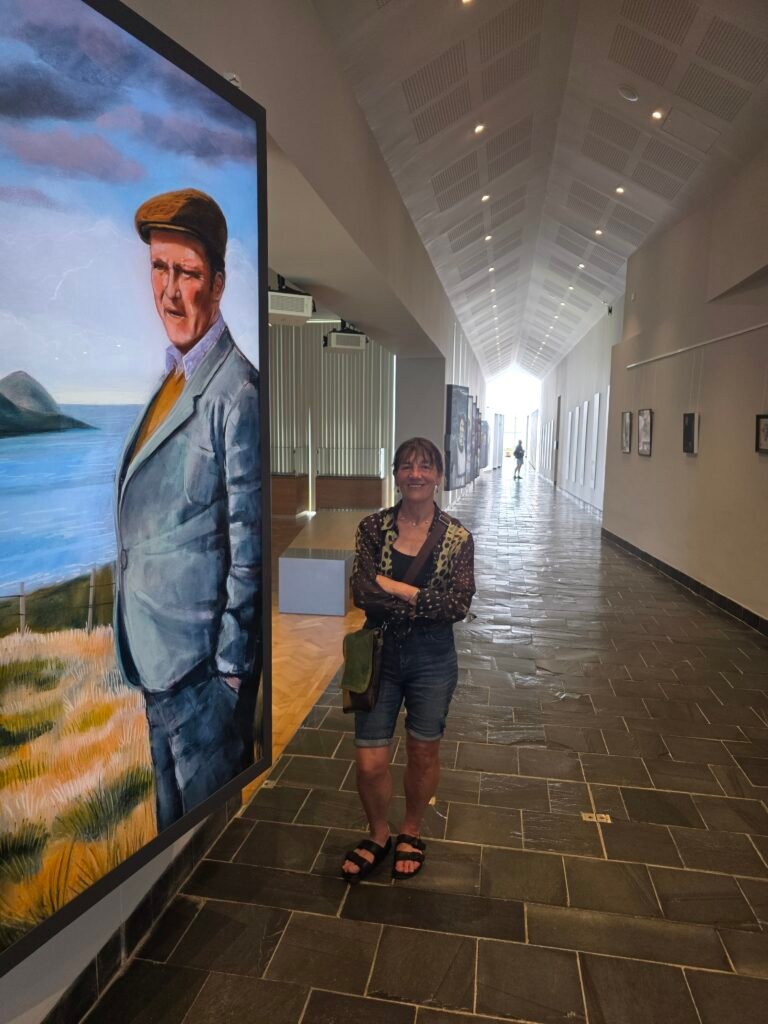
If you are ever down in West Kerry, don’t miss the beautiful Blasket Centre in Dunquin, an architecturally stunning building, showcasing the history and rich literary heritage of the islanders and their descendants – writing talent running down the generations.
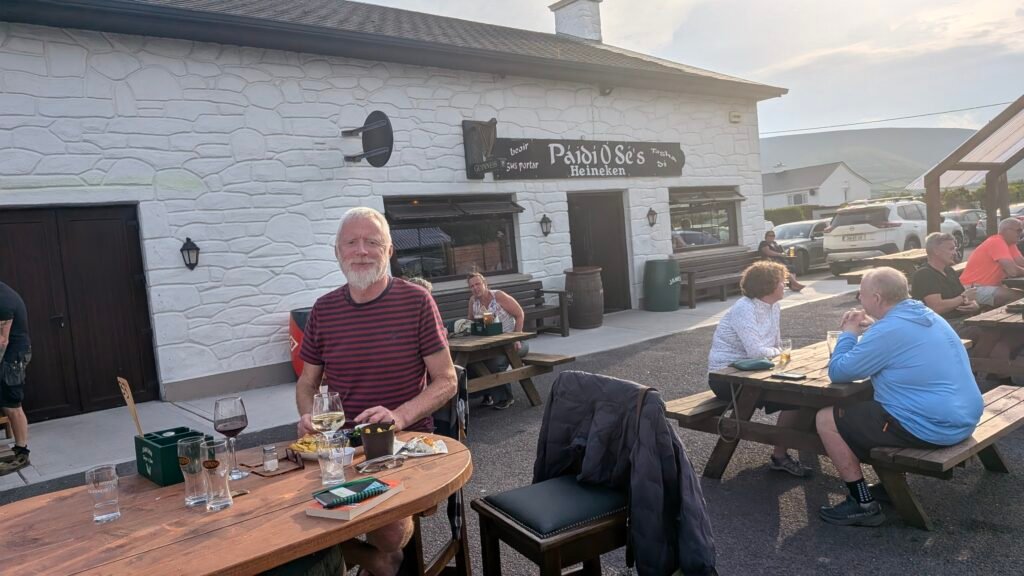
Back on the mainland, we spent a night parked in the field opposite Paudie O’Shea’s pub in Ventry – camping is free with an unwritten agreement that campers will eat or at least have a drink in the establishment where football boots dangle from the ceiling.
This was another enjoyable jaunt in Ireland to the wilds of the Dingle Peninsula, truly an unique place.


4 Comments
Sighle Doyle
Amazing! Didn’t Peig lose some of her children to those slopes.
Ciara O Brien
Incredible Marie. Beautifully written and so evocative. Sounds like a little bit of heaven there. Xx
Micheal Condren
Fantastic- great word smithing- I felt like I was on the visit with you. Thanks for the powerful descriptions and the linkages to the heritage of the islands.
mari.noonan@gmail.com
Thanks, Micheál, it was really a great experience…very different.