Thailand/Malaysia: Long Journey to Paradise
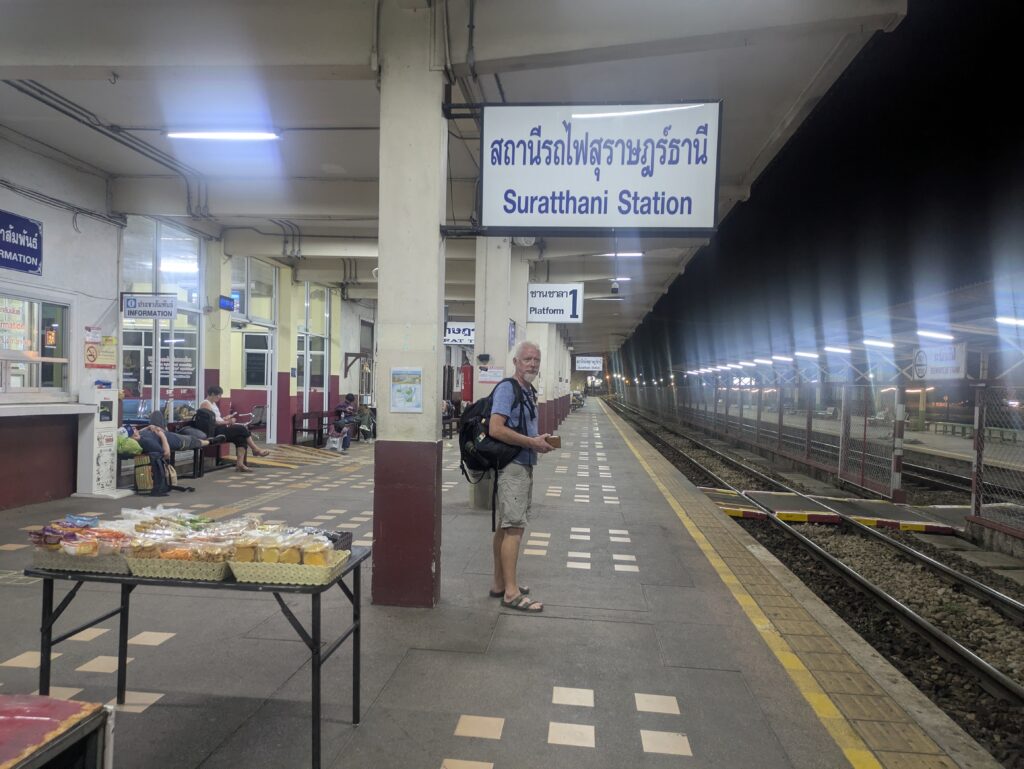
In the train station in Surat thani in Thailand, the woman behind the ticket counter was almost asleep, her head was resting on her folded arms with one bleary eye on her phone A few passengers dozed on the hard benches, using their bags as pillows. It was almost midnight and we were early for the overnight sleeper train, which we had booked online the night before to take us on the nine-hour journey to the Malaysian border town of Sunglai Kolok. Our train wasn’t due for at least another seventy minutes, scheduled for the ungodly hour of 01.16.
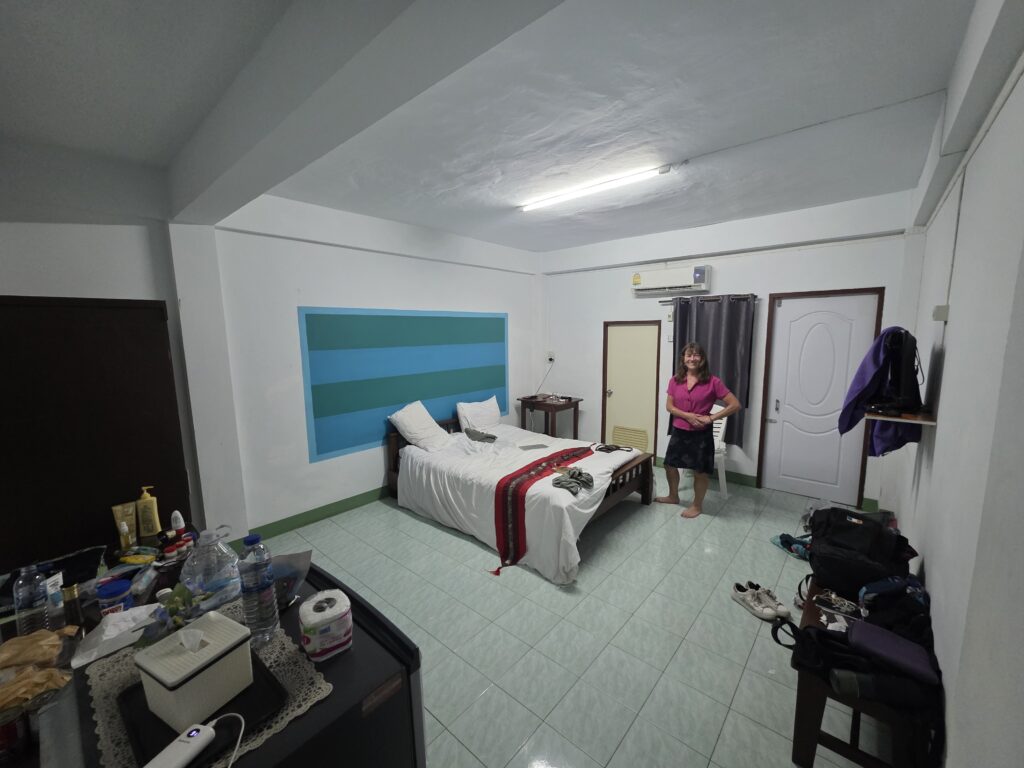
Although we left our hotel in Surat Thani at 23.35pm, we had paid for an extra night, thinking that we would rest but instead watched Ireland give England a good trouncing in the Six Nations Rugby. The hotel, in a non-touristy area, was incredible value at €11 a night for a large room with aircon, a private bathroom and a balcony with lots of local restaurants and a night market nearby.
A goods train rattled into the station, with squealing brakes and roaring engines, rousing some of the waiting passengers. Through the open carriage doors, we could see that It was full of motor bikes, many wrapped in plastic, not surprising with the popularity of motorbike transport in Thailand. A large fan rotated on the station wall, giving us a breeze when it swept in our direction but leaving us sweating when it rotated away.
This was our first experience of trains in Thailand and we opted for a second class sleeper although we were unsure what that gave us. The train was late and when it arrived there was a rush to board…..passengers lined up on the long platform, according to their carriage number. Our carriage was at the very end of the train and although our assigned sleepers were in the same carriage, they were at opposite ends and it seemed that we may have got the last two sleepers on the train. The carriage was a long corridor with blue-curtained bunks on each side, forty-two beds in total, and luggage racks in the central aisle. When I pulled back my blue curtain, it was like entering a darkened cocoon. The mattress was hard but comfortable with a pillow and a blanket (wrapped in plastic like airline blankets). I imagined sleeping soundly to the gentle sway of the train’s motion but I hadn’t bargained for the relentless rattling and jolting which tossed me around my bunk plus the ominous creaking, sounding as if we might derail at any second. Although we were at least a half-hour late leaving, we arrived at our destination a few minutes ahead of schedule so maybe the driver was making up for lost time.
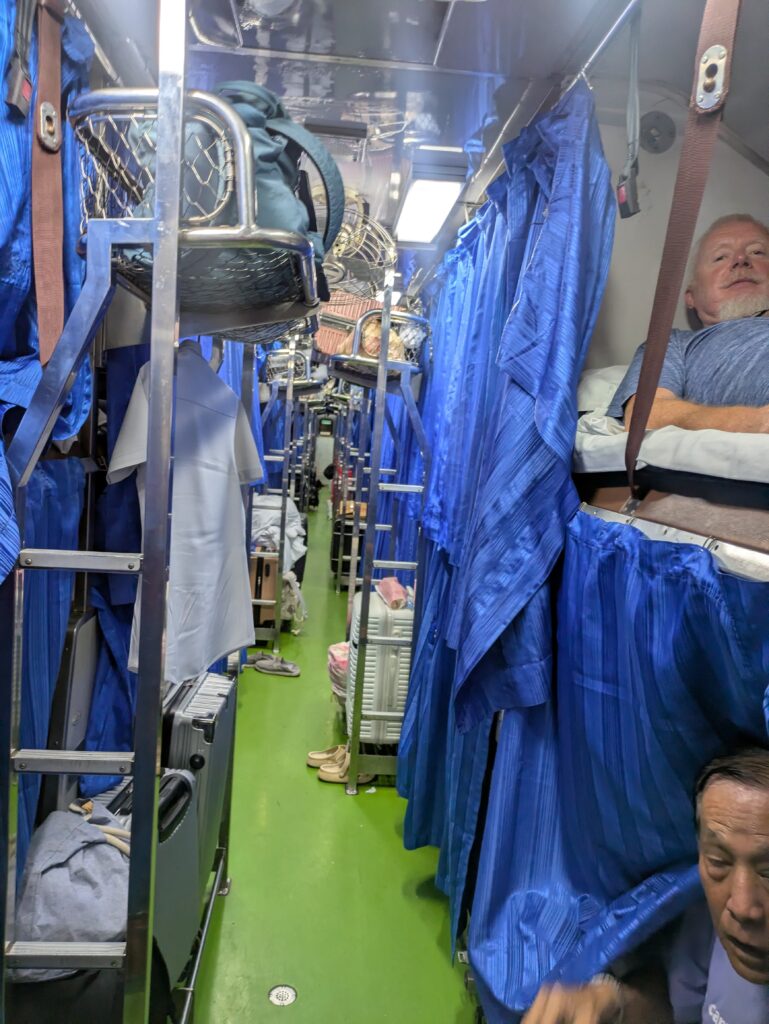
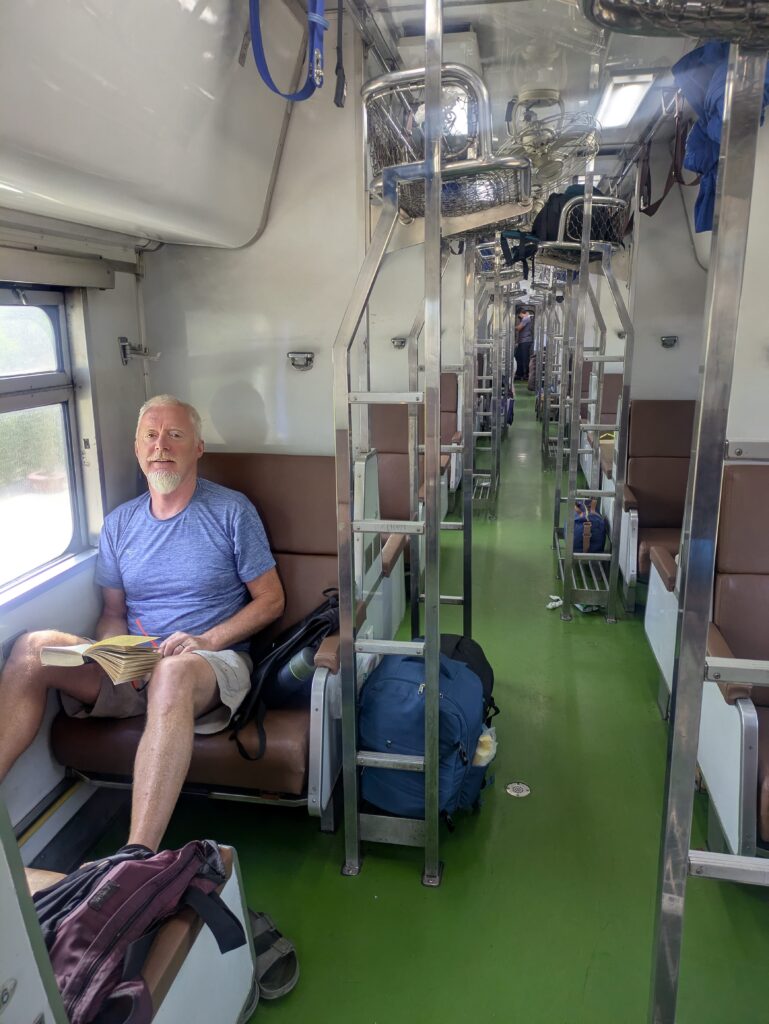
At 6,30am the steward started shouting for people to get up as she had to turn the bunks back into seats. I ignored her as long as long as possible but when she spoke to me in English through the curtain, I got up and reluctantly made my way to the bathroom, a place to be visited only in dire need, unbearably smelly despite the window being wedged open. The steward made her way along the carriage, rousing passengers, until she came to Caoimhin in the top bunk at the far end, the only person in the whole carriage that she failed to move. By 8.30 am he was still snoozing in his bunk, insisting that he was unaware that he was supposed to vacate his bunk although he admitted hearing a voice calling outside his blue curtain.
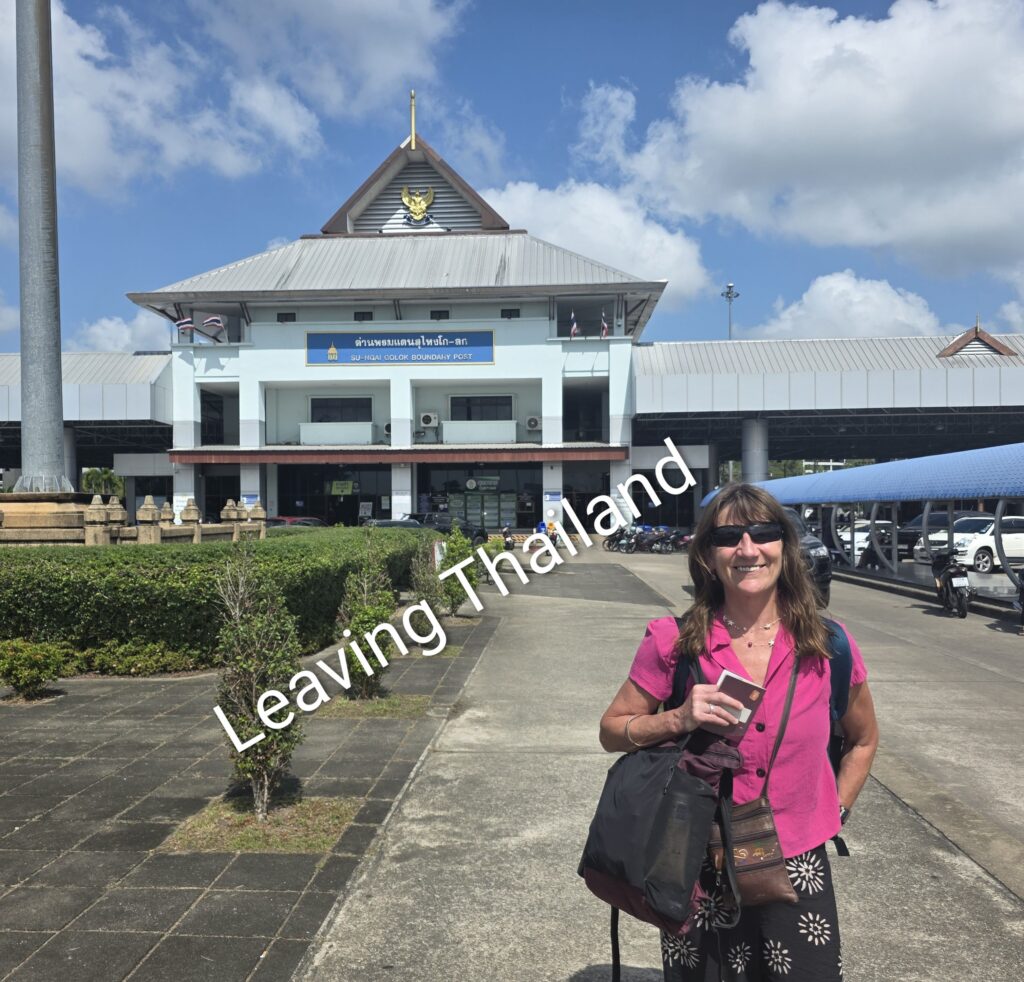
The border was a couple of kilometers from the train station and a crowd of motorcyclists vied with each other for the privilege of taking us there as pillion passengers with our backpacks strapped on. We walked through the immigration building and were directed to a back office where a bald, rotund man asked us where we were going, stamped our passports, handed them back and then said ‘Go, finished,’ pointing to the door.
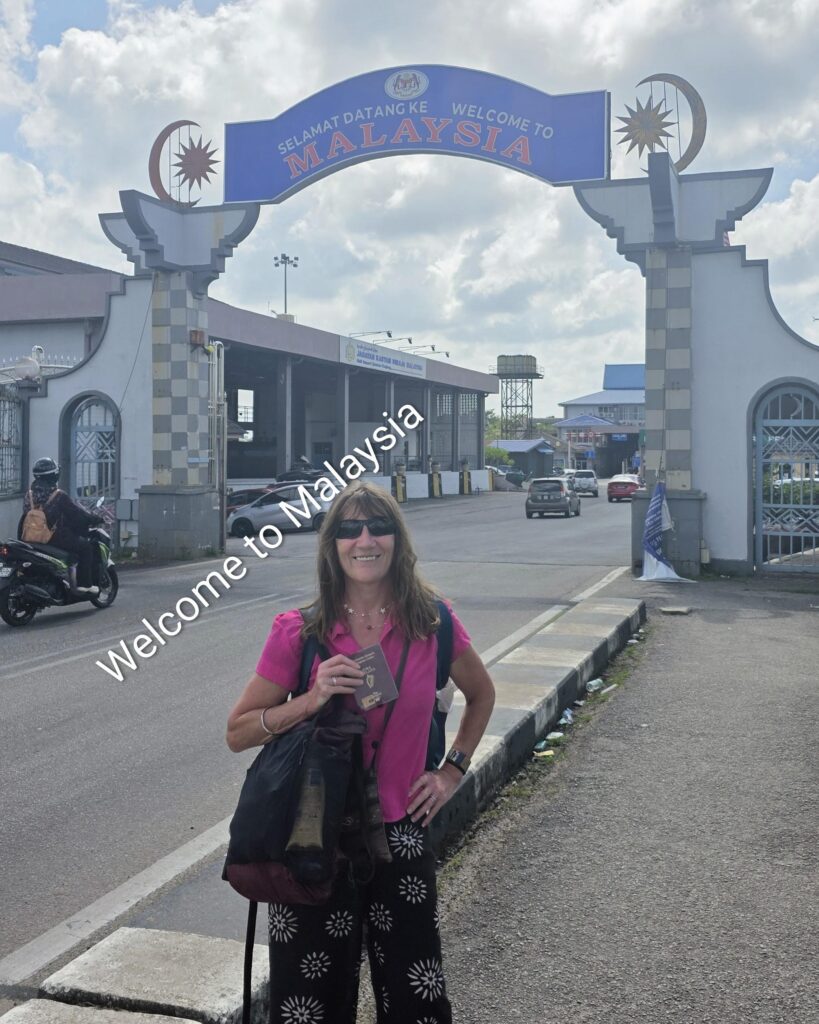
A short walk brought us to the Malaysian immigration, where they smiled when we used our one word of Malay (Terima kasih, thank you). Just like that, we were back in Malaysia, the whole process from train disembarking to entering Malaysia, including the motorbike ride, took less than twenty-five minutes.
Our final destination that day was the Perhentian Islands, two small islands on the east coast in the South China Sea, renowned for their crystal clear waters, where the only way to get around is by boat or by walking as there were no paved roads. Their monsoon season with heavy seas, rain and wind was usually from November to March so technically, it was still monsoon season but we decided to chance it. Weather patterns have become increasingly unpredictable (the rains we got in Koh Phangan last week in Thailand were unusual for February).
Getting to the islands involved a local bus from the border to the nearest big town of Kuala Bahu, followed by an hour long taxi ride down the coast. We planned to get a public bus which would have taken about two hours but a taxi man spotted us as we entered the bus station and offered to take us to the ferry pier in Besut for €12.
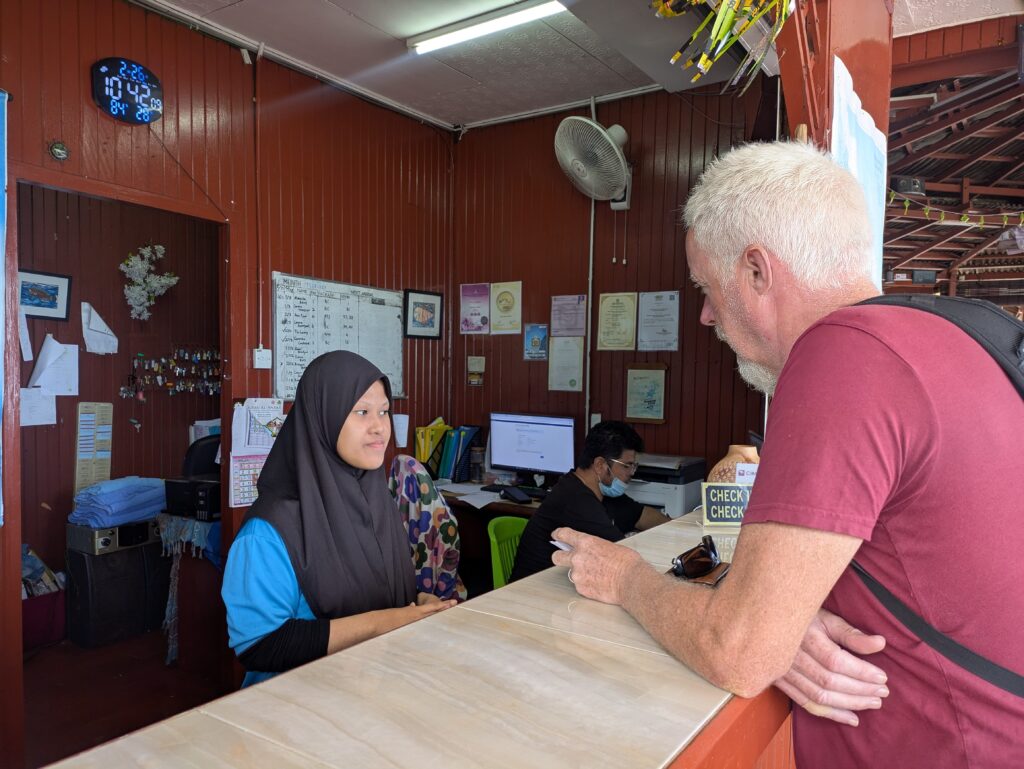
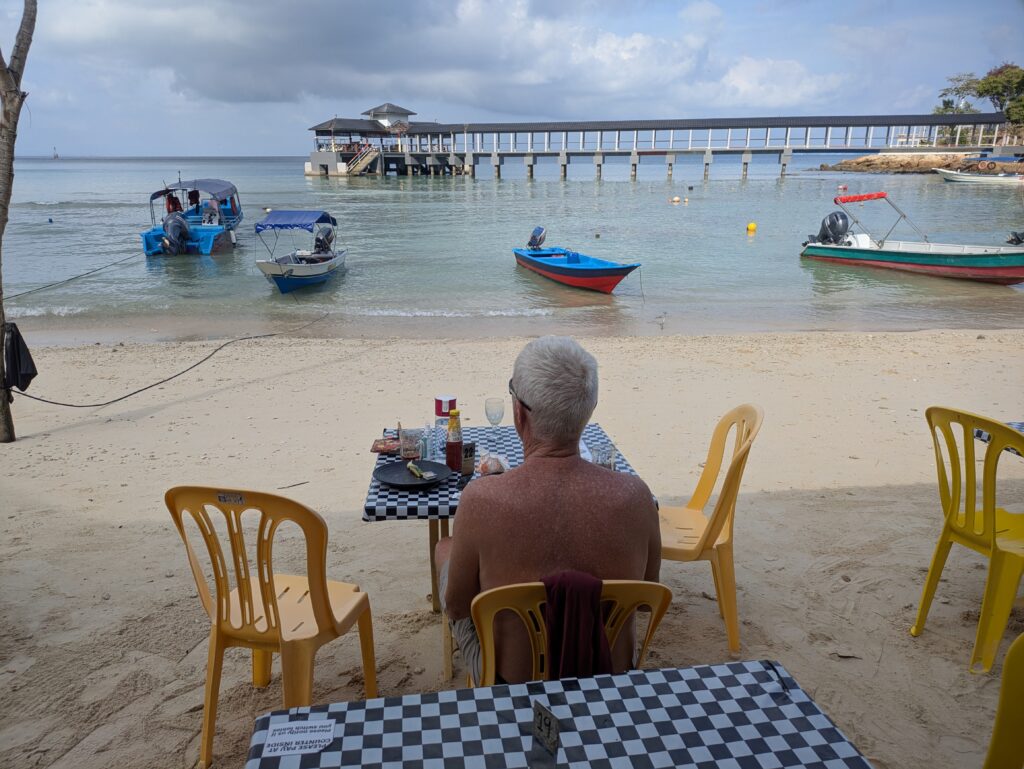
The little town of Besut was hot, quiet and almost deserted, the usual plethora of restaurants were shuttered . The head scarfed girl in the ticket office explained that this was because it was Ramadan and all the restaurants stayed closed until about 6pm as it was a predominantly Moslem area. The only place open from the 7/11 shop where we stocked up on biscuits and processed crap.
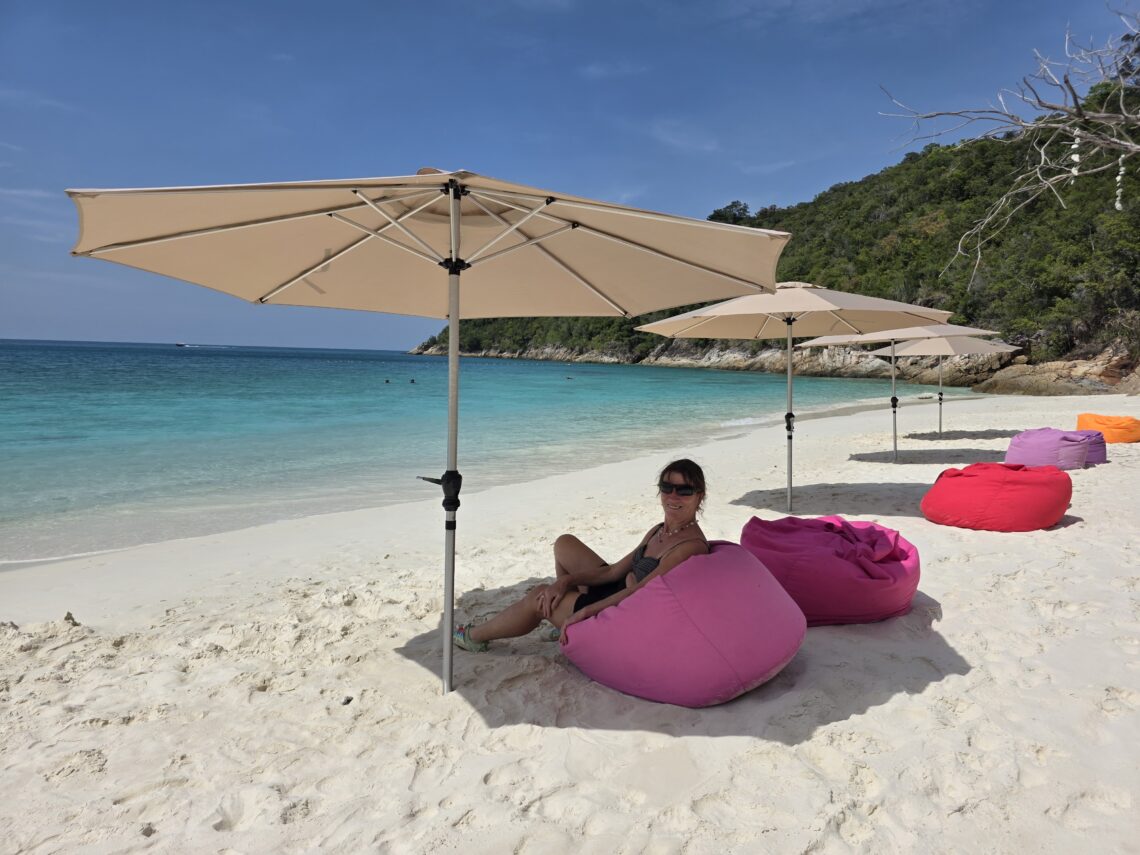
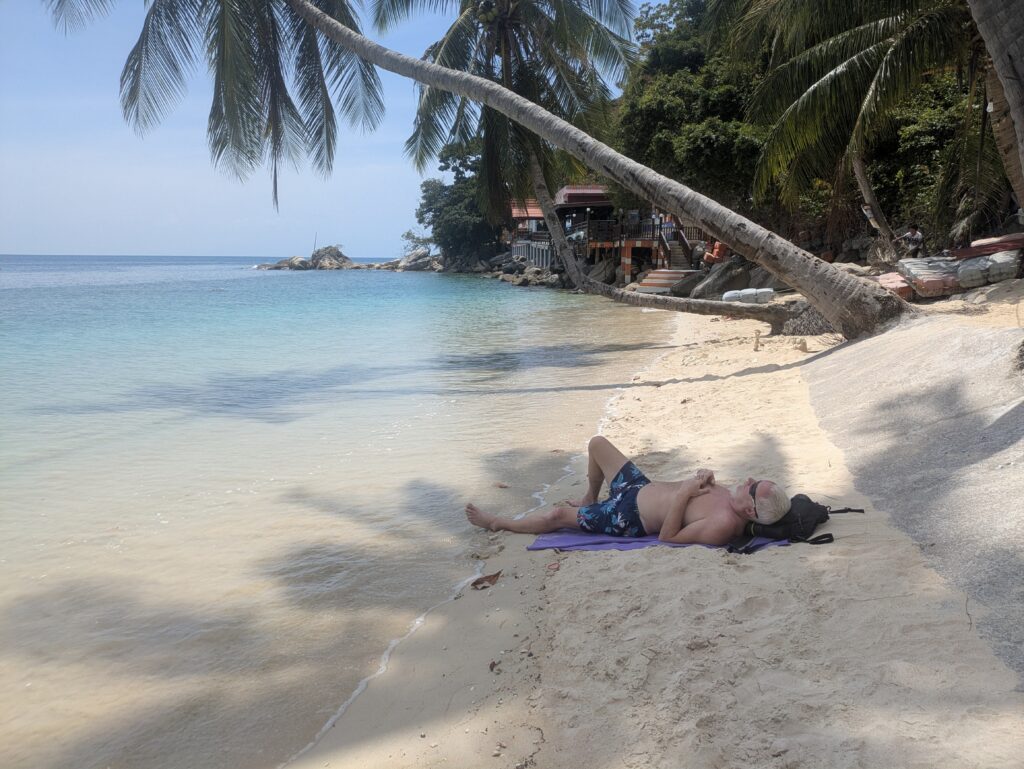
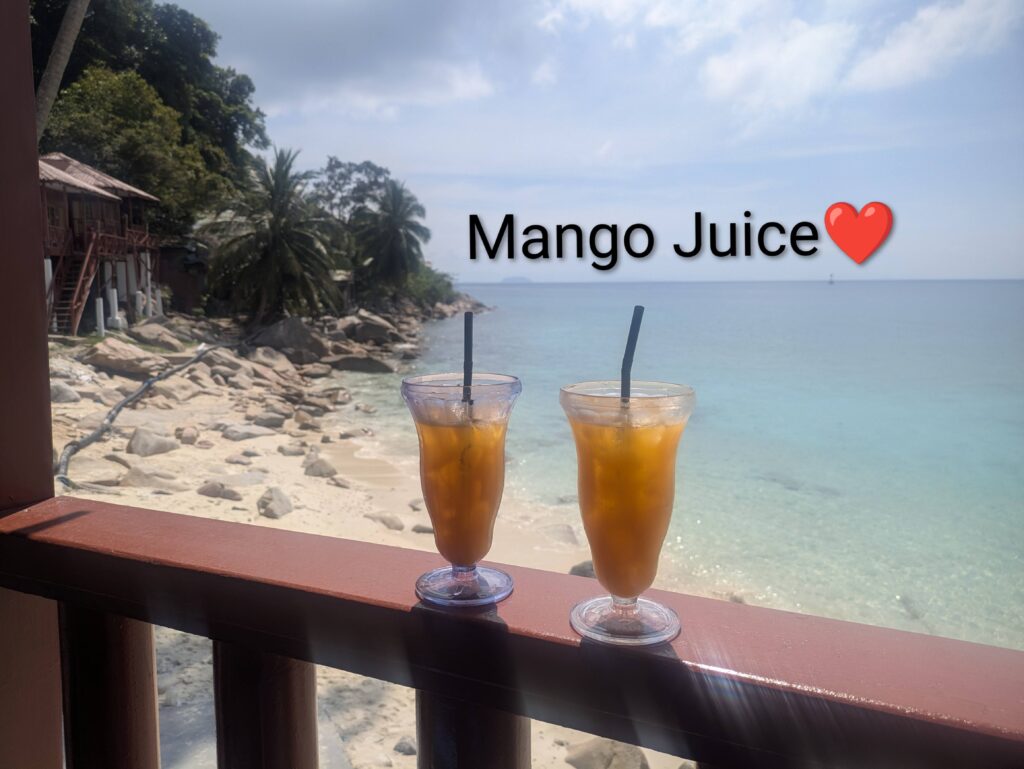
The ‘ferry’ was a speedboat, with eight passengers, all visitors to the islands, a Chinese couple where the woman wore a full mask for sun protection rather than religious observance and two Indian-Malay couples. The boat was almost as jerky as the train and operated more like a water taxi, dropping people off at the various beaches and resorts. We were dropped off first at Coral Beach on the smaller of the two islands. Swallows swooped around the pier and we could see our accommodation, Senja Bay, at the far end of the beach, a series of wooden buildings connected by wooden steps. We shaded our eyes from the glittering sea and walked along the soft sand, hot under our toes, marveling at the beauty of the place. Although our journey had been long, we had arrived to a low-key, laid- back paradise. The receptionists were young Muslim women, greeting us with glasses of cold orange juice.
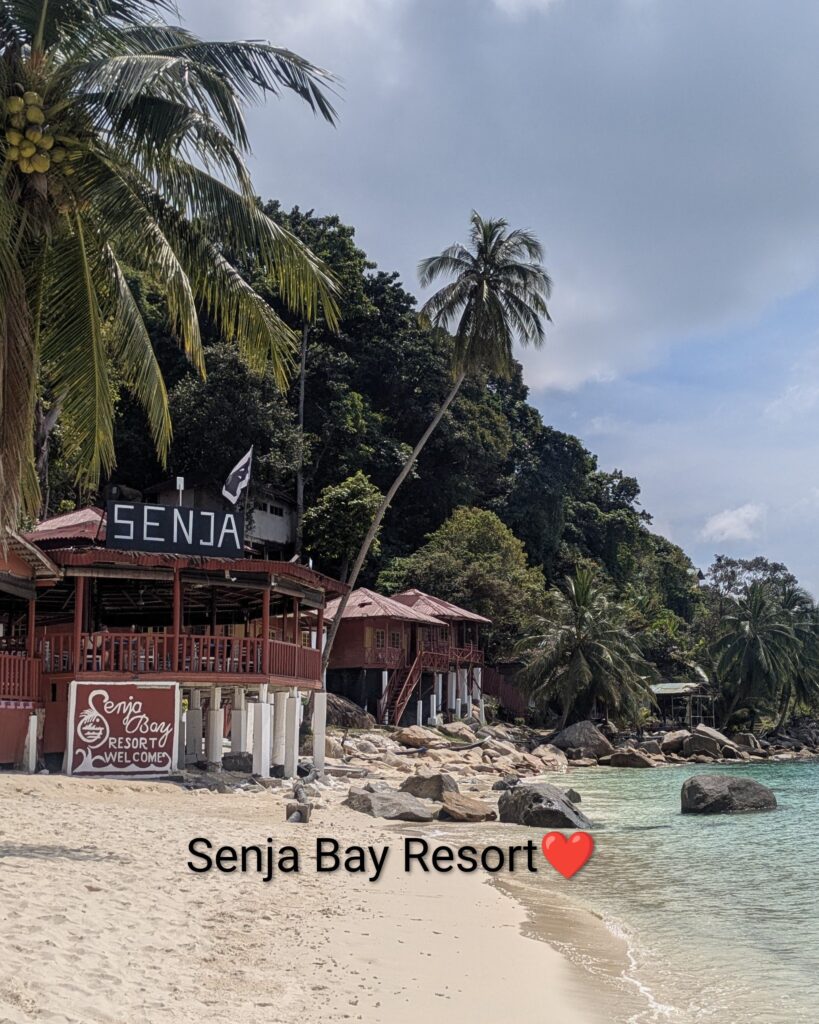
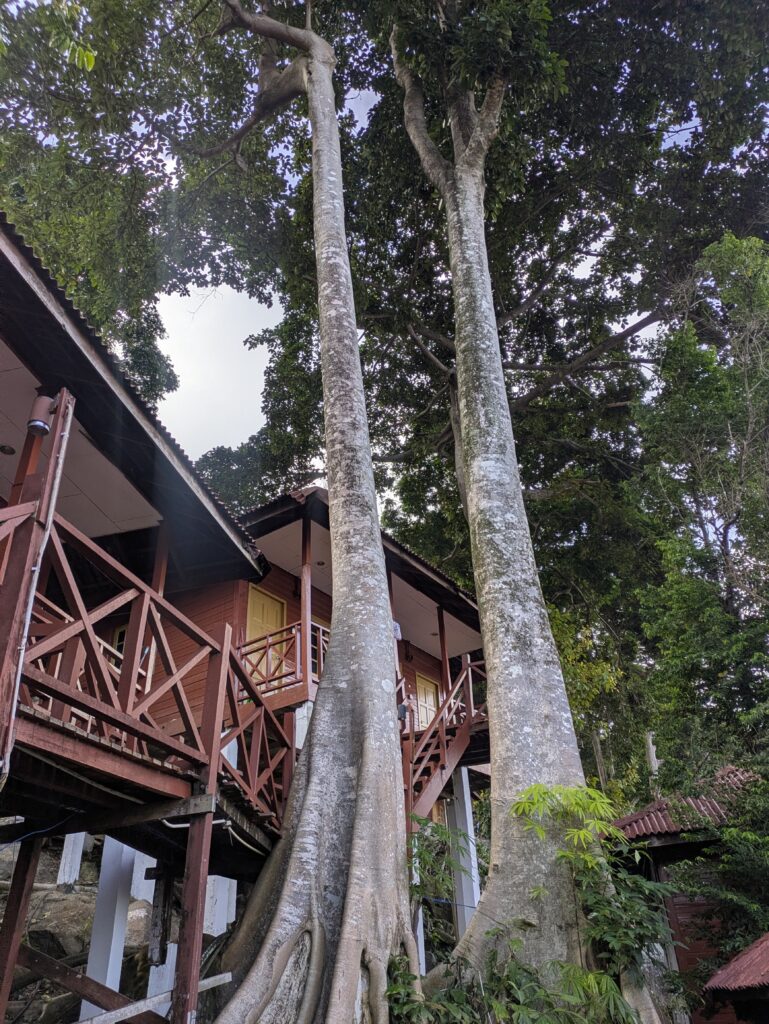
The longer we stayed, we more we loved these Perhentian Islands, and kept extending our stay. The water was crystal clear and our snorkeling trips were a window into another world, full of colourful fish, a world that is disappearing from pollution, overfishing and spikes in sea temperature. The colours were so blindingly vivid that they look Ai enhanced but if anything the reality was even more mesmerizing than the photos. Outside our room, the canopy of huge Mountain Fig Trees soared into the sky, figs thudded onto our roof falling from a great height. Palms and Sea Almond trees provided shade on the beach, while a trio of kittens begged for food in the restaurant. A shoal of flying fish rose from the waters at sunset and troupes of shy monkeys kept their distance in the forests.
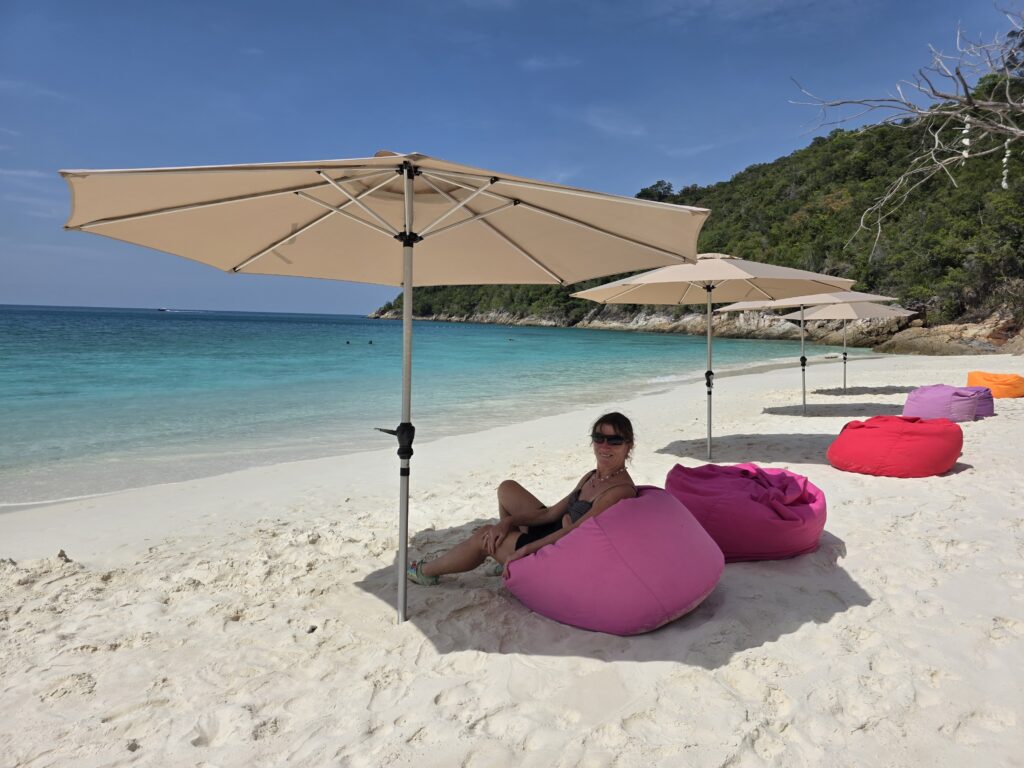
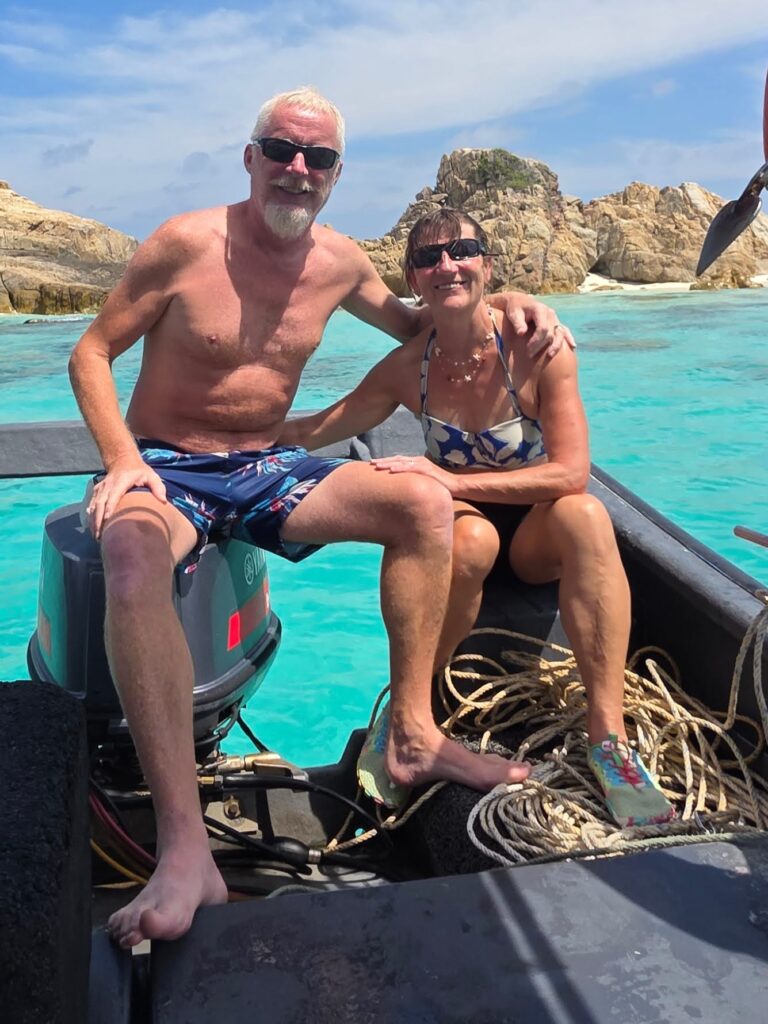
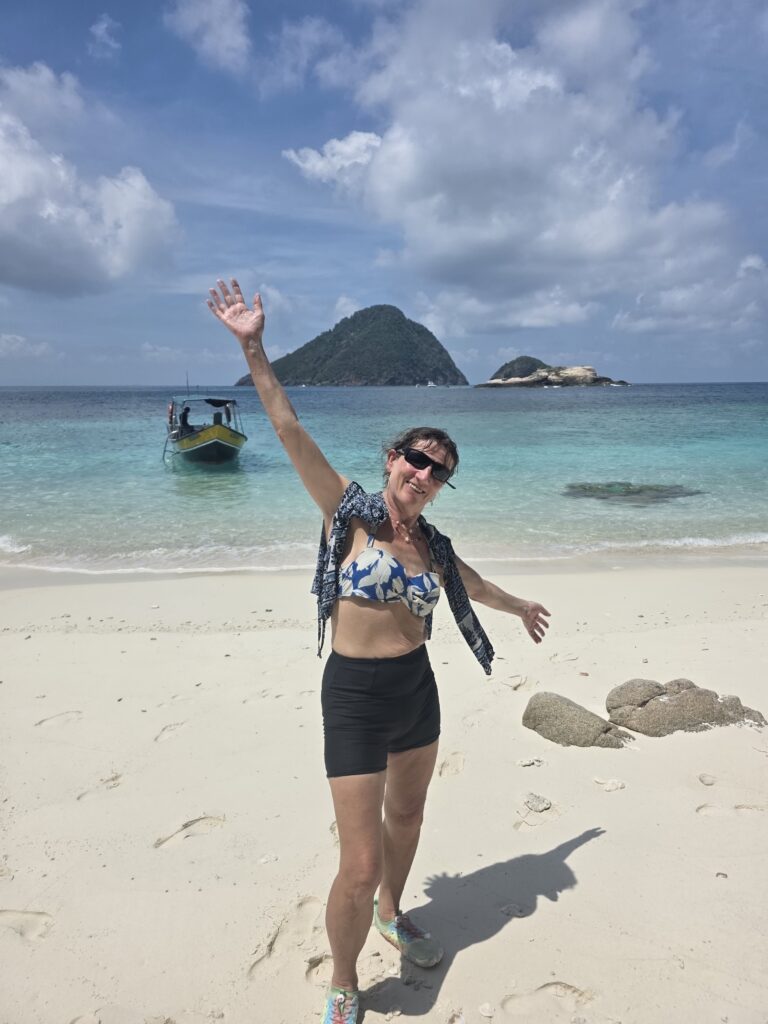
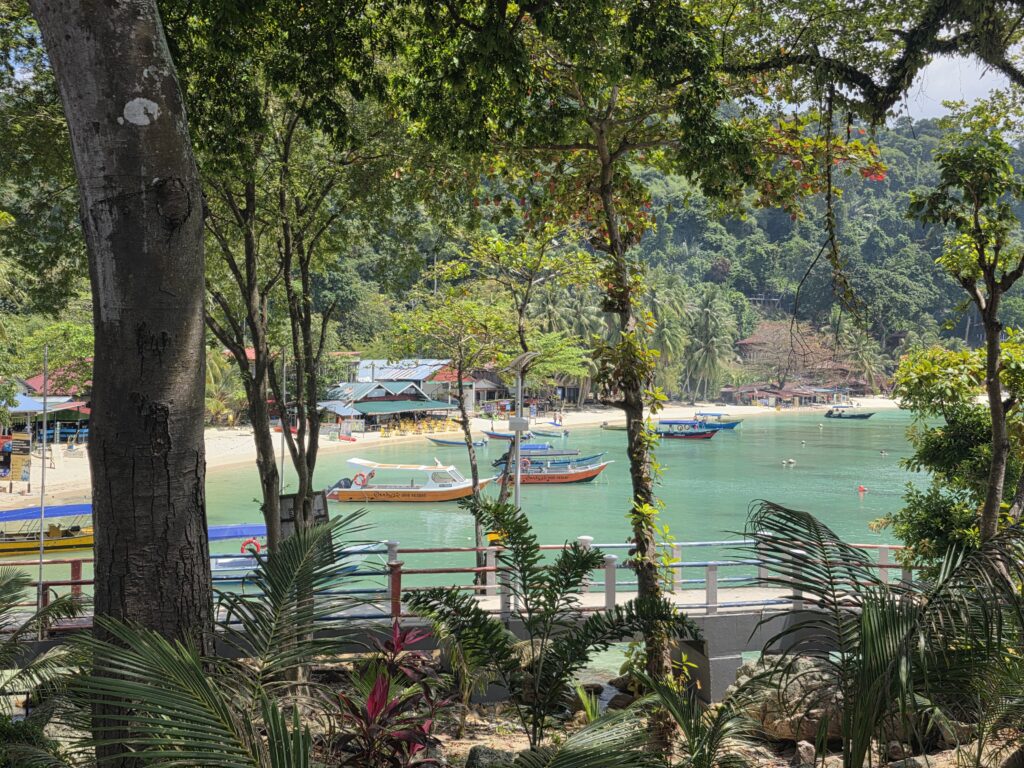
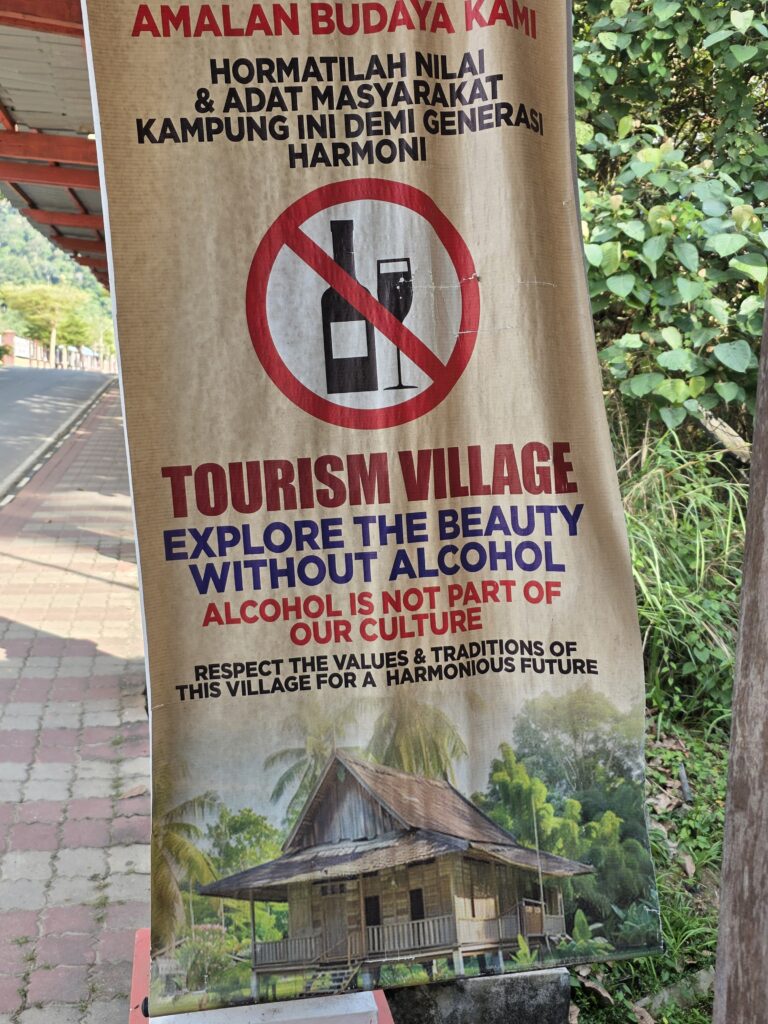
The Perhentian Islands were different, there were tourists but not hordes of us although admittedly we were there in the low season. There was development but on a small scale with no high-rise or large complexes. With no motorized traffic, there was a peace and tranquility without the constant zoom of motorbikes, so common in South East Asia. Senja Bay did not serve alcohol in the restaurant but at reception they called someone who appeared five minutes later with two cans of ice cold Tiger beer. He even gave us his What’s App so that we could order more directly…and we did.

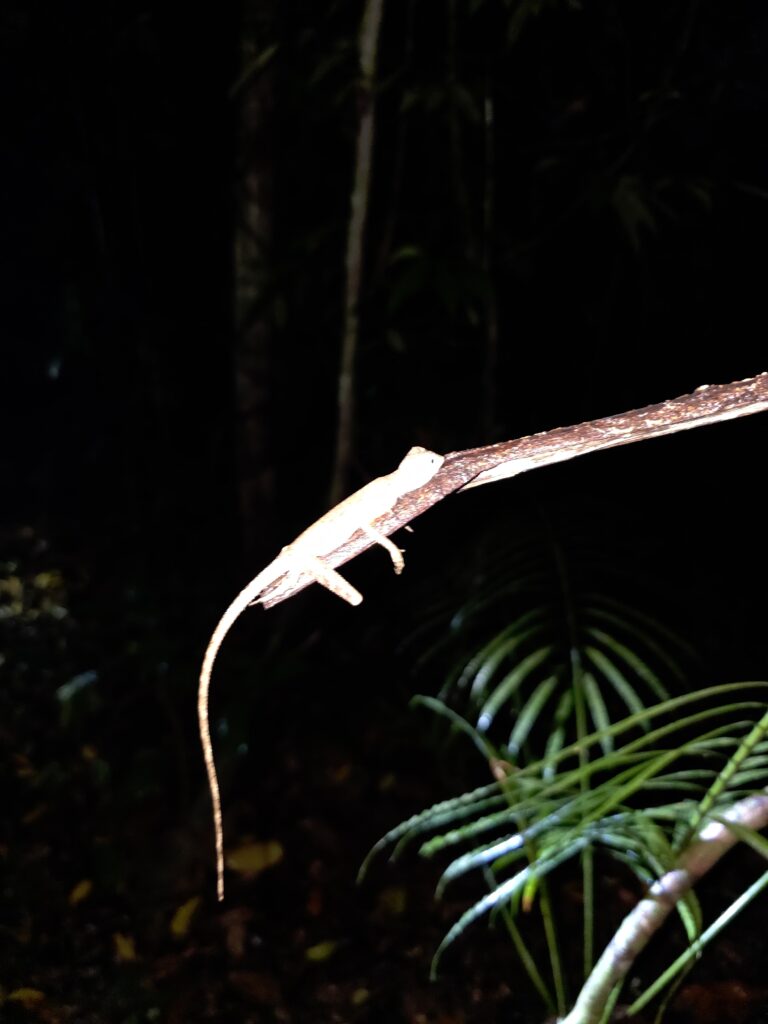
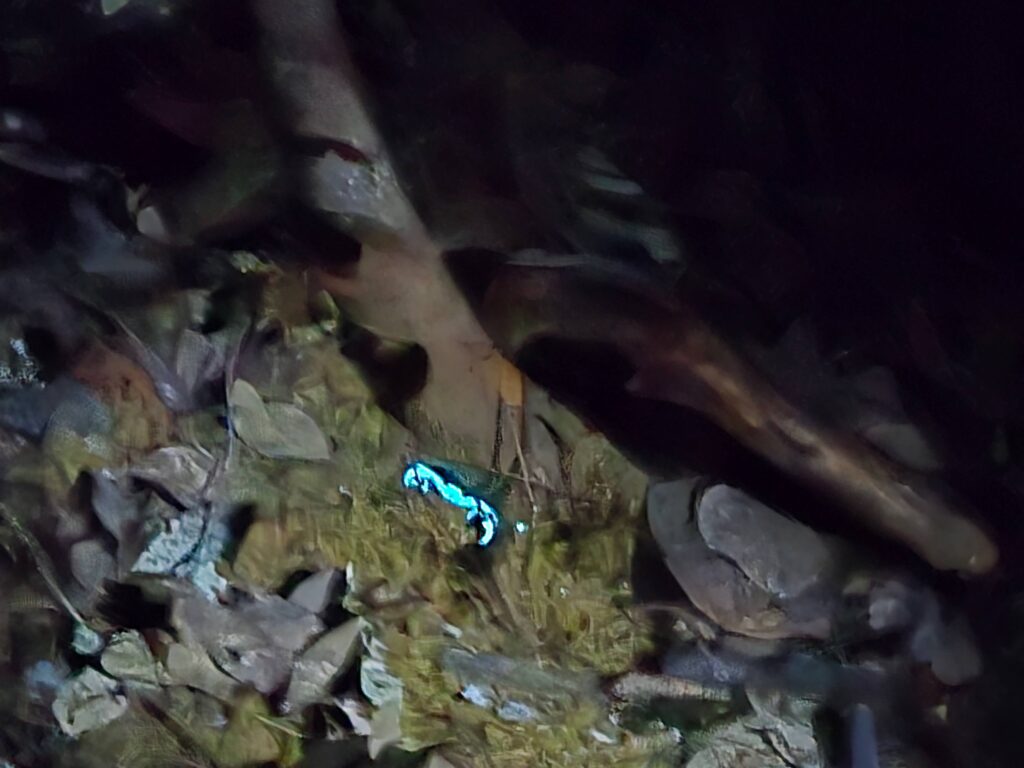
Only the lure of a 130 million year old rainforest could have prized us away from paradise. It took all day, and three separate minibuses to get to Taman Negara, a huge National Park in central Malaysia. As soon as we got to the village of Kuala Tahan, situated across the River Tembelling from the park proper, we were enveloped in a dense muggy heat. Waiting for the night hike, the heavens opened in a deluge. We sheltered under a canopy while a red centipede, incredibly venomous according to our guide, crawled along the gutter. The guide almost called off the hike but the rains abated and we set off. It wasn’t called a rainforest for nothing. Most of the animals seemed to be sheltering from the rain which still dripped on us from the foliage although it wasn’t actually raining. It hardly mattered as we were also dripping in sweat from the high humidity and the nighttime heat. There was bioluminescent fungi, scorpions fluorescing under tree bark, and lots of camouflaged insects, termites and giant ants going about their business, so many creatures lurking in the dark that we did not see until they were pointed out to us.
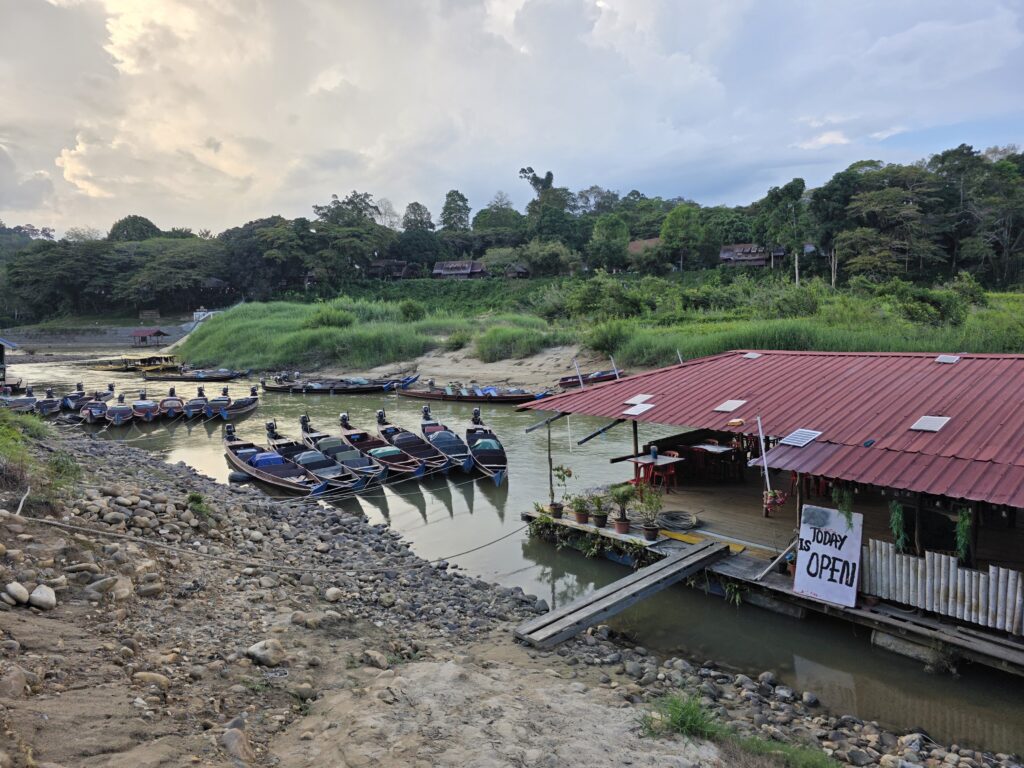
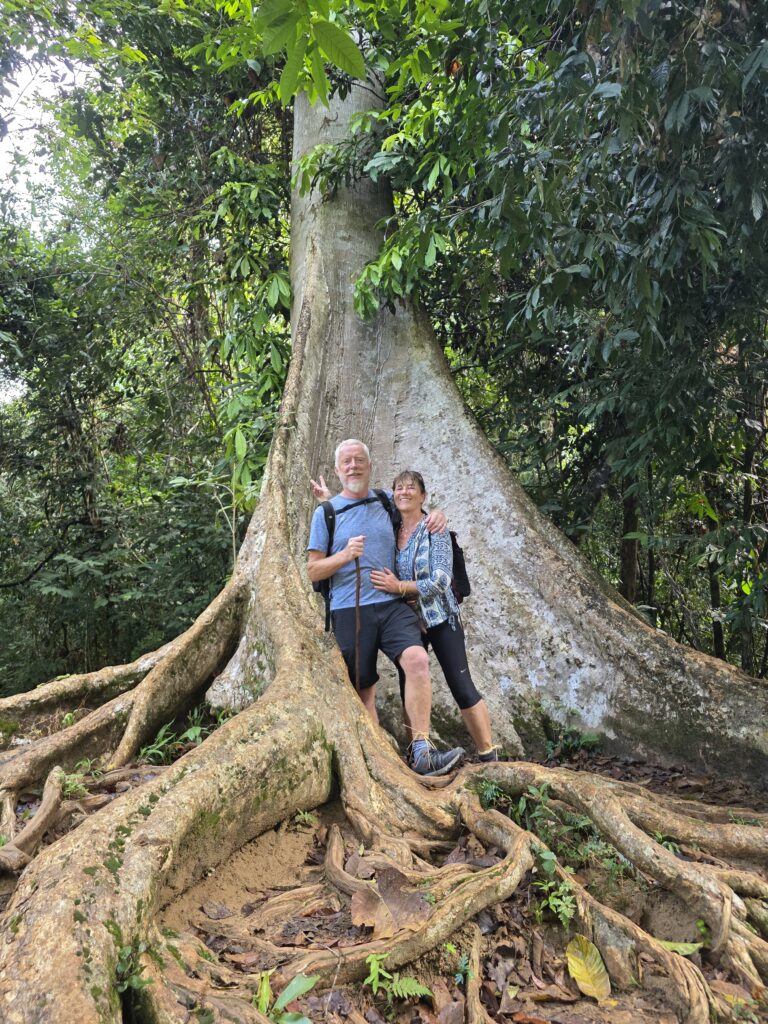
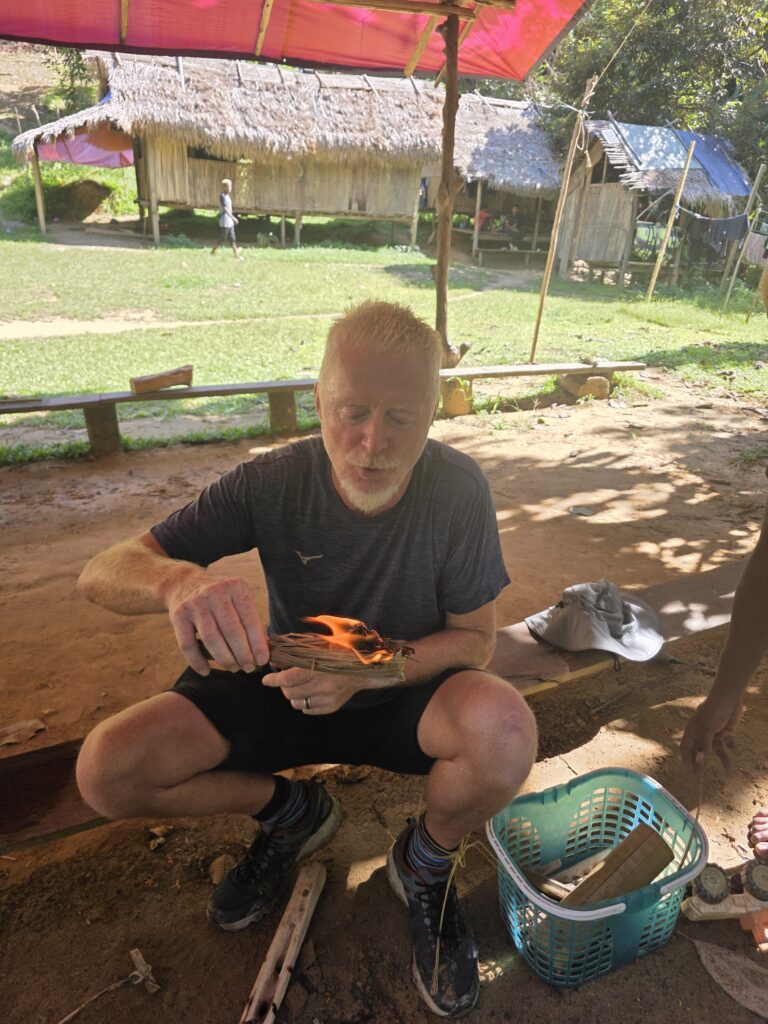
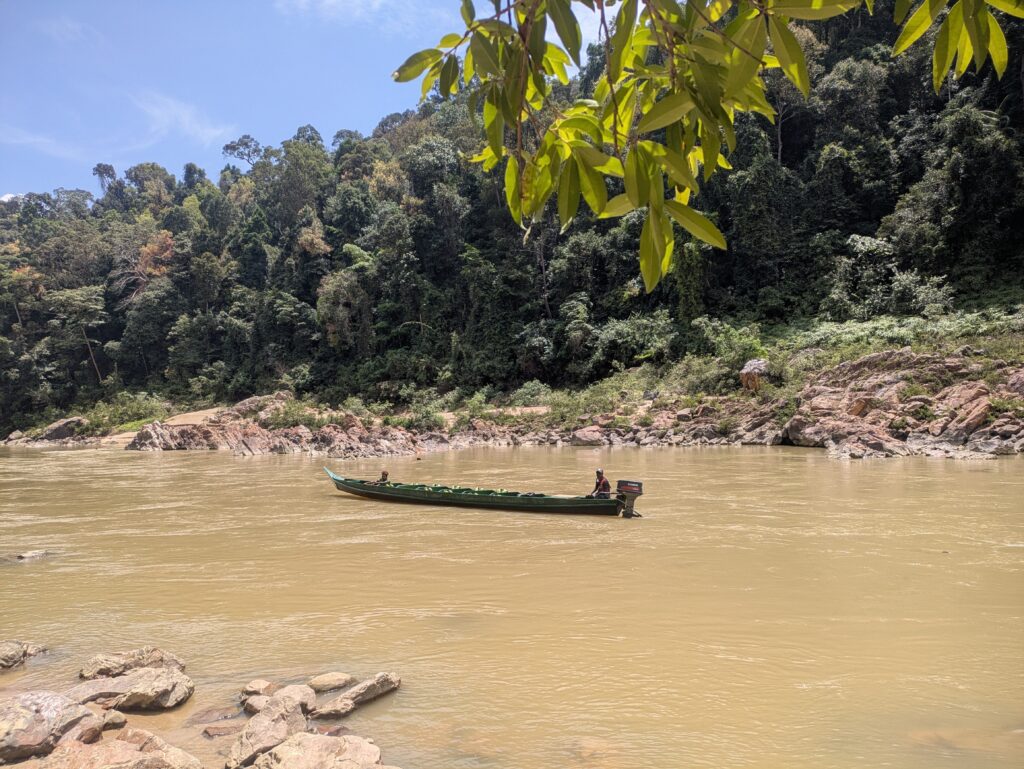
The following day we took a guided full-day hike deeper into the forested jungle followed by a boat ride on the Tembeling River, as brown as a milky cappuccino and a visit to one of the indigenous tribe villages for a demonstration of native skills, including making fire without matches, a skill that Caoimhin excelled at. The rains had brought the leeches, which are endemic to the area, out in force, thirsty for blood. The only way to outsmart them was to walk quickly, stamp your feet often and stay vigilant, checking your boots and socks. Of the thirteen people on the hike, the only person to get ‘leeched’ was our guide, a stick-thin, funny man who wore a scarf around his head in case snakes dropped on him from the trees. He was joking…..I think. But leeches are incredible, they latch on releasing an anesthetic so the ‘victim’ doesn’t feel anything, then they also inject anticoagulant so the blood keeps flowing and doesn’t clot and although the idea of blood suckers is unpleasant, they are harmless and simply drop off when they are full.
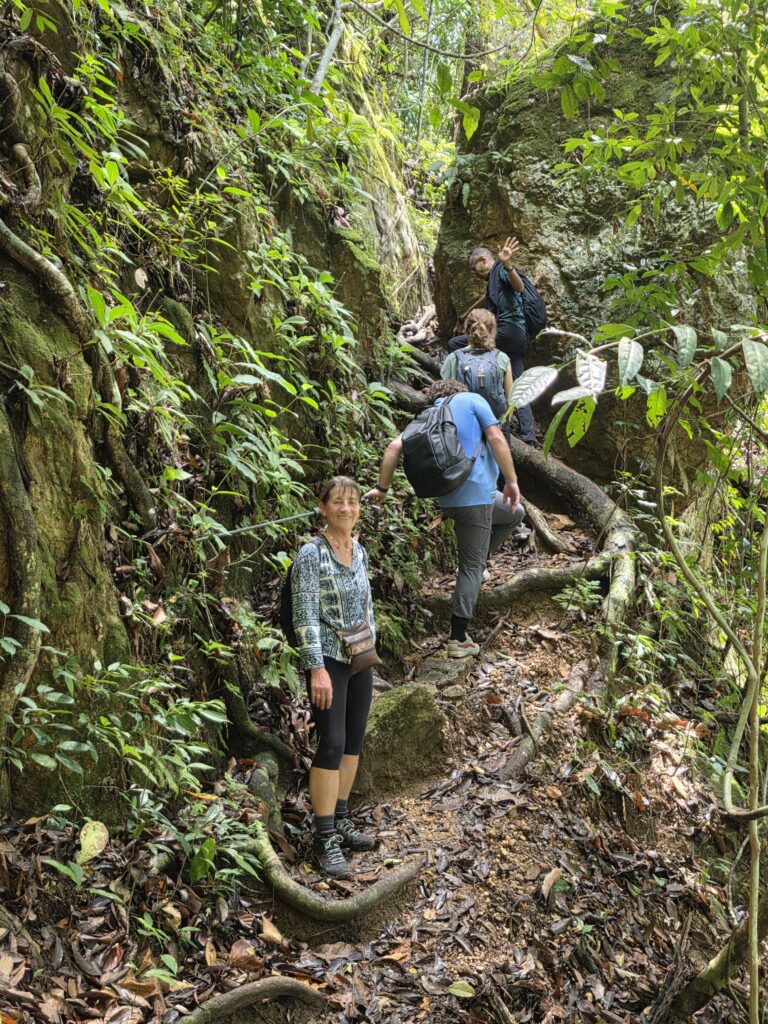
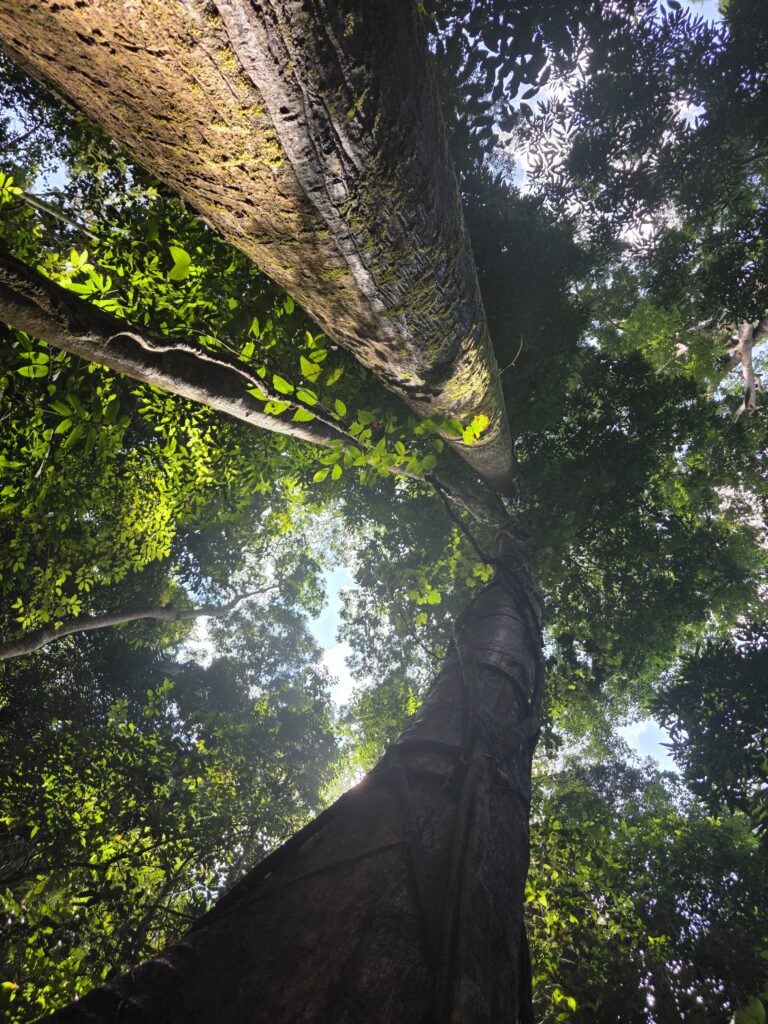
While we were examining piles of elephant poop, looking at the paw marks of sun bears on gigantic trees, worrying about leeches and being awestruck by the rampant, tangled beauty of the rainforest, missiles were flying across the skies. The world, so long on the brink of war, was teetering closer and closer to the edge, to an abyss.
But we continue as normal, search in vain for some cooling beer (there is no ‘beer-man’ here to What’s app),book a minivan to take us to Kuala Lumpur. We hope to fly to Istanbul on Wednesday to spend three nights there before continuing on to Dublin on Saturday but we’ll see what happens. In the meantime, let’s hope for peace and thanks for reading


One Comment
Tomás
Have a fab time guys, and to you too Ruth 🙏🤠