Leaving Belize – Crossings
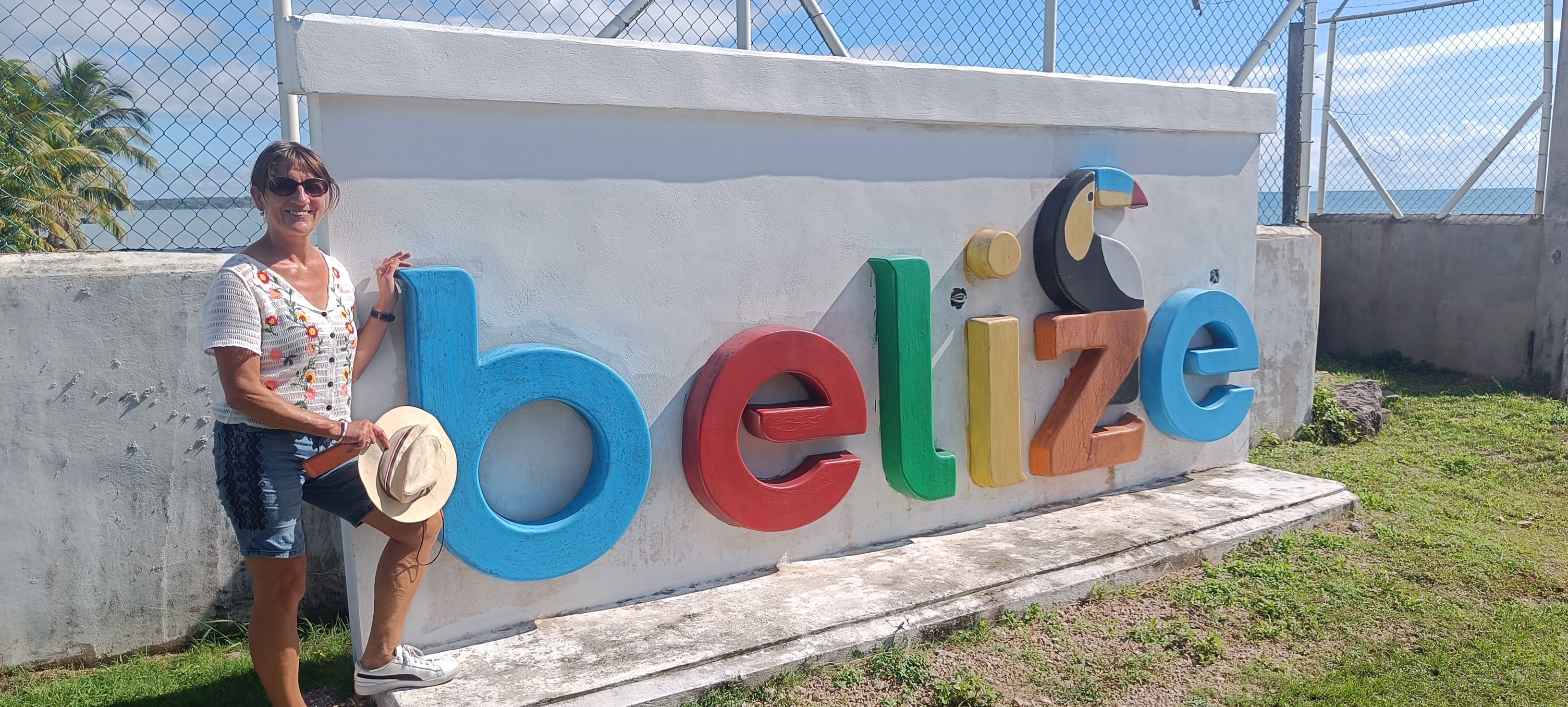
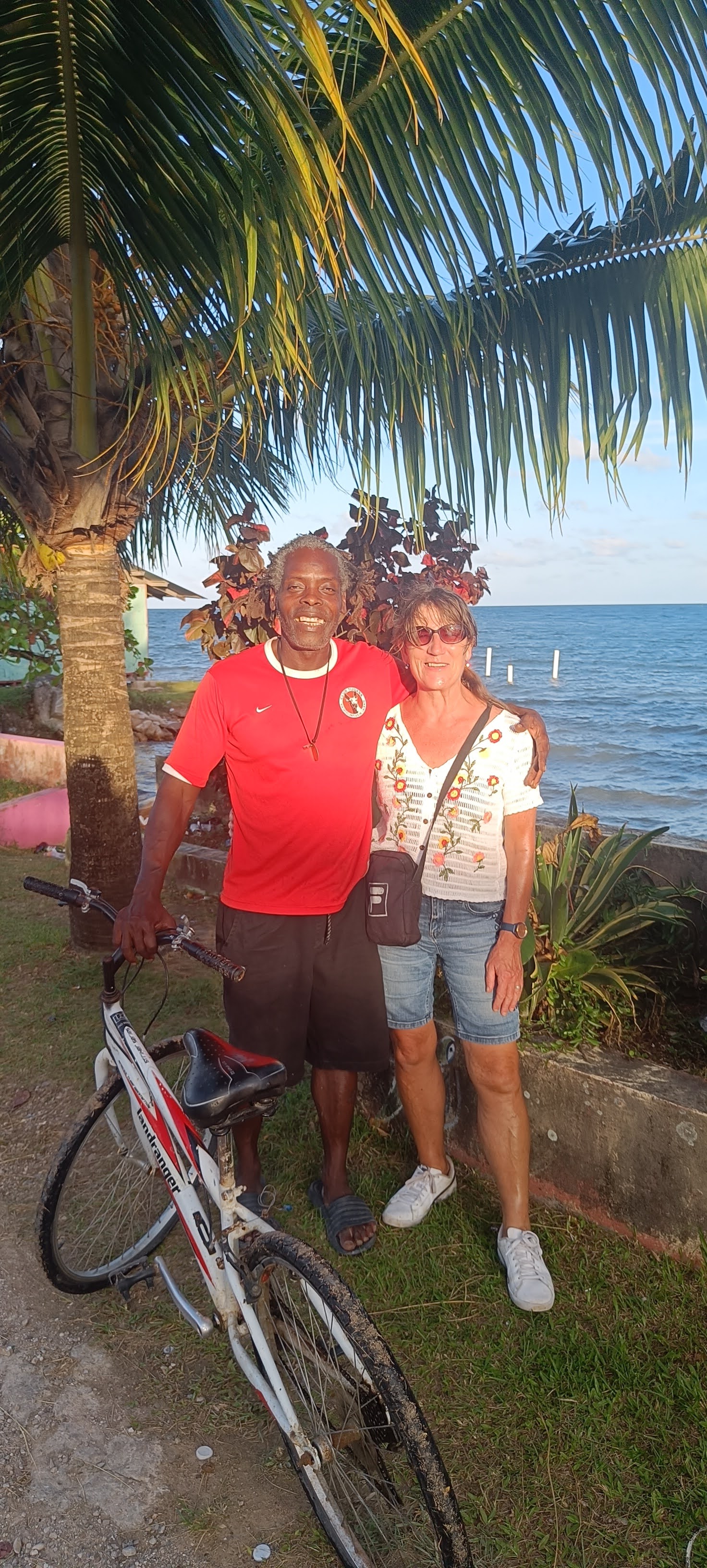
The first person we met in Punta Gorda, a small, rambling port town in Southern Belize, was Delphin, a Garifuna man who swore that Queen Elizabeth appeared to him on the day she died. Queen Elizabeth seemed to be universally loved in Belize but this was ‘devotion’ at a higher level. He even showed us the very spot by the sea where this event happened.The Garifuna are descendents of kidnapped West Africans brought to the New World on slave ships and Punta Gorda had a high density of Garifunas. Punta Gorda was a town at the end of the road- literally, the road ran out here. It was surrounded by jungle and had a reputation for more rainfall than anywhere else in Belize.
We arrived on Friday afternoon after two bus journeys, one from San Ignacia (where we were holed-up from Hurricane Lisa) to Belmopan, the capital. Ten minutes into that journey, the bus broke down with rear wheel axle trouble but a replacement soon arrived. Then a 5 hour journey south by the beautifully named Hummingbird Highway. The buses were crowded especially as movement had been suspended for 2 days due to hurricane fears. Our bus had a large number of army personnel passengers who were on leave and in high spirits….empty coke bottles (possibly laced with rum) moved up and down under the seats like a tide depending on gradient and the army got noisier as the journey progressed. Our intention was to leave Punta Gorda the morning after we got there on a ferry to Guatemala or maybe Honduras.
That was before we found out that the ferries didn’t run at the weekend and that the next ferry was on Monday morning at 9am. 😮 so we had an unexpected weekend in Punta Gorda. It lived up to its weather reputation with torrential rain, thunder and lightning all night and well into Saturday and again on Sunday but the days were hot and very humid.
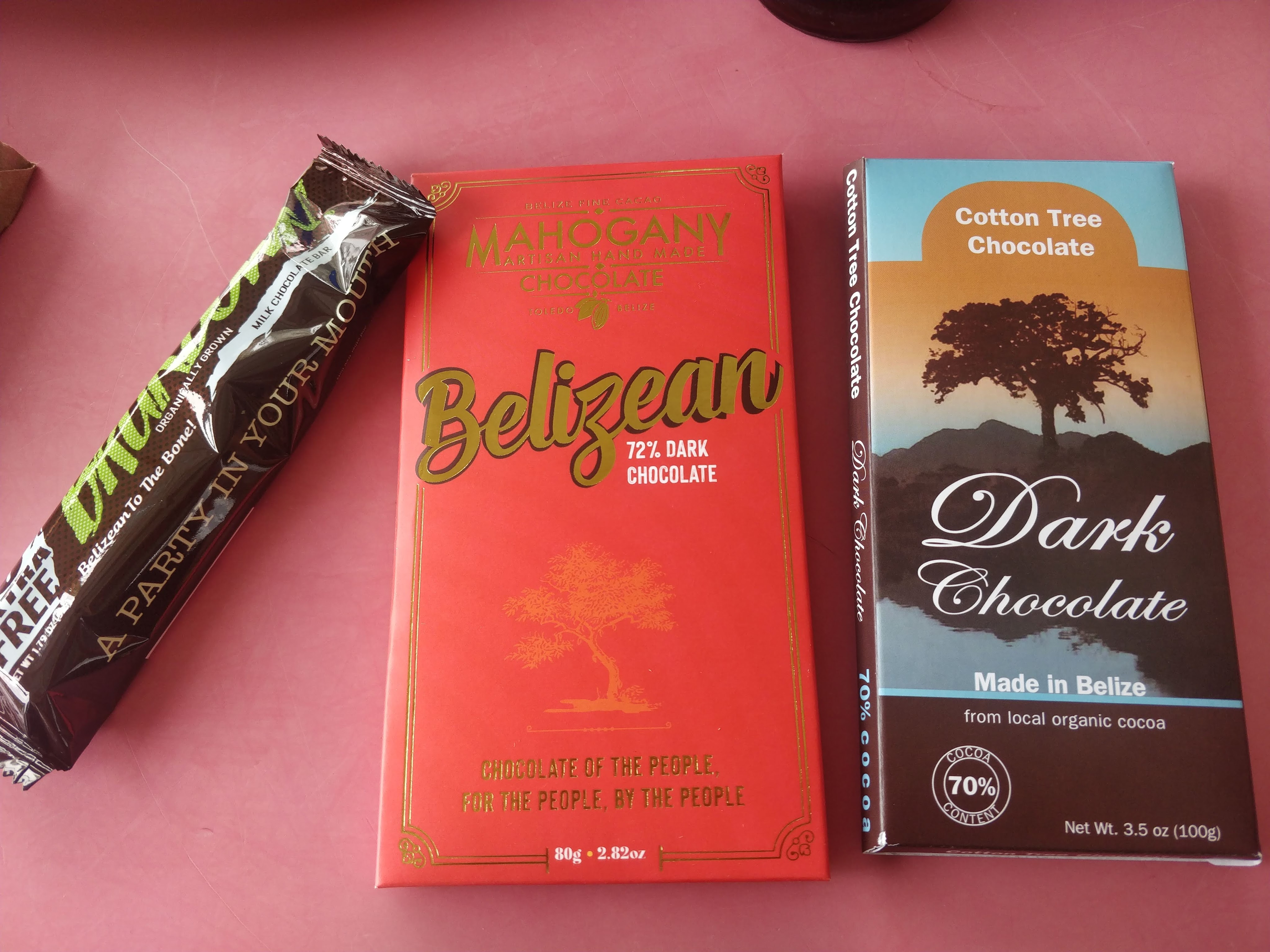
The Mayans believed that chocolate was a gift from the gods😀 and it was usually reserved for the elite. Much of the chocolate making process remained unchanged to this day.The seeds — or beans — were first harvested from cacao trees, fermented, dried, roasted, removed from their shells and ground into paste. The region around Punto Gordo was a prime cacao growing region and the town had two small family-run chocolate-making factories which we visited. We really enjoyed their delicious samples …..and of course bought some….and had to eat them before they melted. I agree with the Mayans – chocolate is truly a gift from the gods and so glad that it’s no longer reserved for the elite.🎁
The ancient Mayan idea of beauty was interesting – a cross-eyed person with a long sloping forehead. They sometimes pressed a baby’s head between two planks of wood trying to achieve this ‘perfection’ which might even result in death. They also dangled a piece of wood between the baby’s eyes to induce cross-eyedness, an early form of plastic surgery. The quest for perfection is not just a twenty first century phenomenon 🤣🤣
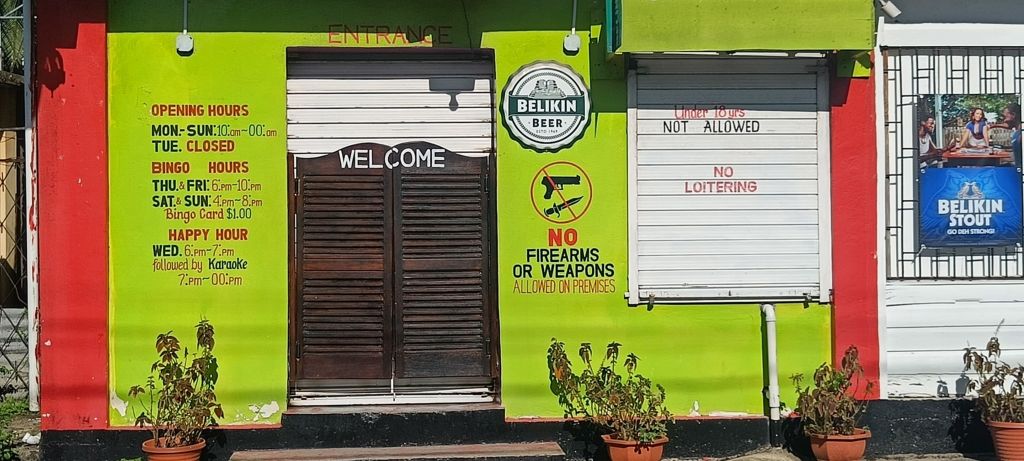
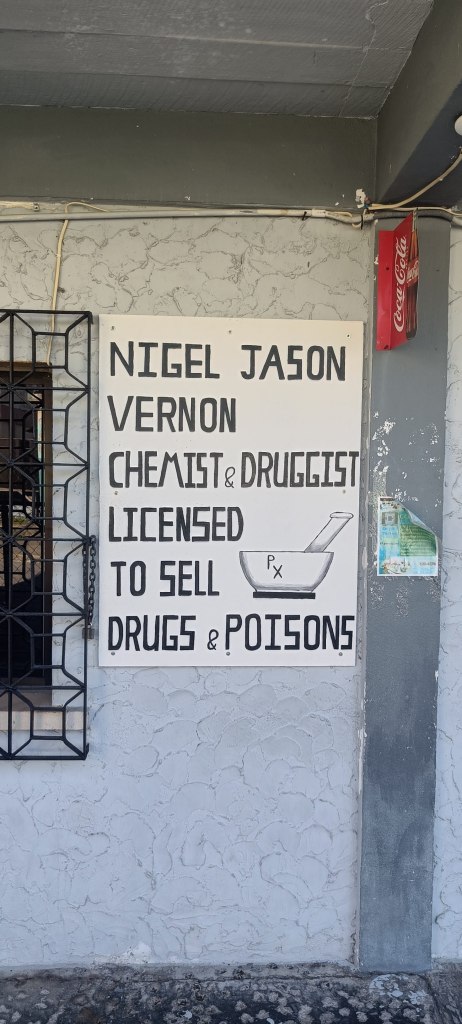
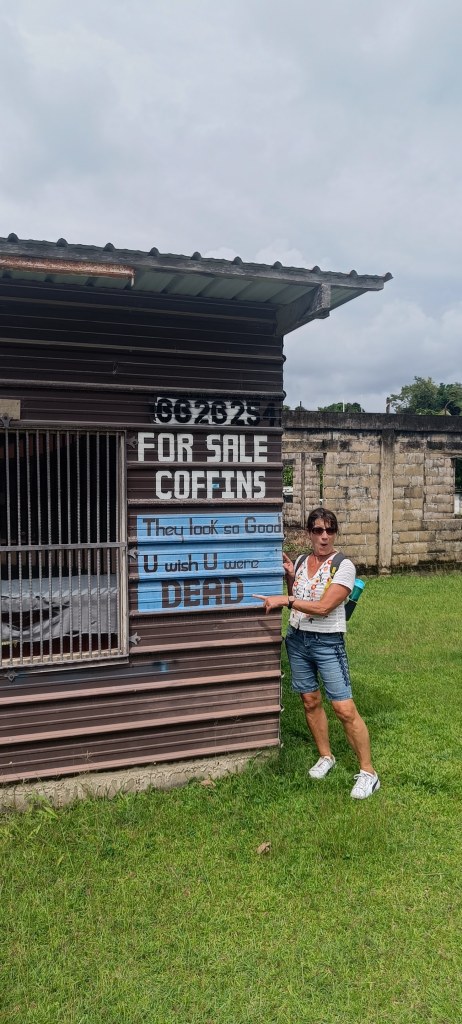


Our hostel was empty apart from us. We ate by ourselves in the upstairs restaurant with its cooling breezes and they ran out of beer…..after we had just one each. We spent our time wandering around town- lots of bars and restaurants were shut down and were being reclaimed by the jungle…..covid has hit the town hard with many businesses not surviving.. There was a clean-up going on with lots of chopping and strimming for a major festival, the Battle of the Drums at the end of the month when there will be crowds, dancing and drumming all weekend. Plenty of drumming practice going on in the meantime. We got a laugh from some of the signs, especially the one advertising coffins (see photo above).
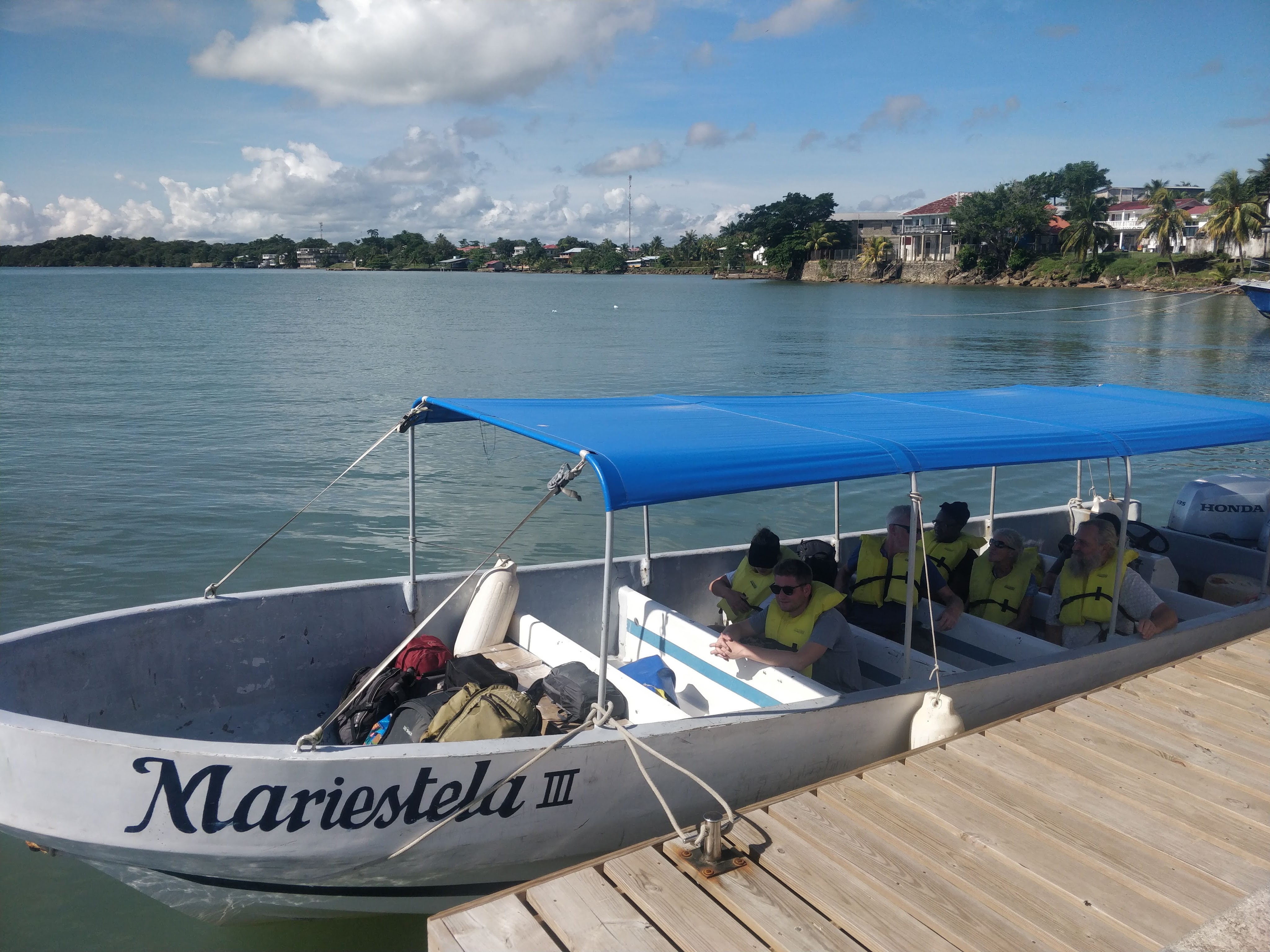
On Monday morning, there was more of a buzz about PG with children going to school and more people out and about. The small boat ride to Livingston in Guatemala across the Gulf of Honduras took less than an hour. Belize is a beautiful laid-back country with some gorgeous beaches, turquoise waters and wild jungle but the thing that struck us most was the diversity of the people and how they seemed to get by without racial tensions. Waiting at the bus station in Belmopan, there was two Mennonites, (tall, spare and bearded with trouser-braces and straw hats), a man with an African headdress that looked like Madge Simpson’s hair, petite Asian women, a blue black man in a singlet with a huge silver cross hanging down his chest, men that could be sumo-wrestlers, a glamorous woman with two toddlers whose hair was in corn plaits. All local, all Belizean, incredible diversity without tension
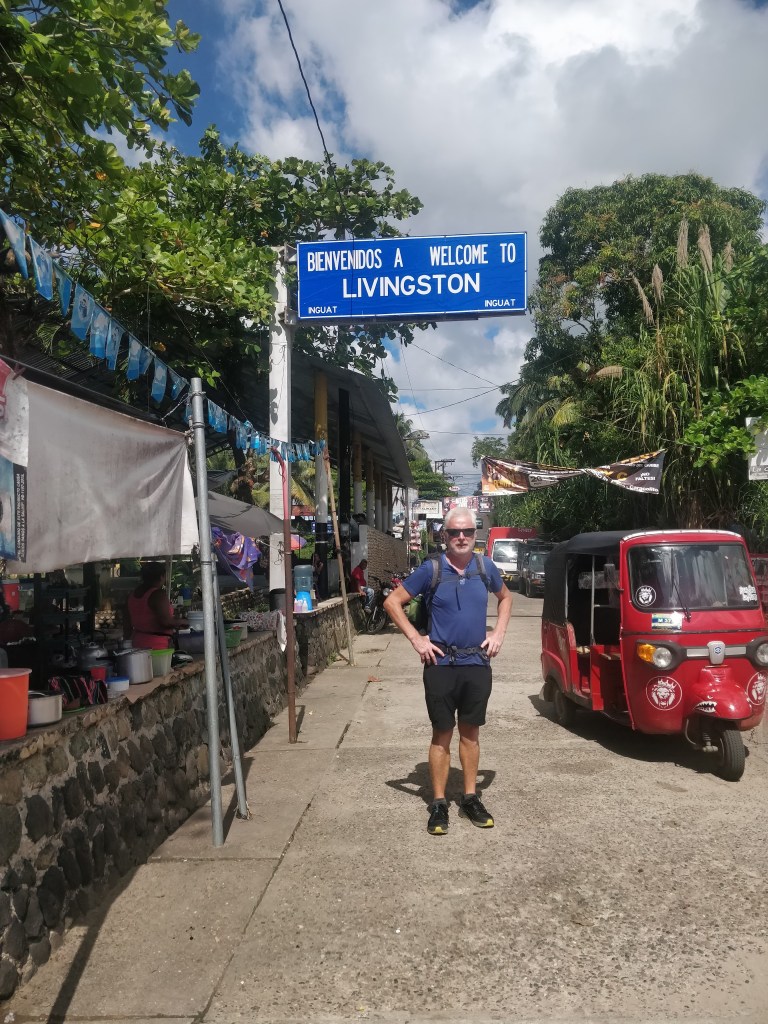
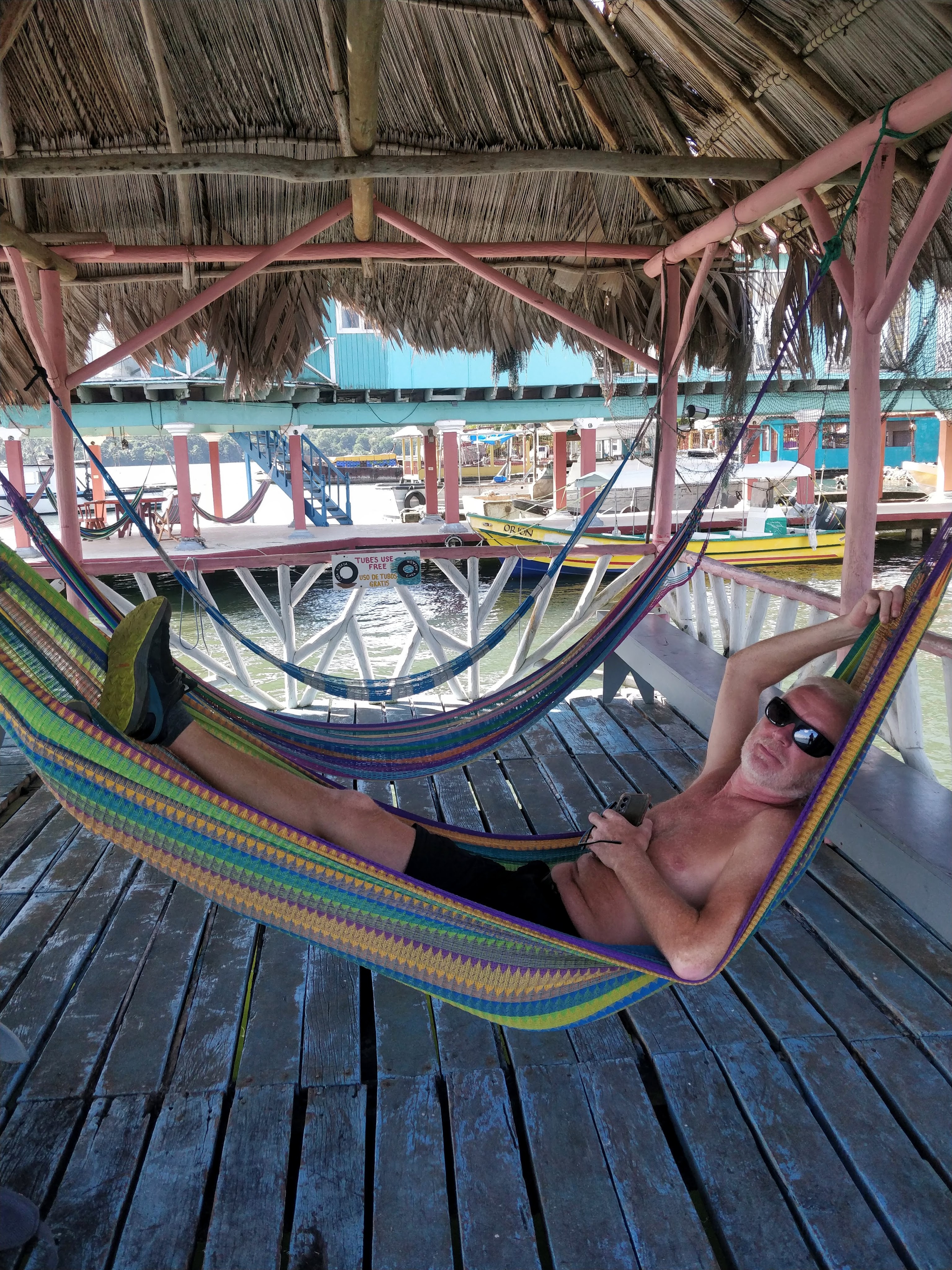
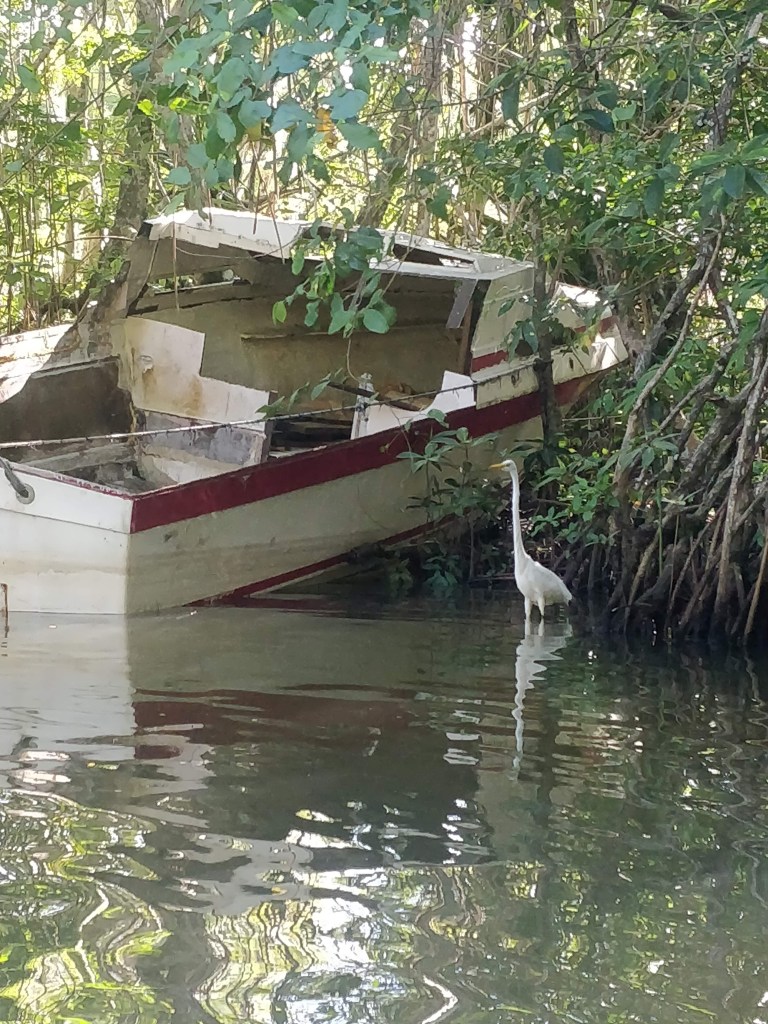
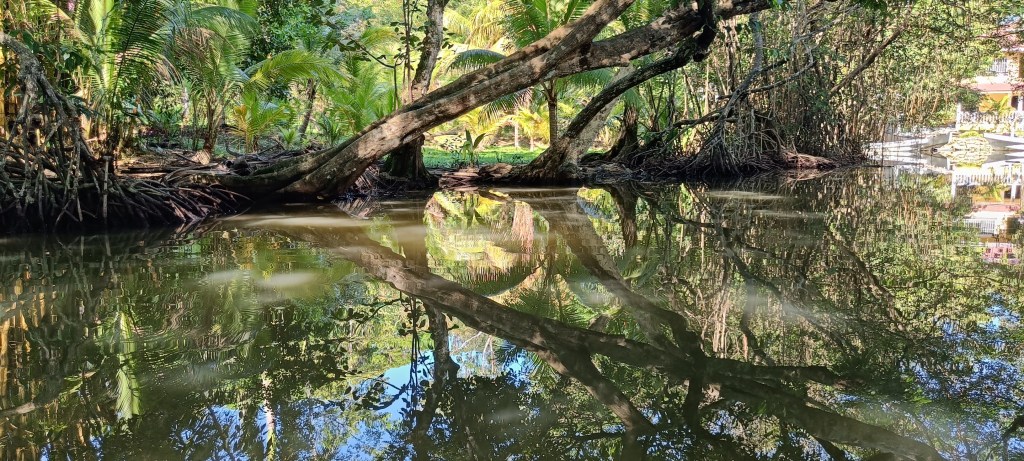
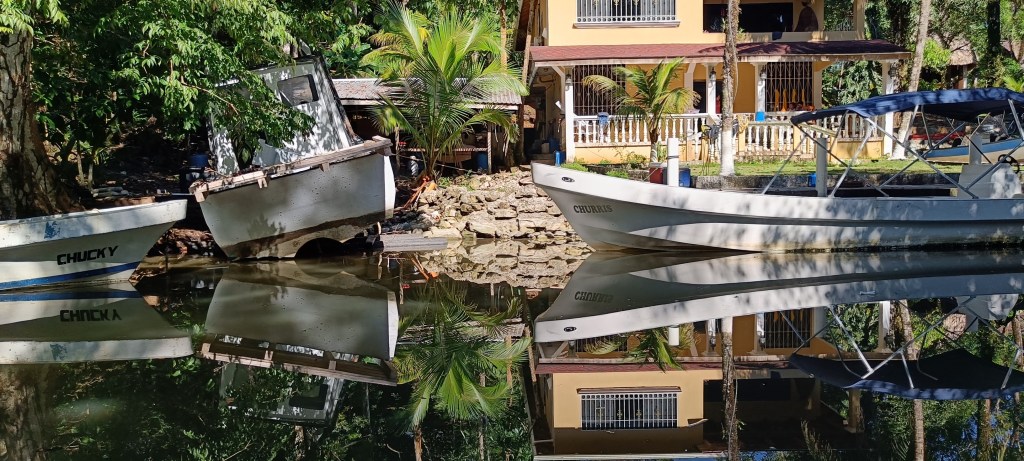
As soon as the boat docked in Guatemala at Livingston, a town on the Caribbean coast at the mouth of the Rio Dulce, we were bombarded by taxis, tuk-tuks and people wanting to help us. We had our passports stamped by a man wearing a singlet in an office in the fruit market in the middle of town. Guatemala seemed a nation of shopkeepers where everyone was selling something and practically every house was a shop. In Belize, most (or maybe all) grocery shops were run by Chinese. Our hostel in Livingston – Casa Rosada- was amazing. It was like an oasis as soon as we stepped off the busy street through the wooden door painted with butterflies and toucans. It was situated by the water on a long pier with a garden and hammocks. We slept under mosquito nets which always felt exotic especially when there didn’t seem to be anything flying about. It was basic but comfortable and about €20 a night, significantly less than we paid anywhere in Belize. We rented a 2-person kayak to go upriver on the Rio Dulce (sweet river). The river was beautiful and wide but busy with motor boats zooming by. The real magic was the little side tributaries which were dim and shaded with white egrets, birdsong and the interplay of light and reflection on the trees and the water surface. We drifted past a boat graveyard where rusting hulks rested in peace. Honestly, it was like being under a magic spell of tranquillity and beauty. It reminded me of an Mary Oliver poem
The dream of my life is to lie down by a slow river And stare at the light in the trees, to learn something by being nothing Mary Oliver
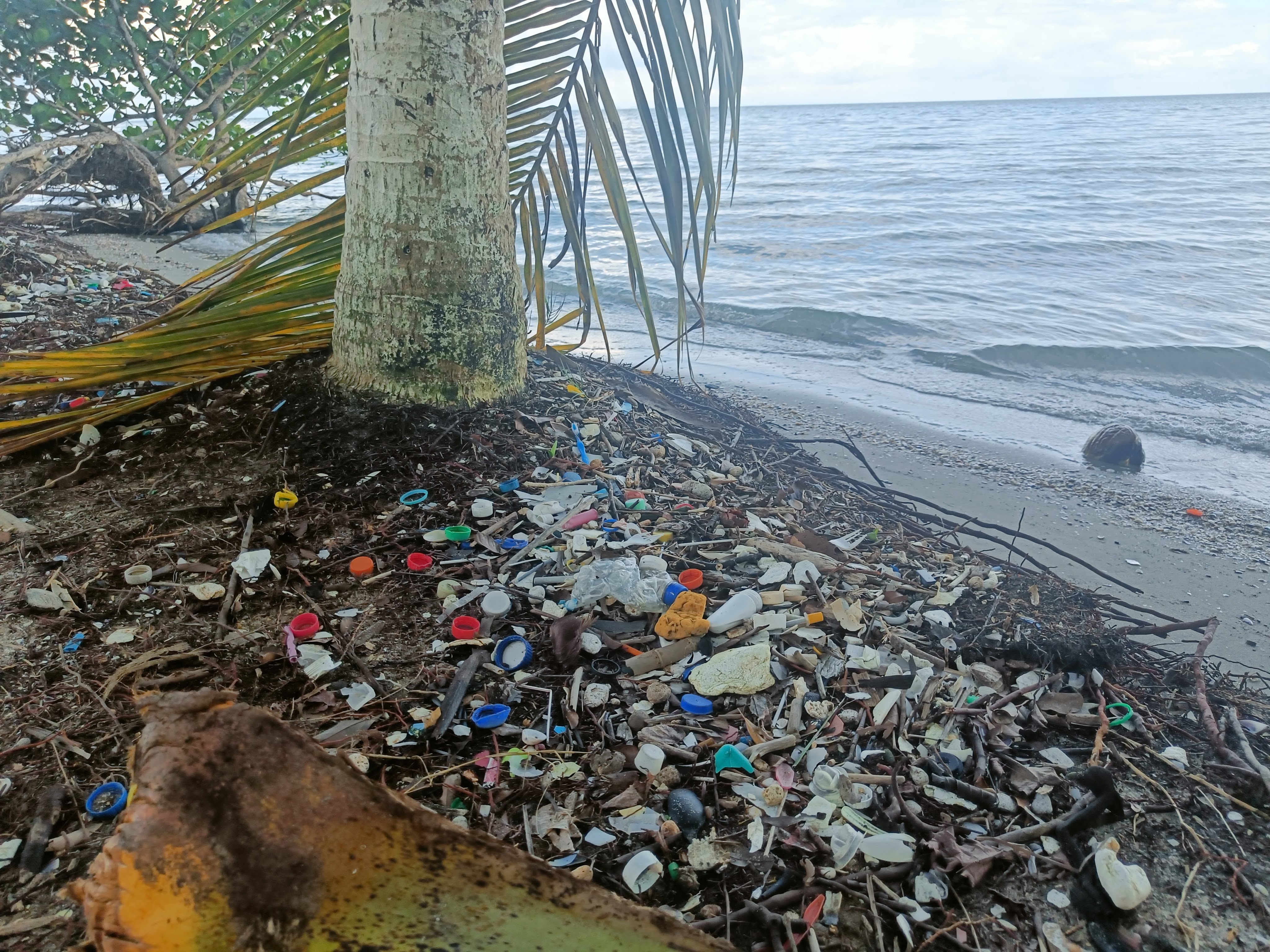
The following day we walked along some beachrs outside the town. Cononuts and driftwood weren’t the only things washed up on the white sands. There were broken shells and a kalidescope of bottlecaps like smarties, plastic shoes, fibreglass shrads, plastic bags and bottles, plastic everything. Some of the rubbish was being burnt on bonfires on the beach with black acrid smoke billowing among the coconut trees.


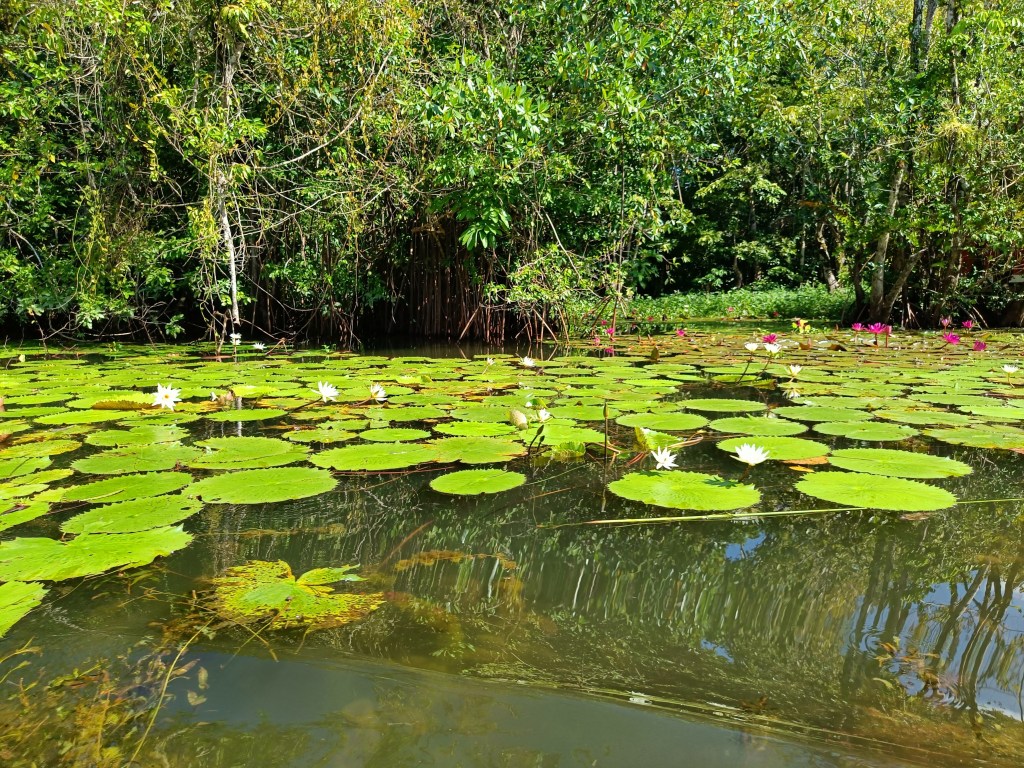
Leaving Livingston, we travelled upriver on the Rio Dulce on a small motorised boat to the town of Rio Dulce. Apart from the constant drone of the engine, this was a gorgeous trip on green silk waters with walls of towering trees on both sides. There were houses on stilts along the shoreline and lines of washing blowing in the breeze. The boat made some diversions along the way to deliver some packages to houses in some small tributaries where there were water lilies, white and shocking pink. There’s no postal service in Guatemala but there’s always a way. The river widened into a lake, the water turning silvery blue.
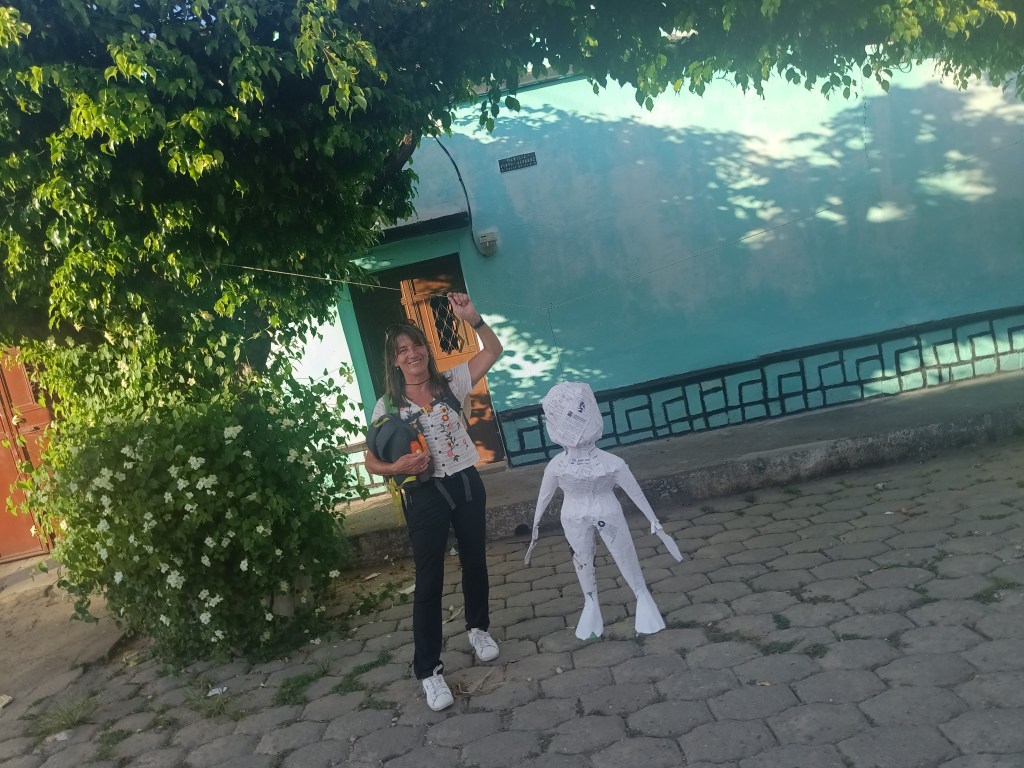
In the town of Rio Dulce we caught a minibus to Morales and a bigger bus to Chiqimula, a town about an hour from the border with Honduras. We had decided not to go all the way to the border with Honduras in case we arrived after dark. The minibus section of the journey was the scariest section mainly because we were sitting up front beside the driver and could see what he was doing – reading the paper as he drove on the wrong side of the road, coughing and spitting out the window, talking and texting on his phone and turning around to look at the passengers in the back😮. There was also some malfunction with the heating system and I thought that my shoes would melt onto my feet. The second leg was better because we were at the back but the traffic was appalling and there was constant roadworks causing delays. We passed by green pasture fields and lorries transporting cattle presumably to slaughterhouses. Shops by the roadside sold saddles and fruit stalls had bags of lychees and oranges. We finally reached Chiqimula at about 4pm and we were glad we weren’t going any further. Chiqimula is known as La Perla del Oriente and was surrounded by forested hills. Some of the streets specialised in making pinatas and there were strange paper mache figures that looked like aliens. We stayed in a friendly airbnb with a dog called Ringo and 11 cats and an enormous breakfast. Juan even walked us to the busstop the following morning to make sure that we got the correct bus to the border.

So onwards to Honduras which has a terrible reputation for corruption and violence-even worse than Guatemala but Guatemala has turned out really well and we have enjoyed our stay. We had a puncture on the way to the border and had to change buses because of another malfunction but we got there.
I can only use one word to describe the border crossing at El Florida between Guatemala and Hondurus – CHAOTIC. There was constant noise and fumes from huge lorries leaving their engines running, little shade from the sun and huge crowds. Hundreds of people were in haphazard queues but we couldn’t figure out whether they were queueing to exit Guatemala and enter Hondurous or the other way around. Usually this is very obvious with separate buildings, flags and all the signs that countries use to identify themselves. Here, emmigrations and immigration for both countries were in the same small building with the same personnel. We thought that we were going to be stuck for hours but when we asked an official, we were told to bypass all queues and go straight to the desks and after being electronically fingerprinted and photographed, we were through in twenty minutes.
I think Hondurus is going to be interesting. Thanks for reading. Until next time…….
11 Comments
Sighle Doyle
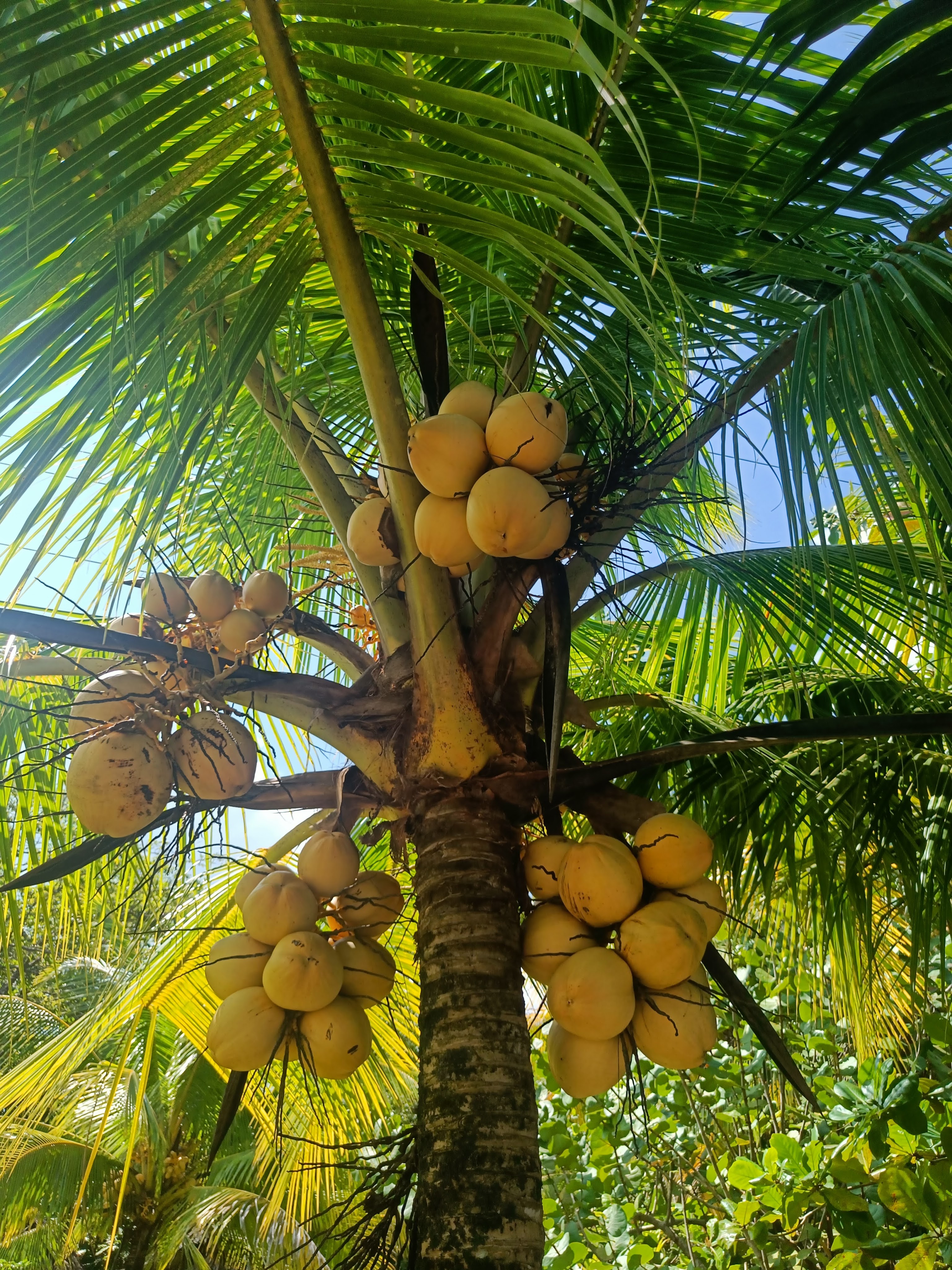
Mind the coconuts!😊🤗
Clodagh O Neill
Great read as always,Marie.Love the river description. Continue to enjoy your last few weeks.
Marie Noonan
Only about a month left, Clodagh 😮…no more dawdling through…we need a plan x
Get
Lovely read.
Marie Noonan
Thanks, Ger
kellyersblog
Bravo Marie. Another fab read. Your writing is just flowing along and seems effortless.
Ger
Imagine I get my name wrong!!
Enjoy what’s left.
threemoos3
Thanks really enjoying the journey from comfort of home!! Brightening a very wet Sunday morning, pictures are brilliant. Look forward to next post. Enjoy and safe travels
Marie Noonan
Thanks Tomás
cipaul2m
The colourful sign for Belize seems to reflect the diversity there. Sounds like ye are meeting some fantastic characters along the way . I can’t believe the distances ye are able to cover in a relatively short space of time . The mere mention of the 2 chocolate factories had me wanting to book a ticket!! Enjoy Honduras.xx
Marie Noonan
More great chocolate in Honduras, Ciara😀