Colombia – Looking for Paradise
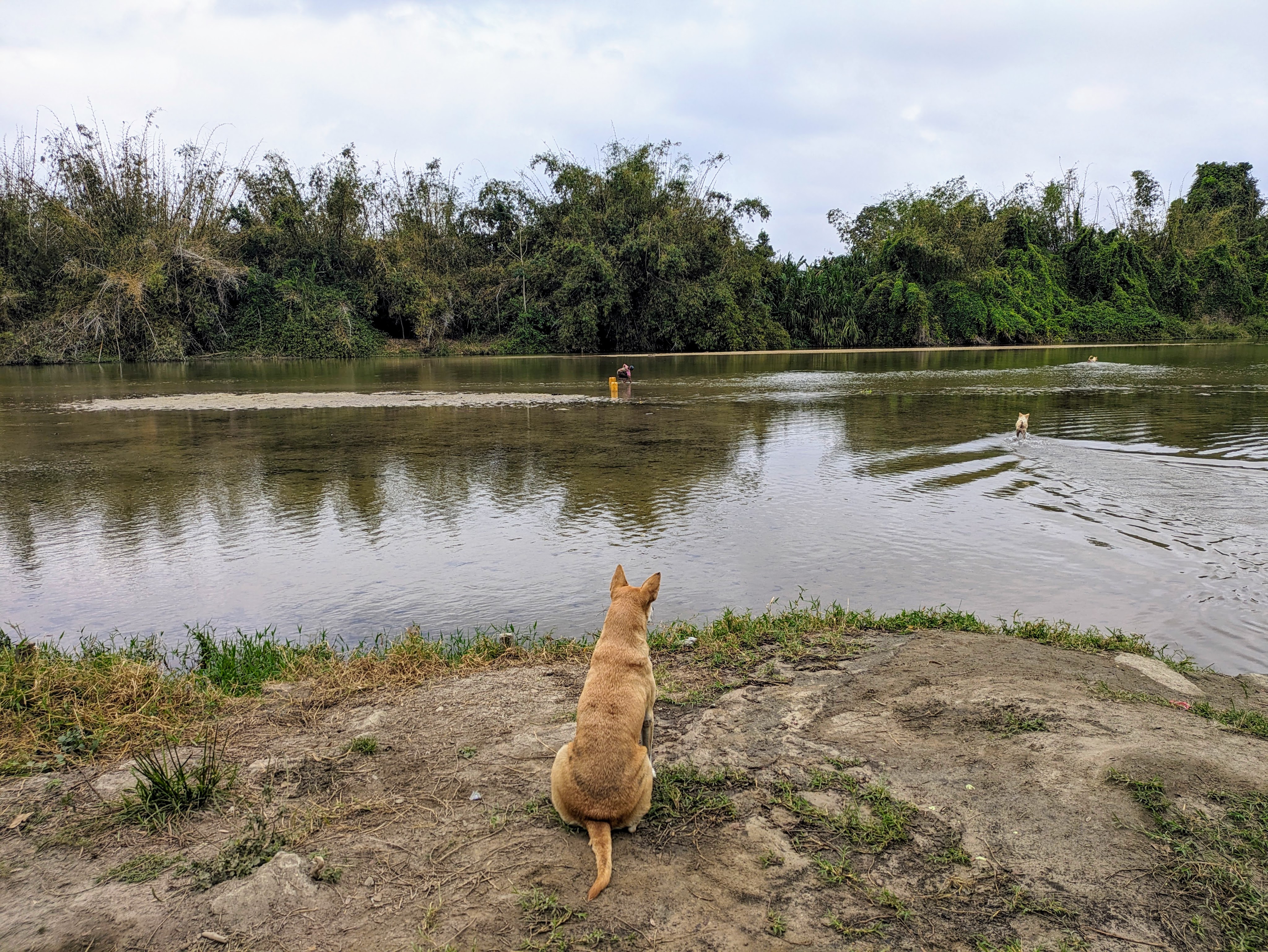
Palomino is a small town on the Colombian Caribbean coast, nestled between two rivers, Rio Palomino and the Rio Salvador. Both rivers flow from the Sierra Nevada mountains to the sea on both sides of the town. It has developed a reputation as a mecca for backpackers with lots of cheap accommodation and good restaurants. It sounded like an ideal spot for some relaxation after our exertions during the Lost City Trek.
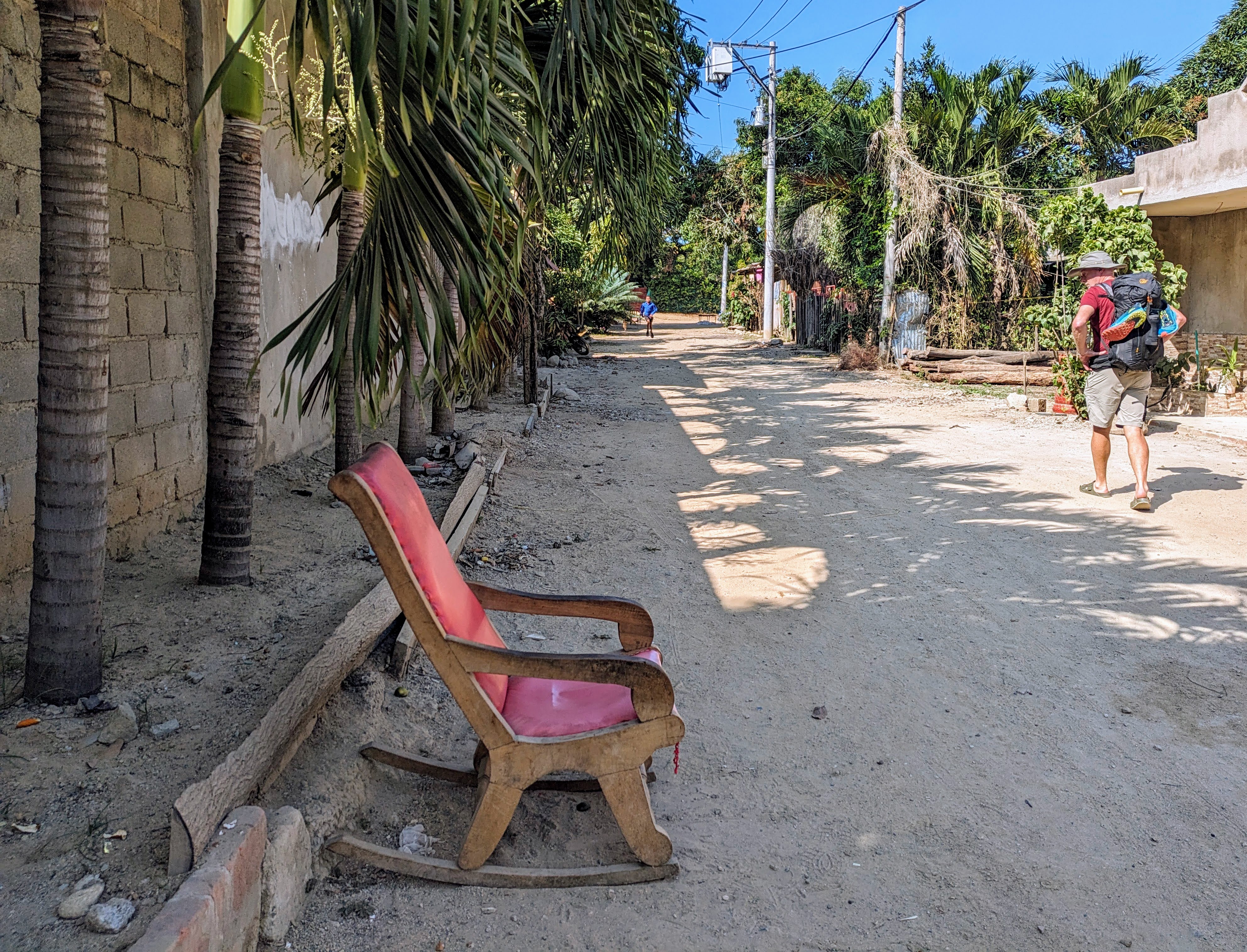
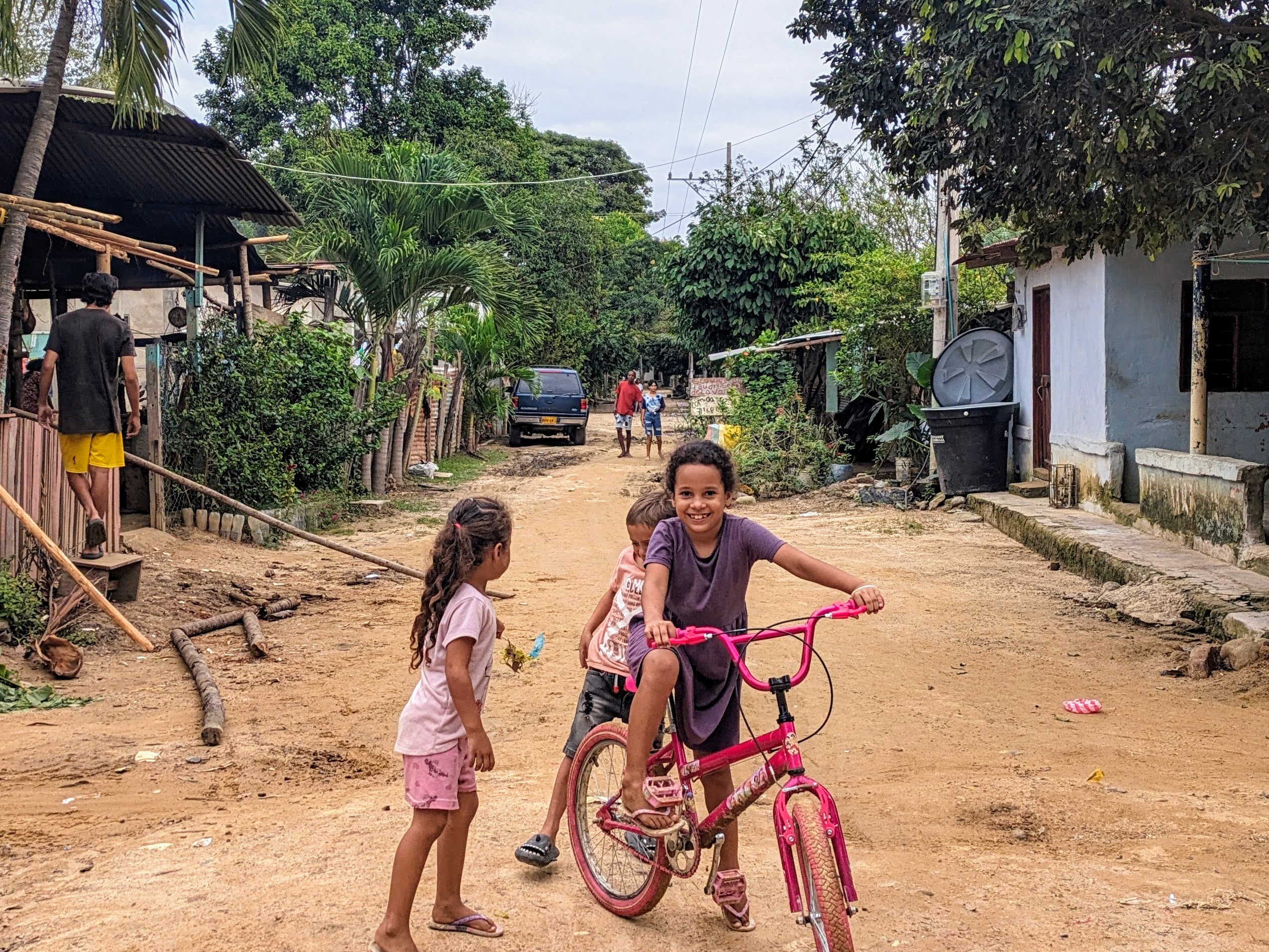
The bus from Santa Marta (two hours away), dropped us on the main road, with roaring traffic, motorbikes, buses, fumes and deafening noise. Palomino itself was just off this paved main road, a series of dusty unpaved roads, lined with low ramshackle, unpretentious houses, a lot of greenery, a few dogs sleeping and hardly a person in sight. It was early afternoon in a dense humming heat and Palomino did not seem like a mecca for backpackers…..or anybody else.😲
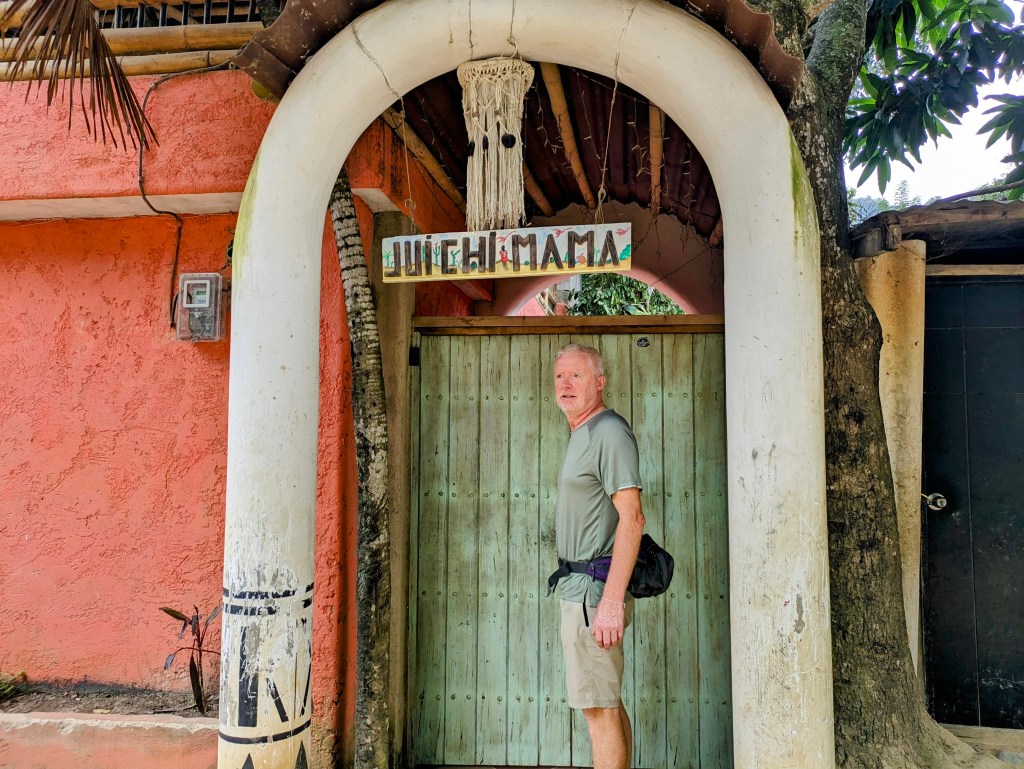
Our accommodation, Jui Chi Mama, was at the edge of the town, a 15-minute walk along more dusty streets. The outside door of our accommodation was faded dirty green, but inside was an oasis of calm and birdsong, an old house set in a huge, lush garden of huge tropical plants, an outdoor kitchen and lots of shady seating areas.
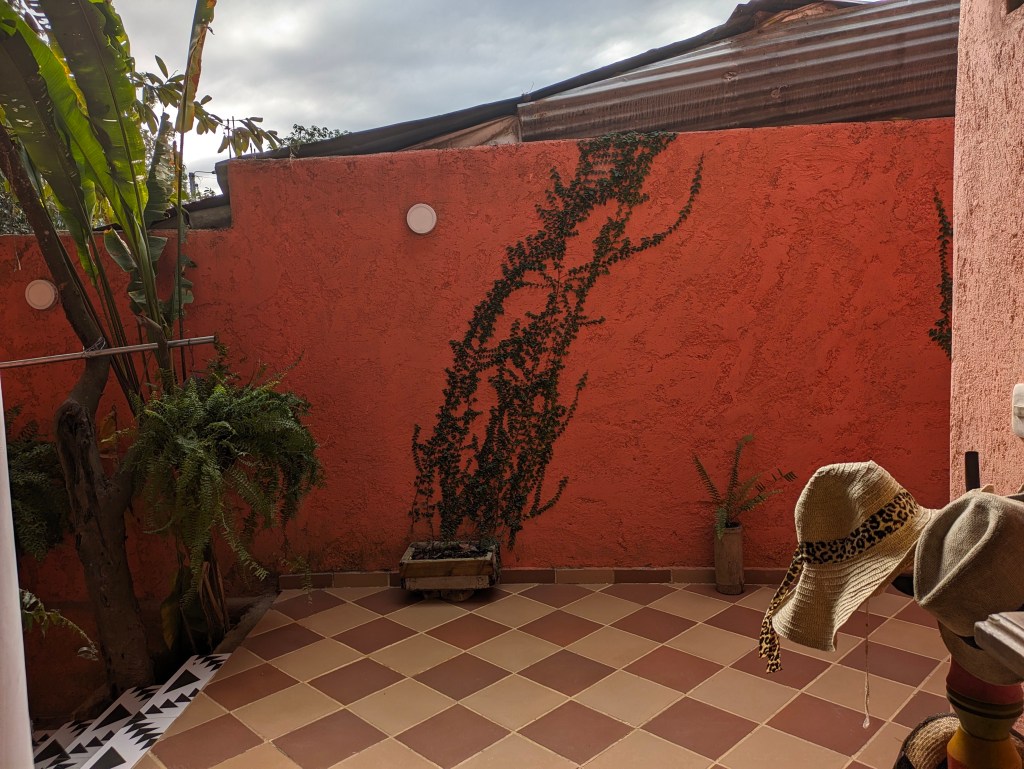
Jui Chi Mama was the sort of relaxing place that put a spell on its guests, a bit like Hotel California, you can check in but you can never leave.😄 Our initial booking was for four nights but we extended that by another four nights and then by another four nights. We weren’t the only ones…an English couple kept extending until they had spent three weeks, a Spanish girl was there for months and so was a German woman. We hope to check out tomorrow……if we can.
Palomino has the feel of a frontier town. Unreliable electricity supply is part of life here and power cuts are routine. A lot of guest houses and businesses have their own generator which unfortunately in our accommodation kept breaking down. We spent one long hot sticky night without a cooling fan, which was very unpleasant. There are no connected sewage systems (houses have individual septic tanks) but there are plans to change this with diggers doing the preliminary work but not very consistently. Clean drinking water is also an issue and we were advised to use the filtered water available in the kitchen even for cooking.
Heat is also part of life in Palomino with it’s tropical climate. It’s hot all the time, most days are well over 30C and nights are just under 30C. When we first arrived and trudged along the dusty streets, we wondered how people got around in the wet season when the dust in the street must turn to mud. February is in the dry season, which runs for six months from December to May. The weather was cloudy, overcast and very humid. We got a taste a few days later of what Palomino might be like in the wet. It rained, just a few showers at first, an afternoon of warm drizzle the next day and then a downpour that felt like it might never end, the skies emptied for about fourteen hours relentlessly. The streets were a quagmire, a slip-sliding mess of oche mud, flowing streams and floating rubbish. We were told that rain like that was very unusual, especially at this time of the year.
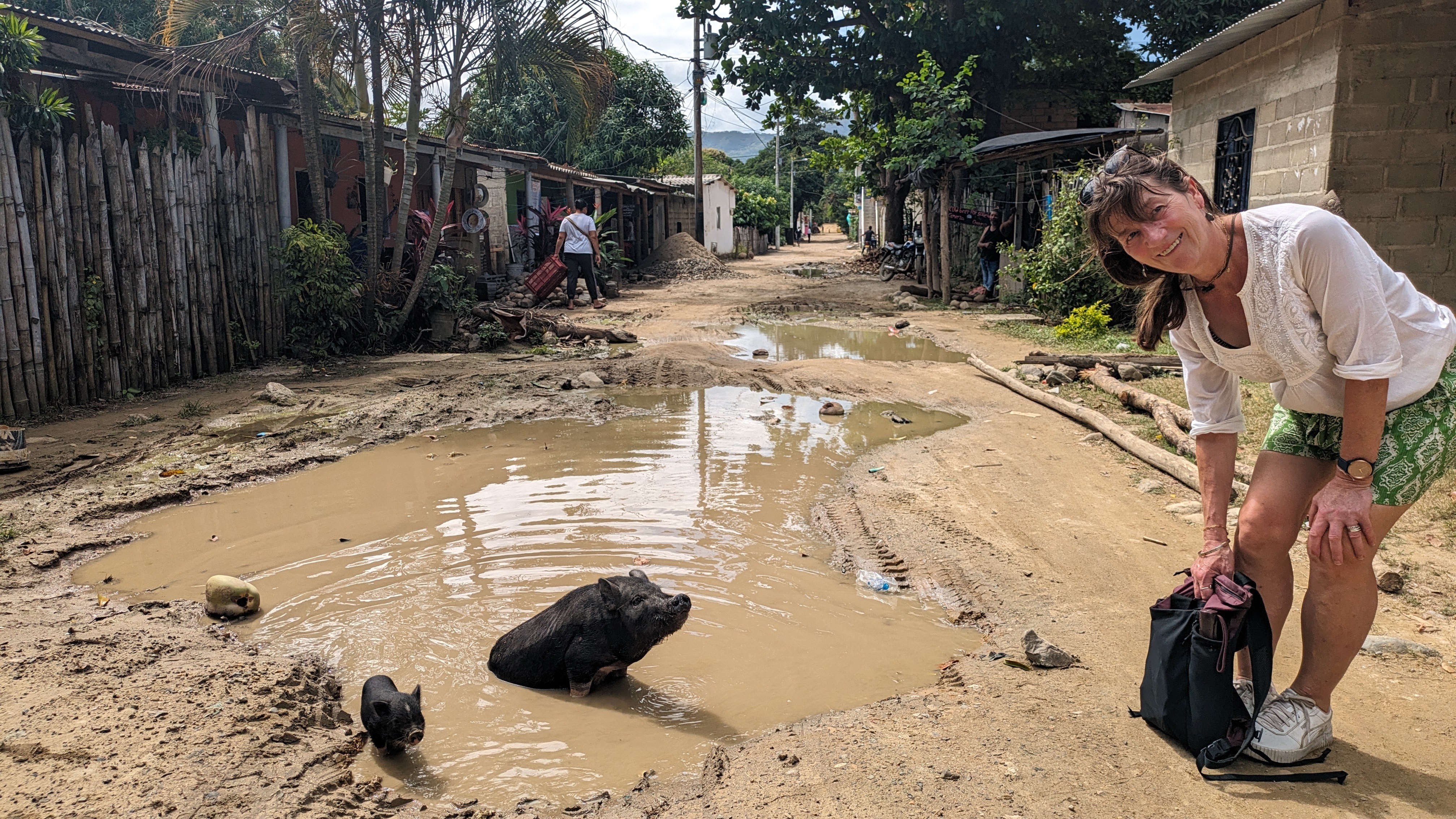
Palomino had the feel of two separate towns, there was the main strip, really just one street that led to the beach with lots of restaurants, tourist shops, tattoo places and tour operators. This was where most of the visitors hang out and then there was the rest of the town, where we were staying where the children played in the streets, where the front doors were open, where people sat outside their houses and gossiped, where the music coming from the snooker hall was seriously deafening at the weekends.
The Beach was long and sandy, bookended by the two rivers but the sea was surprisingly rough and quite dangerous in places for swimming. It was not the Caribbean of our dreams, the clear calm turquoise waters that we imagined. We dipped in it a couple of times, like being in a washing machine on a warm cycle, and when it spat us out, we relaxed at one of the beach bars and restaurants,

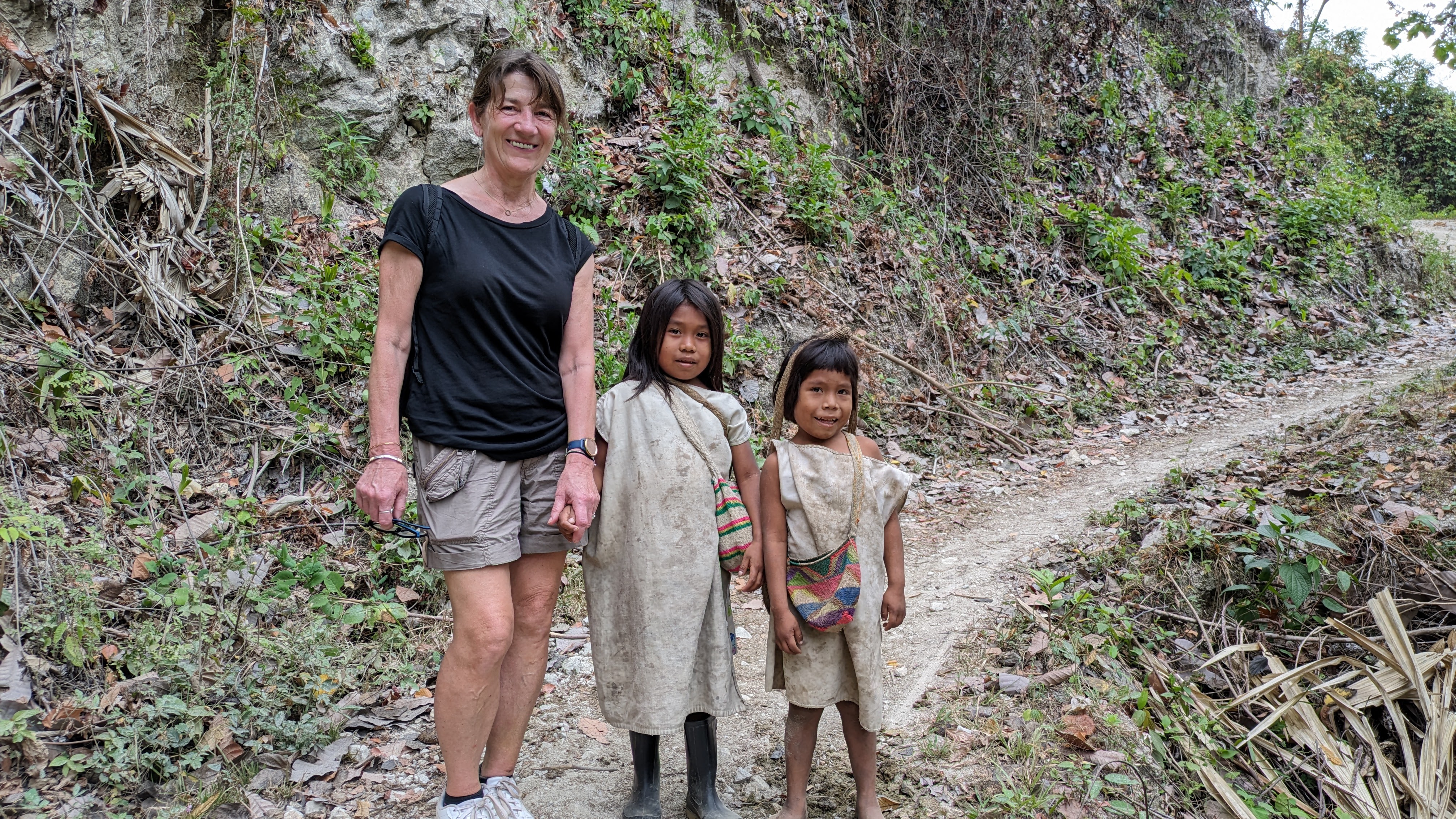
There were interesting trails into the mountains leading to indigenous villages, along paths that climbed high and then descended steeply and repeated over and over through thick vegetation.
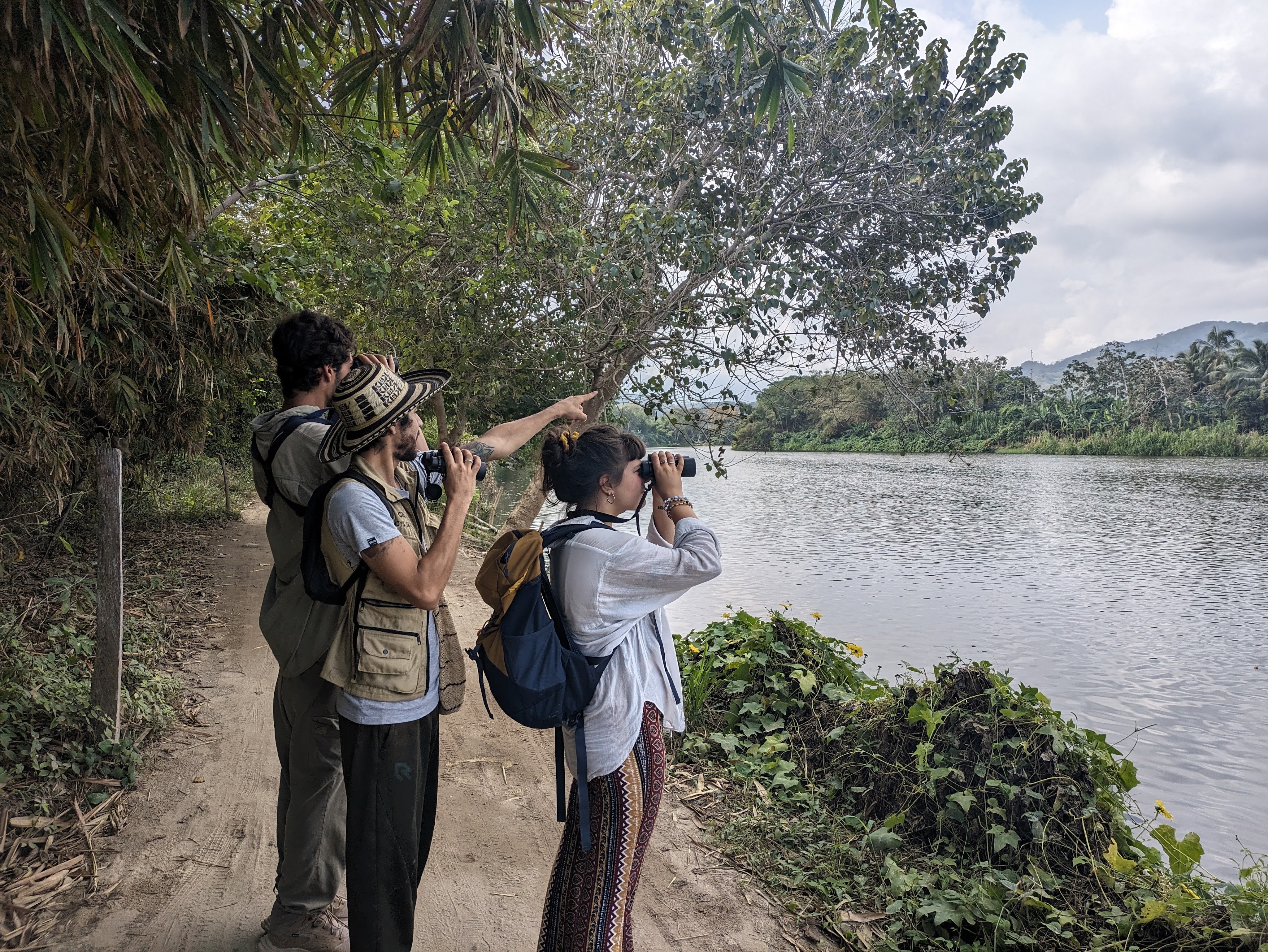
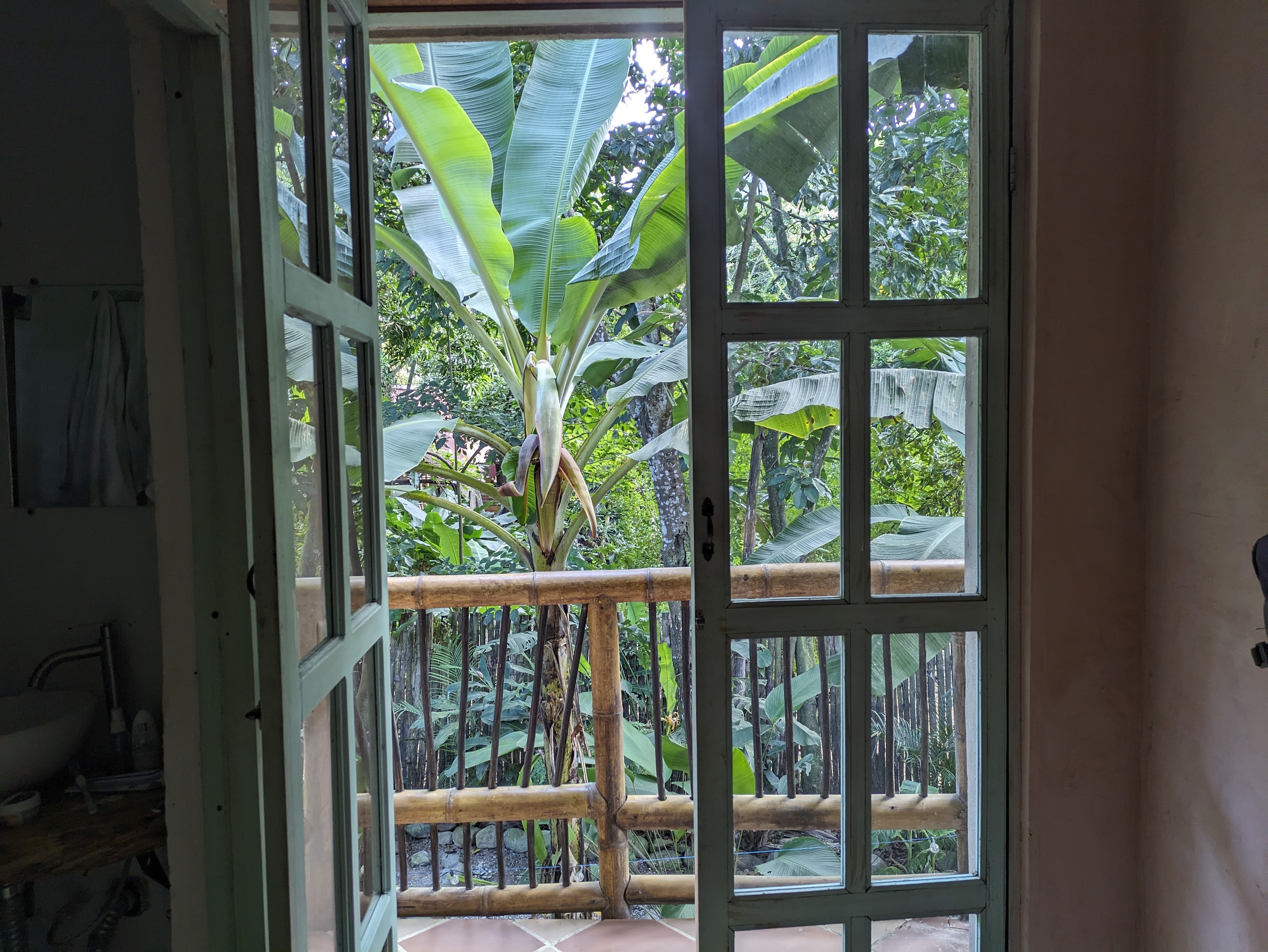
Herman, who runs our guesthouse, was a keen birdwatcher so we booked a birdwatching tour with him, a four-hour walk in the early morning though the town, along by the river and mangroves to the beach. There was a huge variety of birds from tanagers, flycatchers to eagles. Many of the birds were similar to our own but then there are the colourful parrots, the Macaws and the tiny hummingbirds. Over the last six or seven years, a large patch of ground on the edge of town that was used mainly as a dump has been cleared up and is being reclaimed by nature to form new habitats. The growth here is phenomenal….we have watched a bunch of bananas in the tree outside our balcony , increase in size by the hour.
For the last week, we have been taking Spanish classes with the wonderful Christina, just an hour a day, mainly concentrating on conversation. Christina is a native of Bogota who moved to Palomino many years ago and also spent a long time in America so her English is excellent. Our progress is slow but hopefully, one day, it will all fall into place….with perseverance and practice🤞
So tomorrow we check out -if we can- and head further into the La Guajira region towards the desert and the northernmost part of South America
Hasta luego, amigos🥰
9 Comments
Claire
Marie, you are well and truly sounding like a professional backpacker now!..having a fabulous time and living like one of the locals… even speaking the language 😊…just bring some of that lovely weather home!
Marie Noonan
Thanks, Claire……will need a few more Spanish lessons. TOO much heat is put problem🌞🌞🌞🌞
Eileen Desmond
Wow Marie another great instalment. The experiences you are having and people you are meeting sound amazing. We’ve been having lots of rain here, maybe not all out as heavy as the full day of rain you had there but some days it feels like it will never stop! Keep having fun 😊
Marie Noonan
Thanks , Eileen. Still trying to dodge the heat…but all good🌞🌞🌞🌞
Emily Ennis
Wow all sounds amazing Marie thanks .
Rita
Sounds like you’ve had well deserved “chill” time in Palomino Marie – that Lost City trek was a fantastic feat! Every time you mentioned cooling off in a pool or river I could almost feel the relief myself 😅! Loving the photos too 🥰
Marie Noonan
Thanks, Rita x
Ciara
Wow! What wonderful descriptions. Loved the warm cycle of the washing machine! Pace of life sounds addictive. No wonder ye can’t leave!!Fab.Enjoy.x
Marie Noonan
Thanks, Ciara. Complaining of the heat now….but cold beer and siestas help😋